
Reviewed · CALLIGRAPHY CLASSES
Beijing Culture Event: Tea Ceremony, Music Show, Calligraphy
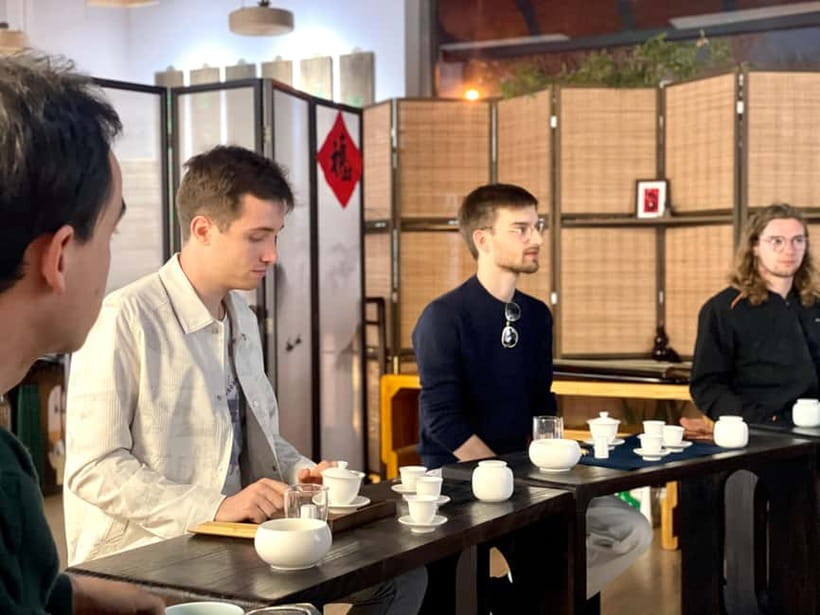
This is a fun way to see Beijing culture in just 2.5 hours, because you get three big arts in one visit: tea ritual, Guqin music, and calligraphy writing. I like the step-by-step Six-Step Tea Art teaching, and I also like that you do more than watch, you get hands-on practice like playing a simple Guqin melody and writing your own character. One thing to consider is that the session is short, so if you want a long performance or a deep focus on just one craft, this might feel time-boxed.
The format also makes it feel personal. With a small group limited to 8 and a bilingual cultural guide with a Master’s degree in History and Sociology, the explanations have context, not just instructions. You’ll also get traditional attire rental, photos, and original souvenirs, which makes the experience easier to justify if you hate “just another show” sightseeing.
Logistically, it’s straightforward if you can handle one metro meet-up and you arrive on time. You’ll meet at Hua Gong station C exit (Line 7), and it ends back at the same meeting point, about 30 minutes from Temple of Heaven.
Key highlights you’ll care about
- Six-Step Tea Art with porcelain teaware and guidance on red, green, and floral teas
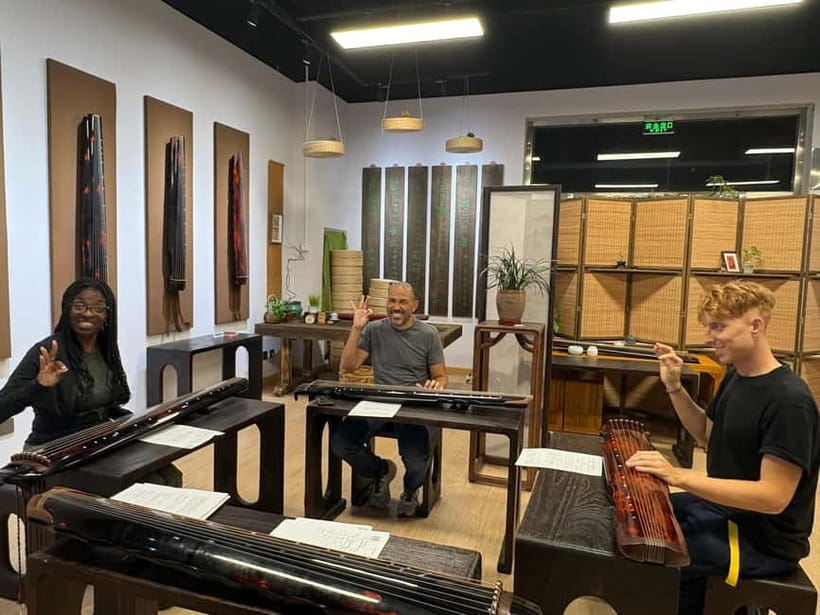
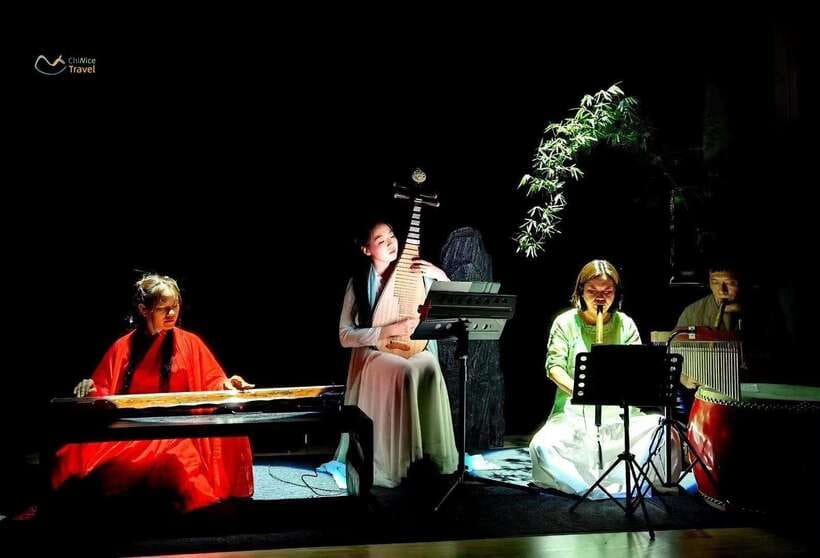
- Guqin master performances plus a short Guqin class where you learn a simple melody
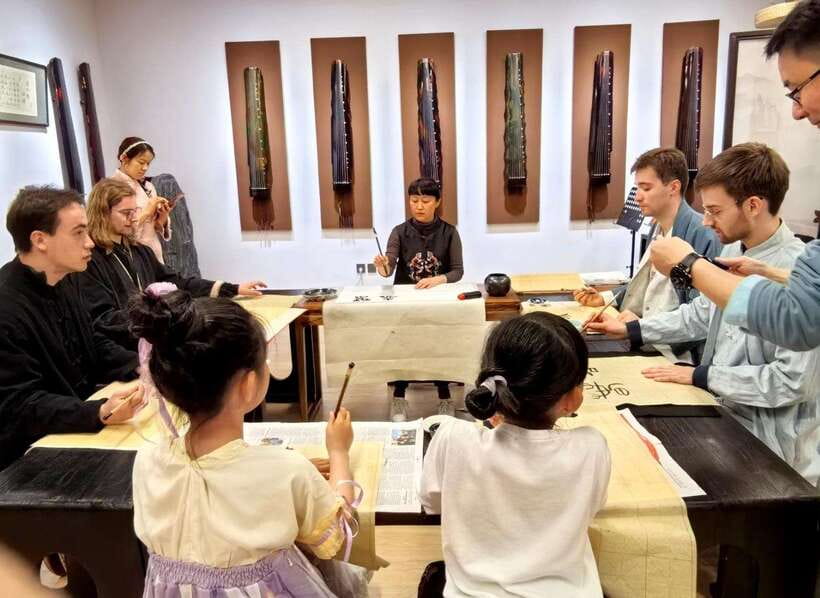
- Calligraphy practice across historical evolution, then you write your own meaningful symbol
- Hanfu rental and ritual styling, plus a photoshoot to make it memorable
- Bilingual cultural expert support, with historical and sociological context
- Small group (up to 8), so your questions actually get answered
Tea ceremony, Guqin, and calligraphy in one 2.5-hour Beijing class
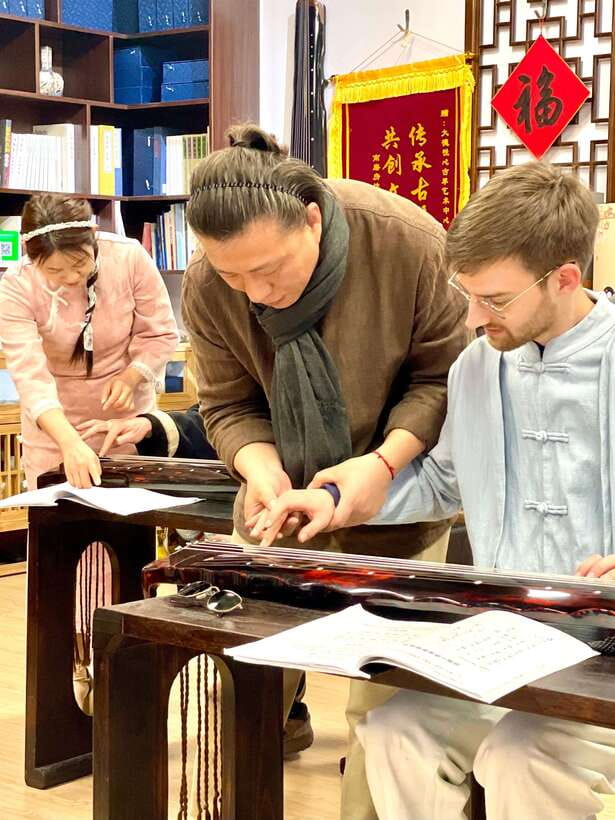
If your Beijing checklist includes tea culture, music, and calligraphy but you do not want three separate half-days, this is the streamlined option. You get a compact route through three art forms that usually take longer to understand. And you do not just sit and watch, you taste, you handle the objects, you try the writing, and you even participate in a music exercise.
The big idea here is craft plus meaning. Tea is not treated like a drink, it is a sequence of movements and sensory cues. Guqin is not treated like a random instrument show, it is explained as a cultural symbol tied to scholars and refined communication. Calligraphy is not treated like arts and crafts, it is explained as a visual history, from early pictorial forms toward the major traditional styles.
This matters because most cultural performances abroad become either too abstract or too touristy. Here, the teaching tone is practical. You are guided step-by-step, and the guide connects what you see to why it matters.
More Calligraphy Classes in Beijing
- Beijing Calligraphy Class
★ 4.9 · 112 reviews - Chinese Calligraphy Class for Small Group
★ 5.0 · 104 reviews - Beijing Historic City Guided Walking Tour + Calligraphy Creation
★ 5.0 · 59 reviews
The full session flow: tea, Guqin performance, Guqin practice, calligraphy, and ritual
The experience runs for about 2.5 hours and is built like six connected “chapters.” Each chapter has a performance component and an interactive component, so you are always doing something, even when you are watching.
Here is the practical order you can expect:
1) Tea ceremony watch, then guided brewing
A professional tea master performs an ancient-style tea ceremony. Then you follow along and learn the traditional Six-Step Tea Art process. You taste teas including red, green, and floral types, and you are taught to notice aroma, color, and flavor differences.
2) Guqin master performance
A national-level Guqin heritage master performs. The focus is not loud spectacle. It is careful listening, with cultural context on the Guqin as a revered instrument, sometimes described with the nickname giant panda of musical instruments. You get the sense of why this instrument has long been associated with scholars.
3) Hands-on Guqin learning
After the performance, you get instruction to play a simple melody yourself. This is the “worth it” part for many people. You learn the basics with patient guidance, so even if you have never touched the Guqin before, you still leave with the experience of making sound.
4) Calligraphy writing, from evolution to your own symbol
You learn how Chinese characters evolved, moving from earlier forms toward five major traditional calligraphy styles. Then you write your own meaningful symbol using traditional brush and ink. People tend to remember this part because you leave with a physical result.
5) Traditional attire and ritual
You rent hanfu and dress for a short ceremony honoring your teacher. This is usually where the experience shifts from classroom to atmosphere. You are not wearing hanfu for a photo only, you participate in a ritual moment.
6) Photos and original souvenirs
You get photoshooting time during the experience, plus original souvenirs included in the price. If you want your memory to live beyond a few phone photos, this helps a lot.
Small-group format matters here. With limited group size, the guide can keep track of who needs an extra explanation, who has questions, and who is ready to move to the next step.
What makes the tea ceremony teaching feel real, not scripted
The tea portion is built around the Six-Step Tea Art method, which gives you structure. Instead of being told vague facts like tea is healthy or tea is cultural, you learn a process. That process helps you understand why tea culture is so detailed back home: small changes in steps can shift aroma and taste.
You will use authentic porcelain tea ware, which is important. Cheap substitutes can feel slippery or wrong in your hands, and they do not teach you the same sensory discipline. Porcelain is part of the “ceremony logic,” and it encourages you to slow down and pay attention.
In the tasting, you are guided to notice differences across red, green, and floral teas. This is great for beginners because it gives you a checklist. Aroma first, then color, then flavor. If you are the type who usually forgets what you just drank, this organized approach helps you remember.
A small bonus is that this portion includes water and tea as part of what you receive. That means the session does not start with you worrying about snacks or hydration.
Guqin performance plus a mini lesson on the instrument
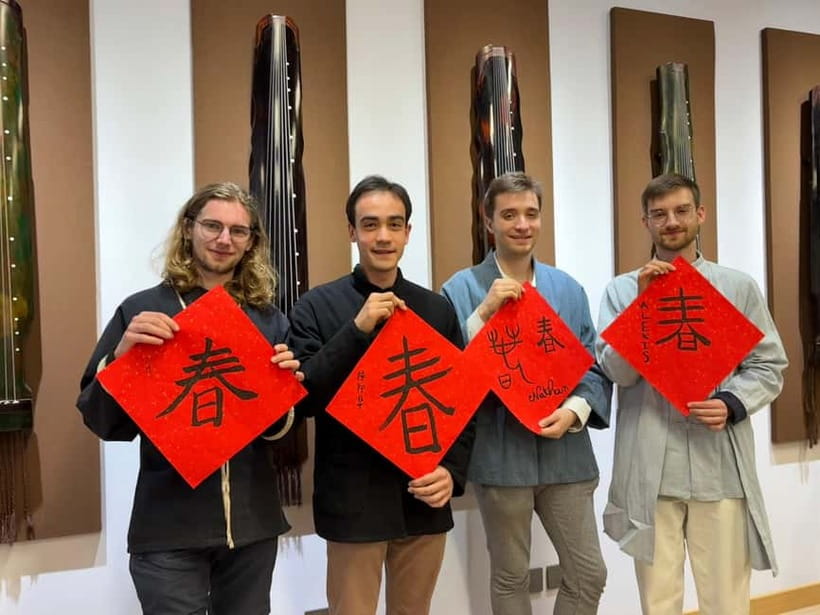
Guqin is one of those instruments that can sound like background music if you do not know what to listen for. Here, the guide sets expectations. A master performs so you can hear the character of the instrument, and you get context about how the melody links to the rhythm of Chinese characters and the instrument’s cultural meaning.
Then you get to play a simple melody. This part is not presented like a hard music class. It is presented like a respectful introduction, with patient coaching. If you have ever wondered how to translate “I watched a musician” into “I actually experienced it,” this is the bridge.
Also, the Guqin portion includes the show ticket and a Guqin class. So you are not paying for the idea of learning. You are paying for the learning time.
If you are a music nerd, you will enjoy the chance to hear a master first, then reproduce a small piece. If you are not, you still benefit from the quiet, focused listening. The pacing is intentionally calm.
More Tea Ceremonies in Beijing
- Traditional Chinese Tea Ceremony Experience
★ 4.7 · 74 reviews - Chinese Tea ceremony in Beijing Hutong courtyard
★ 4.7 · 26 reviews - Private Beijing Markets Tour with Tea Tasting at Hongqiao Pearl Market
★ 5.0 · 18 reviews - Beijing Culture Event: Tradition Music, Tea Ceremony, Calligraphy
★ 5.0 · 11 reviews
Calligraphy with brushes and ink, plus your own souvenir character
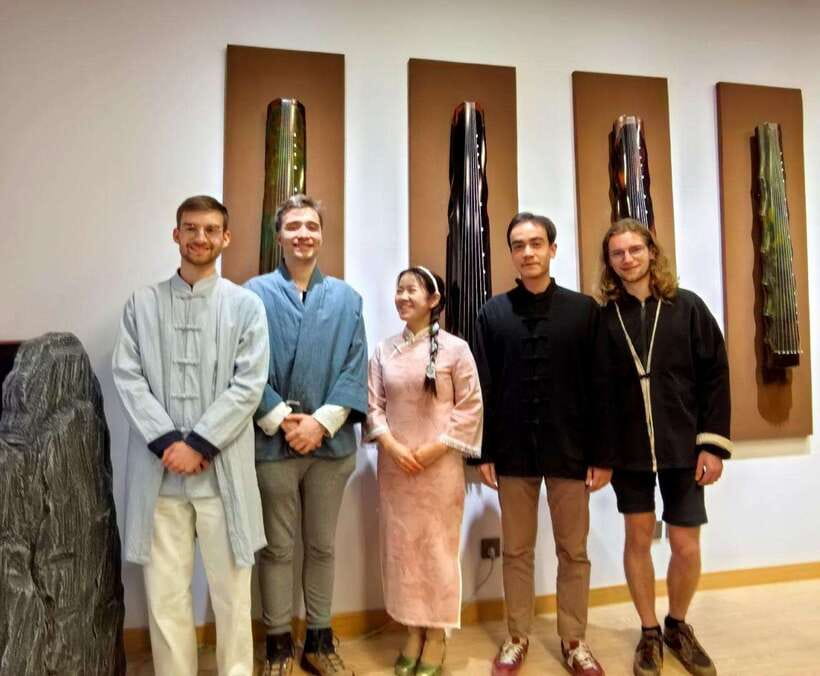
Calligraphy can be intimidating. The good news is that the teaching flow lowers the fear factor. You start by understanding how characters evolved. That gives the activity a reason, not just a how-to.
Then you move through five major traditional calligraphy styles. You learn that style is not random decoration. It is a visual system shaped by eras, aesthetics, and meaning.
After that comes the satisfying part: you write your own meaningful symbol using traditional brushes and ink. People tend to love this because it becomes a personal souvenir. It is also a great break from tasting and listening. Your brain shifts from sensory learning to motor practice, and you end up calmer.
Two practical notes:
- Bring the attention span of someone writing carefully, not sketching fast.
- If you want to keep your character neat, ask for guidance on grip and brush angle during practice.
The experience also includes hanfu rental and a ritual element, so the calligraphy moment often lands in a visually beautiful frame. You dress up, then you create.
Hanfu, photoshooting, and the ritual moment that makes it feel ceremonial
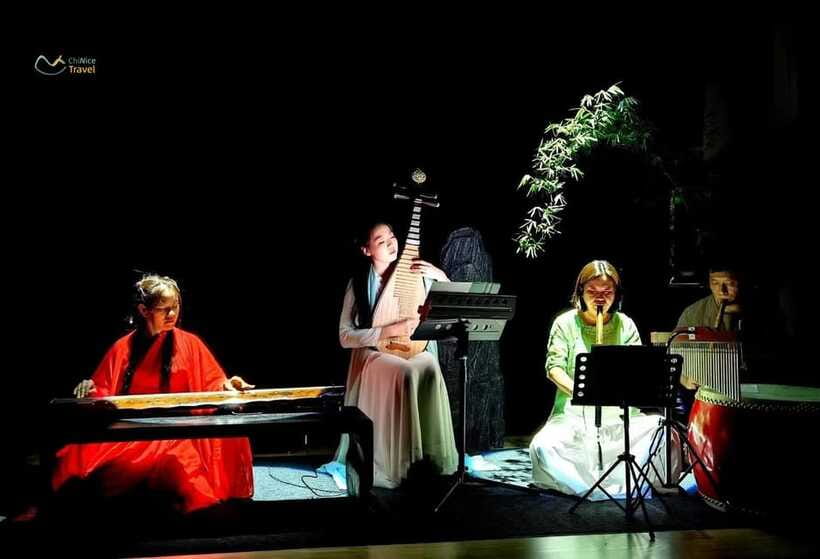
The hanfu portion is more than a costume change. You rent traditional attire and dress for a ceremony honoring your teacher. It adds formality, and it helps you shift from tourist mode to participant mode.
If you are traveling with kids, this part often does a lot of work because it feels like a real cultural moment rather than a sales stop. In the family experiences I’ve seen, people who started out unsure ended up enjoying the ceremony and photos because it became interactive.
Photoshooting is included, so you do not have to rely on finding a stranger to take group shots. Still, if you care about your pictures, bring your own camera or phone ready, since photos can happen at multiple times during the session.
One simple prep tip: wear comfortable clothes under your hanfu layer plan. You will be dressing for the session, so you want easy comfort for that.
Pricing and value: what you get for $79 and who it’s best for
At $79 per person, this is not a low-cost activity, but it is also not paying for a single show ticket. You are paying for a bundle: tea ceremony teaching, Guqin performance, Guqin class, calligraphy instruction, hanfu rental, photoshooting, and original souvenirs, all guided by a bilingual cultural expert.
So the value comes from how many distinct art skills you touch in one block of time. If you were to book separate tea lessons, music sessions, and a calligraphy workshop, you would likely end up paying more and spending more hours moving around the city.
This experience tends to suit:
- Couples who want culture with photos and a clear structure
- Families who want a short program that stays engaging for kids and adults
- Travelers who like quiet, thoughtful art rather than loud performances
- Anyone who wants “hands-on” rather than passive sightseeing
It might be less ideal if:
- You are strictly chasing big ticket museum sights and only want major monuments
- You want a very long, advanced lesson in one discipline
- You dislike getting dressed for a ceremony, even briefly
Where to meet in Beijing and how to make the timing painless
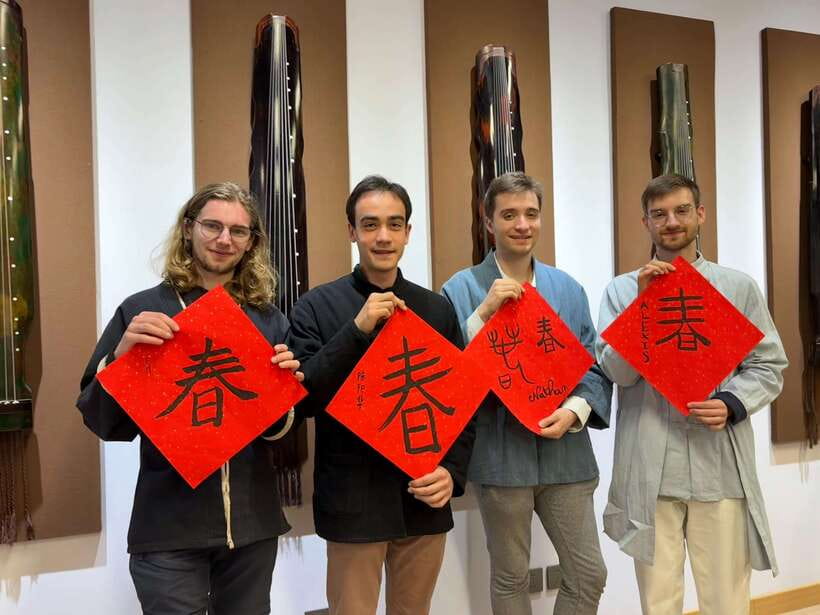
Meeting point is clear: you meet at Hua Gong station C exit (Line 7). It is about 30 minutes from Temple of Heaven by train time. The activity ends back at the same meeting point, so you do not need to figure out a second destination.
Arrive about 10 minutes early so you can get settled before the session begins. That “buffer” helps your guide start smoothly and keeps you from stressing about being late.
In one helpful real-world tip, Sylvia met guests at the metro entrance so they could find the art center easily. That is a good sign that the provider is paying attention to first-time visitors who may not read directions easily on their phone. Also, before the session, the team asked about allergies so they could cater. If you have any food sensitivities, tell them in advance so the tea portion goes smoothly.
Transportation and meals are not included. You will need to plan your own way there and then eat on your own schedule afterward.
If you are building your day, treat this as a scheduled cultural workshop block, not a casual stop.
What to bring so you leave with the experience, not a sore head
Here is your practical packing checklist for this style of event:
- A camera if you have one, because photos are part of the included program
- Comfortable clothes for the hanfu dressing session
- An extra 20 minutes of mental patience for dressing time if you are coming straight from walking around Beijing
Also, keep your schedule flexible. Starting times vary, since the activity length is listed as 2.5 hours and availability depends on the day.
Wheelchair accessible is listed, which is a relief if you need barrier-free movement inside.
Should you book Beijing Culture Event: Tea Ceremony, Music Show, Calligraphy?
I think you should book if you want a compact, hands-on arts education that hits tea, music, and calligraphy in one organized afternoon. The small group size, bilingual expert guidance, and the mix of watching plus doing are the winning combination. You are also getting hanfu, photos, and original souvenirs, which makes it feel complete for the money.
Skip it if you only want a long performance or if you prefer to learn at your own pace without ceremony and structured steps. Also, if you are not comfortable traveling by metro to a specific station meet-up, plan to build in extra buffer time.
If you do book, my best advice is simple: arrive 10 minutes early, tell the guide about any allergies beforehand, and treat the tea and calligraphy parts like hands-on classes, not just photo ops. That mindset is what turns the 2.5 hours into something you actually remember.
FAQ
How long is the Beijing Culture Event
It lasts about 2.5 hours. Starting times can vary, so you’ll want to check availability when you book.
Where do I meet for the experience
You meet at Hua Gong station C exit on Line 7, and the activity ends back at the meeting point.
What languages are used during the event
The instructor and guide support Chinese and English.
How big is the group
The experience is a small group limited to 8 participants.
What is included in the ticket price
Included items are water and tea, ticket to the show, hanfu rental, photoshooting, Guqin class, a professional guide or tutor who is one of the Guqin performance masters, and original souvenirs.
What should I wear or bring
Wear comfortable clothes for the hanfu dressing session. Bring your camera for the photo shoot, and arrive about 10 minutes early to get ready.
Latest reviews from Beijing
- 11-Day Private China Tour: Beijing, Lhasa, Xi’an and Shanghai★ 5.0 · 5 reviews
- From Beijing: JinShanLing Great Wall Bus Tour with Ticket★ 4.2 · 5 reviews
- Beijing: Jingshan Park Entry Ticket★ 5.0 · 5 reviews
- Beijing: Top Michelin Vegetarian Restaurant Reservation★ 5.0 · 5 reviews
- Lama Temple, Hutong and Silk & Pearl Market Private Day Tour★ 5.0 · 5 reviews
- Private Great Wall Hiking Tour: Jiankou to Mutianyu★ 5.0 · 5 reviews
- Beijing Golden Mask Dynasty Show With Private Transfer★ 4.8 · 5 reviews
- Beijing: Great Wall Hiking Tour from Jiankou to Mutianyu★ 5.0 · 5 reviews
Calligraphy Classes, compared.
Beijing Historic City Guided Walking Tour + Calligraphy Creation
Read our review →
Beijing Wangfujing Calligraphy Class by Forbidden City
Read our review →
Beijing Wangfujing Calligraphy Class Nearby Forbidden City
Read our review →
2-Hour Chinese Calligraphy with an Artist in Shanghai, China
Read our review →
Discover Old Beijing: Hutong Walking Tour & Calligraphy
Read our review →Browse the lists this tour appears in