
Reviewed · CALLIGRAPHY CLASSES
2-Hour Chinese Calligraphy with an Artist in Shanghai, China
Chinese calligraphy is interesting because it turns a writing system into visible character and slow, precise movement. I love the hands-on format, and I love that you leave with a fan souvenir you made yourself. The one thing to think about is that, like any creative skill, your first attempts may feel awkward until the brush starts obeying you.
This class is built to help you get over that first-brush panic. The teacher is often described as patient and encouraging, and the session starts with context so your strokes make sense before you make your own piece. If you can follow simple instructions in English, you will be fine.
You’ll meet at Yugucun (North Gate) and the workshop wraps back up at the same spot. It runs about two hours in a small group (max 8), and it includes tools, materials, plus tea or coffee, so you do not have to hunt down supplies or worry about bringing anything extra.
Key things to know before you go
- English instruction for a true beginner start with guided brush practice
- All materials included, so you can focus on learning instead of preparing
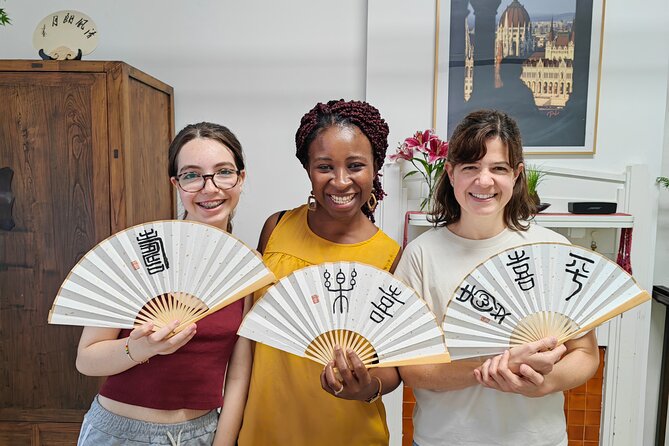
- You create a folding fan with your chosen Chinese character
- History and script background so the art looks deeper than street calligraphy
- Small-group teaching (max 8) for more individual correction
- Tea or coffee included, which makes the pace feel calm and local
Why this 2-hour calligraphy class beats another Shanghai checklist stop
Shanghai can feel like a constant motion machine. One museum day turns into another neighborhood hop, and suddenly you realize you’ve been looking at culture instead of touching it. This workshop is different because it asks your hands to join the story.
In about two hours, you get the full arc: a short introduction to calligraphy, a practical brush lesson, then real time creating your own work. That rhythm matters. You do not just hear about Chinese characters, you learn how to build them stroke by stroke, and you finish with something you can actually take home.
The fact that it is small-group teaching is a big deal too. With a group of up to eight, you have a better chance of getting quick corrections while you’re writing, not after you’ve already repeated a mistake for half the session.
More calligraphy classes in Shanghai:
- Shanghai: Zhujiajiao Water Town with Calligraphy Experience
★ 5.0 · 17 reviews - Private Qibao Ancient Town Walking Tour with Tea Tasting and Calligraphy Experience
★ 5.0 · 4 reviews - Beijing Calligraphy Class
★ 4.9 · 112 reviews
Meeting at Yugucun (North Gate): getting there without stress
The start point is Yugucun (North Gate), at 愚园路361弄3-127号, postcode 200040. The activity ends back at the same meeting point, so you do not have to plan a separate return.
Practically, this area is handy because it is near public transportation. People also mention that it feels a bit off the main tourist lanes, but directions are usually straightforward once you’re in the right lane. My advice: give yourself a few extra minutes the first time you go. You will spend more energy enjoying the class if you do not start it rushing.
Bring your phone for the mobile ticket. Confirmation comes at booking, and you’ll have what you need to check in. If you’re traveling with a service animal, the class allows service animals.
Chinese Calligraphy 101: what you learn before you touch the brush
The workshop starts with a brief overview of Chinese calligraphy history and how Chinese people think about this art form. That might sound “academic,” but in this case it acts like a tuning fork. Once you understand what calligraphy tries to express, the strokes stop looking like random marks.
Expect to hear stories behind great works of calligraphy and insights into how different scripts came to be. Even if you are only a complete beginner, this matters because calligraphy has rules. You’re not just decorating paper. You’re learning how the brush reflects structure, balance, and rhythm.
This is also where you get the mindset shift. In calligraphy, character form is inseparable from technique. So when you later practice, you’re not guessing. You’re building strokes with a reason.
Tools and technique: the stuff that makes your character look like a character
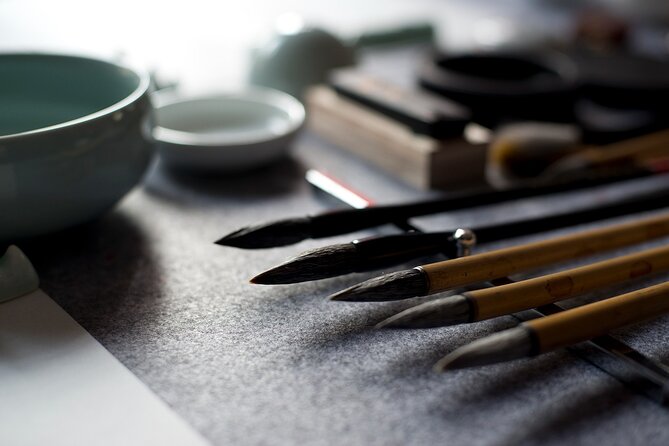
One of the best parts of this experience is that it is designed around ancient tools. You use traditional calligraphy equipment, and you learn the basic writing technique in a guided way.
You’ll go through the practical sequence:
- Learn how the tools work before you start drawing full characters
- Practice the fundamentals so your hand movement becomes more controlled
- Warm up to prepare for the final piece
This matters because beginners often struggle with two things at once: ink behavior and brush control. Ink can flow fast. That can feel magical, then it can feel messy. A good teacher helps you turn that into repeatable results.
You’ll also learn how to form the strokes for the Chinese characters you choose. Some students even ask for a specific style of script for their final piece, such as regular script rather than seal script, and the teaching can adapt to that interest.
A different sort of day out of Shanghai:
- Authentic Local Food Tour in Central Shanghai
★ 5.0 · 1,382 reviews - Zhujiajiao Water Town and Shanghai City Private Day Tour
★ 5.0 · 1,016 reviews - Private Shanghai Full Day City Tour with Old and New Highlights
★ 5.0 · 995 reviews - Shanghai: 3-Hour Local Food Tasting Tour
★ 4.9 · 806 reviews
What to do with your first shaky strokes
If your writing looks imperfect at the start, good. That’s the normal stage. Focus on learning what your brush should do, not on how pretty the first marks are.
Calligraphy is muscle memory plus correction. In a small class, you can get that correction in real time, and that speeds up the learning curve.
Warm-up practice: where the class gets fun
The warm-up segment is not filler time. It’s where your hand begins to understand the movement pattern needed for the final fan piece.
You practice the basics first, which reduces frustration later. By the time you’re ready to write your character for the final work, you have already gone through the “feel” of brush and ink, so you spend more time building your actual souvenir.
If you tend to second-guess yourself, warm-up is also your confidence builder. Your strokes improve because you’re trying again with the technique the instructor just explained.
The final work: making a traditional folding fan with your own character
The creative payoff is a traditional folding fan decorated with calligraphy. This is one of those “wow, that’s mine” souvenirs. It’s useful for visitors who want more than a photo and a keychain.
Here’s how the final step feels in practice:
- You choose your favorite Chinese character
- You write it on the fan with the calligraphy technique you learned
- The teacher helps refine technique so the finished piece looks intentional
There’s a pride factor here. Many people start thinking calligraphy is intimidating. Then, once they finish a fan with a real character written with real technique, the art suddenly feels personal.
Also, the fan format is smart. It gives your character a frame and a shape, so even a beginner’s first attempt has a clear visual structure. You get a finished artwork, not just a sheet of practice paper.
What if I want a certain style?
You might find the teacher is willing to talk style preferences. One student requested regular script instead of seal script for the final piece, and the instructor adapted. If you have a preference, it helps to say it early in the session, before you commit to a specific stroke structure.
Tea or coffee, small group teaching, and why the $50 price makes sense
At $50 per person for about two hours, this workshop is not trying to be a bargain. It is priced like a real studio lesson with real materials.
What makes the value strong is that the price includes:
- All tools and materials
- Instruction throughout
- Tea or coffee
- A finished souvenir in the form of your folding fan
In other words, you are paying for teaching time plus supplies plus the final craft product. If you’ve ever tried to buy calligraphy practice kits in a hurry, you know how quickly the cost can rise once you account for quality materials and guidance.
The small-group size (max 8) also supports the price. You’re not just sitting in a lecture. You get hands-on help while writing, which is where the class actually earns its value.
As for the vibe: many students describe the studio space as welcoming and calming. That matters in Shanghai, where you can burn energy without noticing it. Two hours in an air-conditioned, focused environment can feel like a reset.
Who should book this workshop, and who might not love it
This experience suits you if:
- You want a short, meaningful cultural activity that doesn’t require art experience
- You enjoy tactile learning, where you improve by doing
- You want a souvenir with actual skill behind it
- You like small-group settings with direct feedback
It might not be ideal if:
- You expect a long museum-style lecture with lots of viewing and historical depth beyond what fits in two hours
- You are mainly looking for street sightseeing and photo stops, because this is a working studio class
For best results, treat it like a lesson. Come ready to practice. Leave your perfectionist brain at the door.
Timing your day: morning, afternoon, or evening classes
You can pick morning, afternoon, or evening class times. Choose based on your energy.
- Morning works well if you still have mental space to concentrate on technique.
- Afternoon can pair nicely with lighter sightseeing, since you’ll be moving and then resting in the studio.
- Evening can work if you want a calm activity after a busy day, especially with the tea or coffee included.
One practical note: because the class ends back at the meeting point, pick a time that does not force you to sprint across the city right afterward.
What to bring (and what you can safely leave at home)
The key advantage here is simplicity. The workshop includes the tools and materials, plus instruction, and you get tea or coffee. You do not need to bring your own brush or paper.
Still, I recommend dressing comfortably. You might be leaning forward while writing, and you’ll want easy movement for brush control. Also, wear something you can handle in case you get a tiny ink splash. It happens sometimes with brush work, even when you’re being careful.
If you’re traveling with limited time, a two-hour workshop is a manageable slot. It gives you a real outcome without taking over your whole day.
Should you book 2-hour Chinese calligraphy with an artist in Shanghai?
Yes, if you want a hands-on cultural experience that produces a take-home artwork and teaches you real technique, not just a demo. The combination of English instruction, small-group teaching, and included materials makes it a practical choice for beginners.
Book it if you care about learning the “why” behind the art. The short calligraphy history and script context help you see what you’re doing, so your strokes feel purposeful, not random.
Skip it only if you want a long itinerary with lots of sightseeing stops. This is a studio lesson, and your best results come when you lean into it.
If you want one memorable, non-cookie-cutter activity in Shanghai, this is the kind that gives you a story you can carry home, in your hand, every time you unfold the fan.
FAQ
How long is the Chinese calligraphy workshop?
The workshop lasts about 2 hours.
Is the class taught in English?
Yes, the workshop is conducted in English.
What will I create during the class?
You will create your own artwork, a traditional folding fan decorated with Chinese calligraphy using a character you choose.
What is included in the $50 per person price?
The price includes all tools and materials, instruction, and tea or coffee.
How big is the class?
The class has a maximum of 8 travelers.
What is the cancellation policy?
Free cancellation is available. You can cancel up to 24 hours in advance for a full refund. If you cancel less than 24 hours before the start time, you will not receive a refund.
Latest reviews from Shanghai
- Shanghai to Beijing Bullet Train Ticket with Hongqiao Station Transfer★ 5.0 · 5 reviews
- Hangzhou Private Day Trip by Bullet Train from Shanghai★ 4.5 · 5 reviews
- Shanghai Era Theatre Acrobatics Show Ticket★ 5.0 · 5 reviews
- Online Cooking Class Fried Rice by Sunflower Li★ 4.5 · 5 reviews
- Shanghai in a Day: A Whirlwind Tour of the City’s Highlights★ 5.0 · 5 reviews
- Zhouzhuang and Tongli Water Town Private Transfer Service from Shanghai★ 5.0 · 5 reviews
- Shanghai Hongqiao Airport To Shanghai Hotel:Private transfer with Meet service★ 5.0 · 5 reviews
- Private Shanghai City Day Tour with Best Highlights and Shopping★ 5.0 · 5 reviews
Calligraphy Classes, compared.
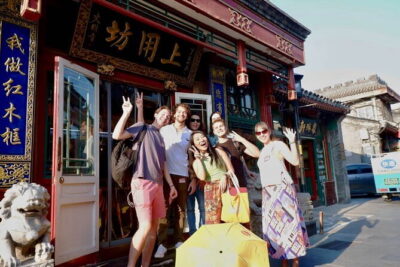
Beijing Historic City Guided Walking Tour + Calligraphy Creation
Read our review →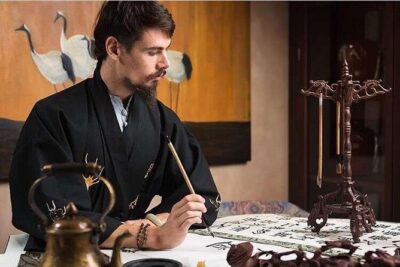
Beijing Wangfujing Calligraphy Class by Forbidden City
Read our review →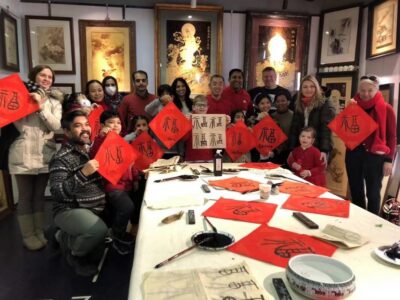
Beijing Wangfujing Calligraphy Class Nearby Forbidden City
Read our review →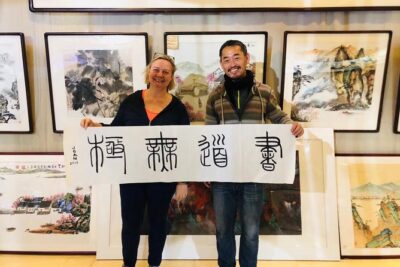
Discover Old Beijing: Hutong Walking Tour & Calligraphy
Read our review →
Zhujiajiao Water Town with Calligraphy Experience
Read our review →Browse the lists this tour appears in