
Reviewed · WALKING TOURS
Beijing: Peking University Campus Guided Walking Tour
A guided walk on the Peking University campus is interesting because the buildings, lakes, and stone symbols all connect to how PKU thinks, teaches, and remembers. I love that the route hits major landmarks like Boya Pagoda and Weiming Lake, and I love the way a current-student perspective makes the place feel alive, not staged. The only real drawback to know up front is that it is a fast 2 hours, so if you want slow strolling and lots of extra photos at every corner, plan for a sprint.
You start at the Peking University East Gate at the stone lion on the right when you face the gate, and you finish at the West Gate. The tour stays small, up to 10 people, and it is led in English, so questions are actually possible. If you get a guide like Henry, the experience is described as friendly, clear, and patient, even when families are in the group.
Key things to love on the PKU campus walk
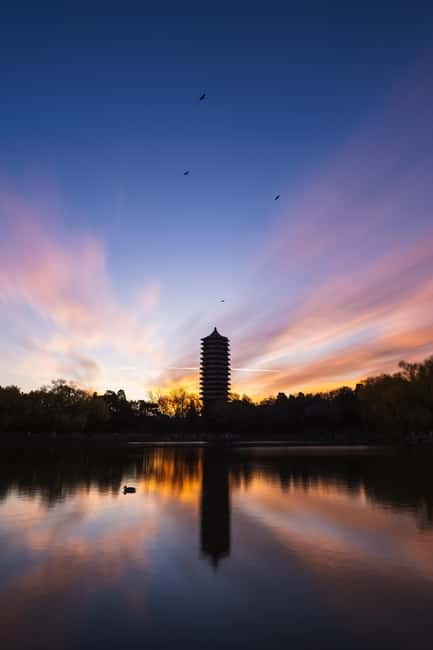
- Boya Pagoda, Weiming Lake, and the Bell Pavilion in one smooth route
- Student-life context from an English guide who can explain what daily campus culture feels like
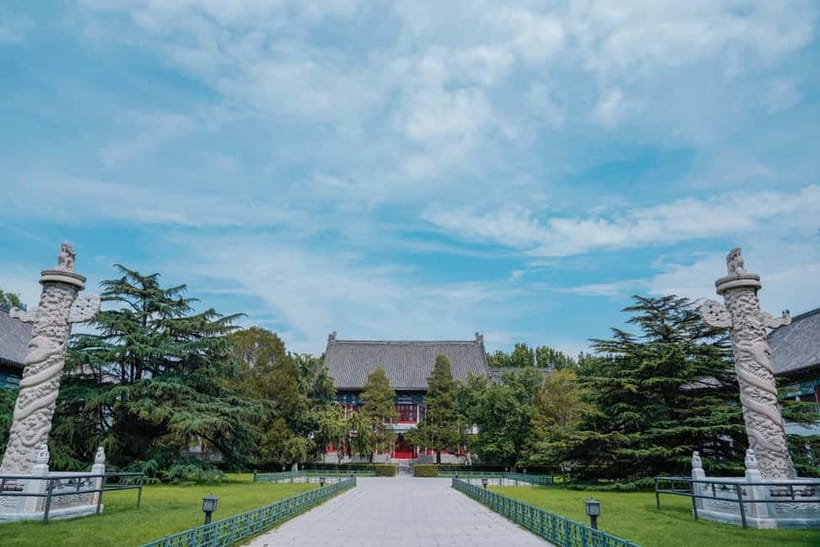
- Symbol spotting with Hua Biao ornamental pillars and Qilin statues
- PKU Library and Cai Yuanpei as the academic and ideological center of the campus
- Yenching University roots plus links to Yuanmingyuan and a Qing-era figure tied to the campus story
- Garden design meanings in courtyards and layouts built for harmony between nature and scholarship
Why Peking University feels like an outdoor classroom
Peking University is one of those places where you can walk past famous names and still miss the point. This guided campus walk helps you connect the physical space to the ideas behind it. You are not just ticking off sights. You are learning how PKU’s design and traditions reflect what the university values, then seeing how that shows up in student routines and campus culture.
What makes this tour work well is the structure. You move through signature stops, then each one comes with a story that explains why it is there and what it symbolizes. The route is also paced for real visitors, not marathon hikers. Two hours sounds short, but it is enough time to get your bearings, understand the campus logic, and see the key landmarks.
I also like that you get an English guide, and the group stays small (10 people max). That matters more than you might think. On a big bus tour, you hear a lot but ask nothing. Here, the atmosphere tends to feel like a guided walk with room for questions and clarifications.
More Walking Tours in Beijing
- Beijing Hutong Walking Food and Beer Tour at Hidden Restaurants
★ 5.0 · 1,132 reviews - Private Beijing Walking Tour of the Forbidden City with 7 Options
★ 5.0 · 675 reviews - Forbidden City Private Walking Tour with Optional Sights
★ 5.0 · 400 reviews
East Gate to West Gate: the 2-hour flow that keeps it doable

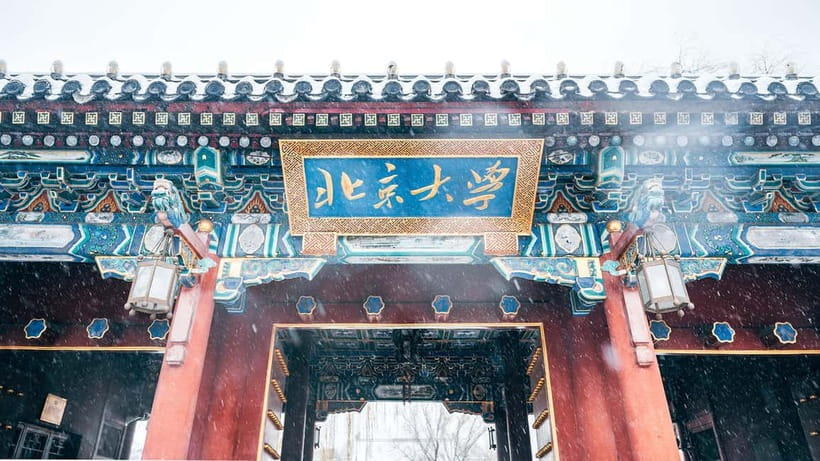
The tour starts at 北京大学东门 (Peking University East Gate). The meeting spot is specific: the stone lion on the right side when you face the entrance. That simple detail saves stress, especially if you are arriving on your own, trying to find the right entrance, or juggling a photo stop before the walk begins.
From there, the walk moves across the campus toward the West Gate, finishing at 北京大学西门. That end point is helpful because it prevents the common problem of tours that strand you back where you started. You end in a different area, which can make it easier to plan the next step of your day.
Time-wise, the tour is only 2 hours. The upside is it fits neatly into a sightseeing plan in Beijing. The tradeoff is you cannot expect long detours or extended stops at every spot. I treat this kind of campus tour like a foundation layer. You come away with key landmarks, key context, and a mental map. Then you can return later on your own if something grabs you.
Boya Pagoda, Weiming Lake, and the Bell Pavilion
The route’s first big emotional hit is the pairing of stone and water. You visit the Boya Pagoda, a century-old landmark with a reputation for being more than just a photo point. On a campus like PKU, age matters. Older structures tend to carry layers of meaning, and the guide’s job is to connect those layers to PKU’s academic identity.
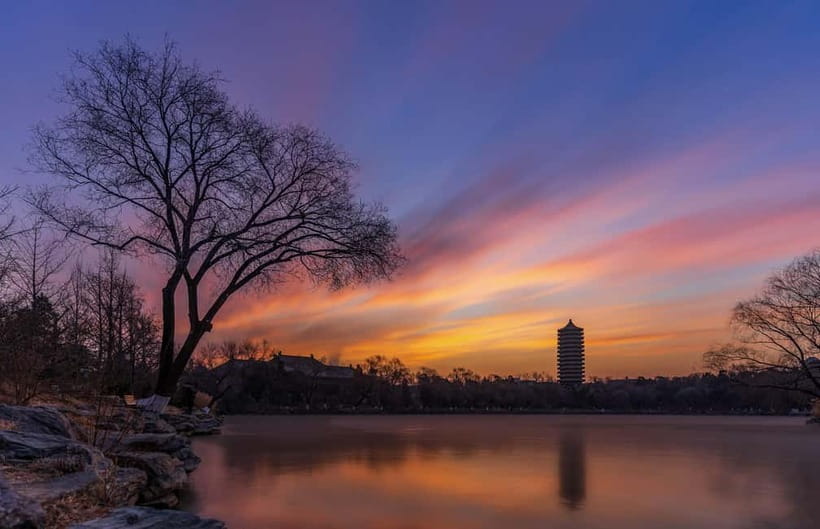
Next comes Weiming Lake, the kind of scenic campus stop that makes you slow down even when you know time is moving. Lakes in traditional university settings are not only decoration. They often reinforce the idea of calm focus, reflection, and study. When you understand that intention, the photos feel less random and more purposeful.
Then you reach the Bell Pavilion. This is one of those places where the name alone makes you curious, and the stories behind it help you see why it is tied to campus rhythm. A pavilion like this is typically designed to shape how the campus sounds, moves, or gathers. Even if you do not catch the bell at the right moment, you still learn what it represents.
A practical note: these are exterior landmarks. Bring good walking shoes, and expect that you will do real footwork on stone and paths around lakeside areas.
Hua Biao and Qilin statues: reading the stone symbols
After the scenic stops, the tour shifts into symbolism. You will see Hua Biao (ornamental pillars) and Qilin statues. These are not just decorative extras. In traditional Chinese architecture, symbolic creatures and carved structures often communicate values like protection, authority, and harmony between different parts of the environment.
On this tour, the guide’s explanations are the difference between looking at stone and actually understanding it. You learn to connect the campus’s visual language to the university’s cultural identity. That makes the walk feel smarter and more satisfying. You start spotting patterns instead of just receiving facts.
This is also a good section for families or first-time visitors to Beijing. Even if you are not a deep architecture fan, it gives you a clear way to interpret what you are seeing. And if you are a photo person, this is where you will likely get the most meaningful shots, because you will know what each element is trying to say.
More walks in Beijing:
- Beijing: Forbidden City and Tian’anmen Square Walking Tour
★ 4.9 · 322 reviews - Beijing Private Hutong Food Walking Tour
★ 5.0 · 299 reviews - Beijing: Hutong Culinary Walking Tour with 15+ Tastings
★ 5.0 · 162 reviews - Beijing: Highlights of Forbidden City Private Walking Tour
★ 5.0 · 104 reviews
PKU Library and the Cai Yuanpei statue: where ideas take form
The campus Library is a major anchor stop, and it is easy to understand why. A university’s most famous library is rarely just storage. It often represents the school’s mission to collect knowledge, develop research, and shape intellectual life.
On this tour, you do not just walk near impressive architecture. You get context for why PKU’s library space matters within the broader story of the institution. It helps you see the campus as a system where teaching, scholarship, and tradition are built into the physical layout.
Then you visit the Statue of Cai Yuanpei. Cai Yuanpei is described as a revolutionary former president of PKU, and that detail changes how you look at the statue. You are not only seeing a person in stone. You are also learning about leadership and educational reform, and how those themes connect to what PKU later became.
If you care about Chinese education history, this is one of the most powerful stops because it turns a statue into an entry point. You can walk away thinking, okay, this campus is not just famous because it is old. It is famous because people shaped it around ideas.
Yenching University roots, Yuanmingyuan ties, and the Heshen connection
One of the most interesting parts of the tour is the way it explains PKU’s evolution. You learn about PKU’s roots as Yenching University, which helps you understand that today’s PKU did not appear fully formed. Like many institutions with long timelines, it grew through different eras and influences.
The guide also connects PKU’s story to the Old Summer Palace (Yuanmingyuan). That link adds drama and historical weight, and it gives you a wider frame for what you are seeing in Beijing. You start to realize that campus history sits inside bigger city and national narratives.
Then you hear a connection to Heshen, the infamous Qing Dynasty official. The point is not to turn the campus into a scandal tour. Instead, it gives historical context for how different people and events can shape institutions, land use, or the meaning of places over time.
This section is valuable because it prevents a common mistake. Many first-time visitors treat historic sites as isolated islands. Here, the stories connect PKU to Beijing’s broader historical layers. Even if you only remember one or two names, you will leave with a more complete sense of how deep the campus story can go.
Traditional Chinese gardens and courtyards: the design logic behind the calm
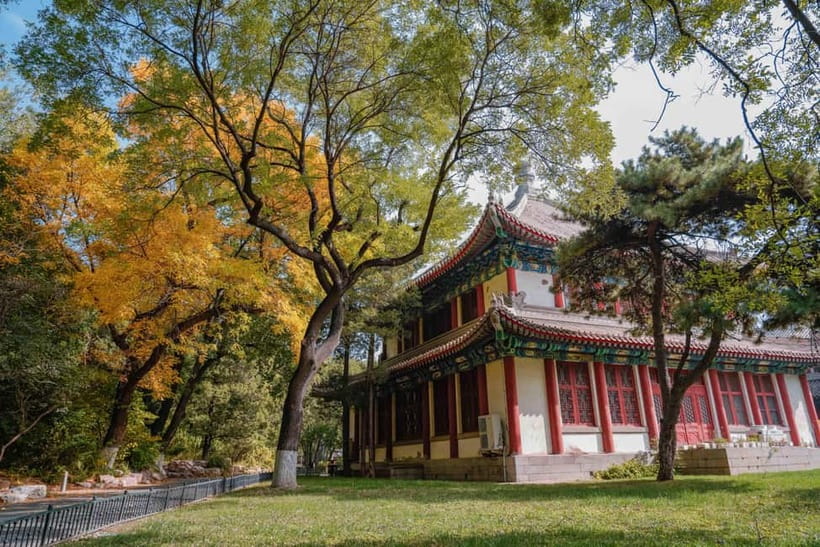
After the major landmarks and historical context, the tour gets more subtle. You uncover the hidden meanings behind PKU’s traditional Chinese gardens, courtyards, and building layouts. The key idea you get is harmony between nature and scholarship.
That sounds poetic, but it translates into real design choices. On a campus walk, you notice how spaces open and close, where sightlines lead, and how gardens frame movement. When the guide explains the meaning, you start understanding why some courtyards feel quiet even when the campus is active.
Courtyard layouts and garden design are often built to encourage focus. They create transitions from public bustle to reflective spaces. That matters at a university because students are constantly switching between social life, study, and informal discussion.
I also like that this part of the tour gives you something you can apply later. If you walk PKU after the tour, you will start mapping the meanings yourself. You will know what to look for, like symmetry cues, directional layout hints, and how water and greenery shape your route.
Student life perspective, alumni energy, and how the guide keeps it human
The tour is led by a current student, and that changes the tone. Landmark explanations are one thing. Student-life insight is another. A guide who is living the campus today can point out details that a guide without that daily perspective might miss.
In particular, English guides like Henry are described as friendly and informative, with explanations that are careful and clear. There is also emphasis on patience, including with kids. That tells me this tour is designed for more than just architecture nerds. It is a flexible format that works if you are traveling with family or if you simply want the stories told in a way that stays understandable.
You also hear how PKU traditions connect to famous alumni and modern-day campus life. That’s important because PKU has a reputation. Without context, that reputation can feel abstract. With a student guide, it becomes more concrete, like you are seeing the institution from the inside rather than only from the brochure.
Price and value: is $39 for 2 hours fair?
At $39 per person for a 2-hour guided walking tour, you are paying for three things: access to guided storytelling, a structured route through major highlights, and an English-speaking guide who can connect history to the campus layout.
It is not a museum ticket price. It is closer to paying for interpretation. That can be great value if you would otherwise wander without context. On a major campus, it is easy to miss the meaning behind key landmarks. Paying for a guide is how you turn a campus stroll into an educational experience.
Two practical cost notes to keep expectations straight:
- Food and drinks are not included. You should plan for water and snacks if you need them.
- Transportation to and from the university is not included, so you will still handle getting there on your own.
Group size is limited to 10 participants. Smaller groups often mean better pacing and more chance to ask questions, which supports the value. And if you only have half a day in Beijing, this kind of priced, time-contained tour is easier to slot in than options that stretch into full-day commitments.
Practical tips so you enjoy the walk instead of racing it
This tour is a walking experience, so you will want to pack for movement, not just sightseeing.
- Wear comfortable shoes. Campus paths can add up fast, and you do not want to lose attention because your feet hurt.
- Bring a camera. The pagoda, lake, pavilion, pillars, and statues offer photo opportunities where context helps your shots look better.
- Expect an English-speaking guide, so if you are relying on translation from another language, this tour should feel smoother.
For timing, think of it as a foundation visit. You likely will not see every corner of PKU in two hours. Instead, you get the big landmarks, the symbolic ones, and the historical context that helps you navigate better later.
Who should book this PKU guided walking tour
I think this tour is a strong fit if you:
- Want a first-time orientation to Peking University without getting lost in your own questions.
- Like history, architecture details, or symbolic elements like Hua Biao and Qilin statues.
- Prefer small-group experiences where your guide can answer follow-ups.
- Are traveling with kids or mixed ages and want a guide who can stay patient and clear.
You might skip or supplement it if you:
- Want a long, unhurried explore with lots of free time inside buildings. This is built around guided walking and stops.
- Plan to spend most of your time shopping, eating, or doing solo wandering. You will still have some time to look around, but it is not a do-everything campus day.
Should you book this tour is mostly about whether you want context. If you do, the $39 price for a tight route makes a lot of sense.
Should you book this guided campus walk?
Yes, if you want the PKU campus to make sense quickly. This tour is built to connect the most recognizable landmarks with the ideas behind them, including the evolution from Yenching University, links to Yuanmingyuan, and historical context involving Heshen. The Boya Pagoda, Weiming Lake, and Bell Pavilion sequence gives you great visual variety, while the library, Cai Yuanpei statue, and garden symbolism give you meaning.
If your schedule is tight in Beijing, or you do not want to spend your limited time guessing what you are looking at, this is a smart way to get an authentic, guided view. Bring comfortable shoes, a camera, and a curious mindset, and you will leave with a mental map of PKU that you can actually use.
FAQ
How long is the Peking University campus guided walking tour?
The tour lasts 2 hours.
What is the meeting point for the tour?
Meet at Peking University East Gate. The exact spot is the stone lion on the right side when facing the gate entrance.
Where does the tour end?
The tour finishes at Peking University West Gate.
Is the tour guided in English?
Yes, the live tour guide speaks English.
How big is the group?
It is a small group, limited to 10 participants.
What is included in the $39 price, and is food provided?
The price includes a 2-hour guided walking tour, visits to historical landmarks, exploration of cultural sites, and stories about PKU’s history and insights into student life. Food and drinks are not included.
Latest reviews from Beijing
- 11-Day Private China Tour: Beijing, Lhasa, Xi’an and Shanghai★ 5.0 · 5 reviews
- From Beijing: JinShanLing Great Wall Bus Tour with Ticket★ 4.2 · 5 reviews
- Beijing: Jingshan Park Entry Ticket★ 5.0 · 5 reviews
- Beijing: Top Michelin Vegetarian Restaurant Reservation★ 5.0 · 5 reviews
- Beijing Culture Event: Tea Ceremony, Music Show, Calligraphy★ 5.0 · 5 reviews
- Lama Temple, Hutong and Silk & Pearl Market Private Day Tour★ 5.0 · 5 reviews
- Private Great Wall Hiking Tour: Jiankou to Mutianyu★ 5.0 · 5 reviews
- Beijing Golden Mask Dynasty Show With Private Transfer★ 4.8 · 5 reviews
Walking Tours, compared.

Beijing Hutong Walking Food and Beer Tour at Hidden Restaurants
Read our review →
Private Beijing Walking Tour of the Forbidden City with 7 Options
Read our review →
Dark Side of Hong Kong – Kowloon Caged Homes Walking Tour
Read our review →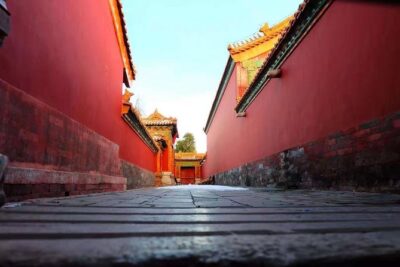
Forbidden City Private Walking Tour with Optional Sights
Read our review →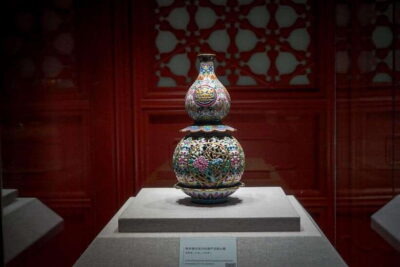
Forbidden City and Tian’anmen Square Walking Tour
Read our review →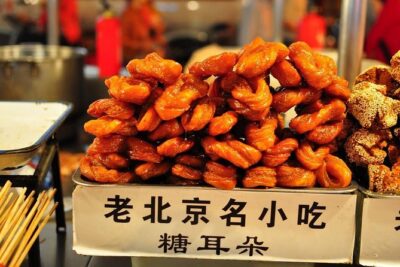
Shanghai City Guided Walking Tour | China’s 1st and Best Rated
Read our review →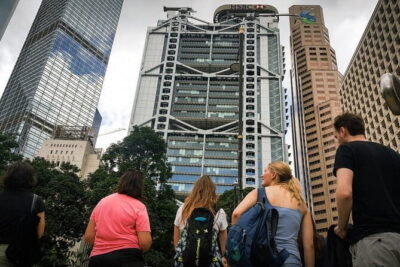
Introduction to Hong Kong: Central Tip Based Walking Tour
Read our review →Browse the lists this tour appears in