
Reviewed · WALKING TOURS
Introduction to Hong Kong: Central Tip Based Walking Tour
This is an interesting Hong Kong Central walk because it connects big-city power to everyday sights, from courthouse principles to incense-filled temple halls. I especially like the personal guide stories, the kind that make the One Country, Two Systems idea feel less like a slogan and more like something you can notice in streets, rules, and buildings.
I also like that it’s a short, focused loop with free stop entry and a hands-on finale at Man Mo Temple. The only drawback is pace and terrain, the route mixes city sidewalks with escalator travel, so bring solid shoes and be ready to keep moving for about 2 hours.
Key things that make this Central walk worth your time
- One Country, Two Systems, explained through the Court of Final Appeal in plain language.
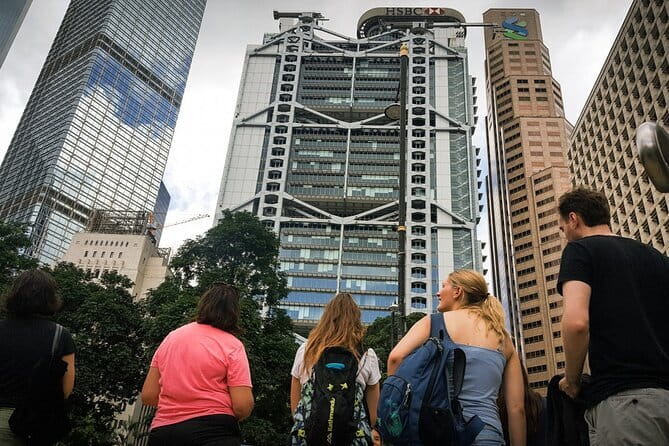
- HSBC vs Bank of China at Statue Square, where you learn how architecture and Feng Shui get folded into finance.
- Money, currency, and coastline history at the HSBC Main Building, including what the guardian lions symbolize.
- Central-Mid-Levels Escalators as urban problem-solving, not just a tourist ride.
- Wellington Street food clues (wonton noodles and egg tart) to help you plan your next meal.
- Man Mo Temple participation, offering incense and joining the bell and drum ritual.
What you’re really doing on this 2-hour Central-to-Sheung Wan route
This tour is not about ticking off landmarks. It’s about seeing Hong Kong as one connected system: government, money, architecture, and ritual all shaping how people live and move.
You’ll start in Central, then work your way toward Sheung Wan, ending at Man Mo Temple. Along the way, you get short, guided stops at places that are easy to find on the map but hard to understand on your own unless someone puts the meaning in context.
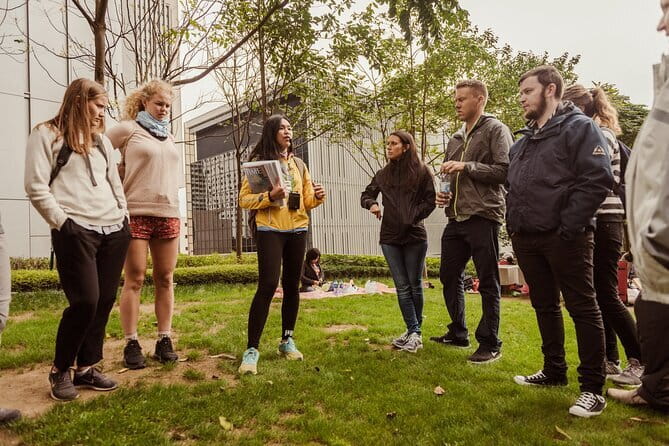
The “tip-based” style also matters. The listed price is very low for a guided 2-hour walk, so the real value is the guide’s explanations and your willingness to tip if you enjoy the way they tell the story. With a max group size of 30, it also tends to feel social enough to ask questions, without turning into a chaotic pack.
More Walking Tours in Hong Kong
- Dark Side of Hong Kong – Kowloon Caged Homes Walking Tour
★ 5.0 · 418 reviews - Full-Day Private Customized Walking Tour of Hong Kong
★ 5.0 · 106 reviews - Hong Kong: Kowloon Street Market & Food Culture Walking Tour
★ 5.0 · 105 reviews
Entering Hong Kong’s legal world at the Court of Final Appeal
The first stop sets the tone. You’ll look at the Court of Final Appeal and get a practical explanation of how One Country, Two Systems plays out in daily life through law.
Here’s the point I think helps most: you’re not just hearing trivia about legal systems. You’re getting the mental framework for why certain rules, decisions, and public expectations can feel different from mainland China even today. The tour frames it as the interplay between British common law and Chinese continental law.
Practical note: courthouse surroundings can feel formal and quiet. Plan to speak softly, keep your phone ready for skyline shots, and expect this to be more “observe and listen” than “walk around and linger.”
Statue Square’s HSBC and Bank of China rivalry, Feng Shui as a finance tool
At Statue Square, the tour shifts from courts to cash. You’ll learn about an architectural showdown between HSBC and the Bank of China, explained through a Feng Shui battle for financial dominance.
I like this stop because it’s a Hong Kong-style reality check. People tend to assume finance is only spreadsheets and trading floors. Here you see that in Hong Kong, symbolism and belief can be part of how institutions project power.
What to watch for:
- The way the buildings face and relate to the street space.
- Any design clues your guide points out about intention and positioning.
- How that story connects back to what you learned at the courthouse stop.
If you prefer history with strong visuals, this is one of the easiest moments to follow along.
HSBC Main Building: guardian lions, currency stability, and older Hong Kong than you expect

Next up is the HSBC Main Building, where the tour ties together three things: monetary stability, symbolic guardians, and the city’s long relationship with the coastline.
You’ll hear about the bank’s role in the currency peg, and you’ll also get the background behind the HSBC guardian lions. The tour includes the idea that Hong Kong’s dramatic coastline reclamation since 1842 is tied to how the city grew into its financial role.
This stop is a good one for photos, but it’s also a good one for understanding. A lot of visitors see the building as just another landmark. The guide pushes you to see it as a physical record of how Hong Kong built itself around money and trade.
More walks in Hong Kong:
- Organic Chinese Dumpling Class with Market Walk
★ 5.0 · 88 reviews - Private Half-Day Real Hong Kong Walking Tour
★ 5.0 · 70 reviews - Organic Xiao Long Bao Soup Dumpling Class & Market Walk
★ 5.0 · 62 reviews - The Authentic Hong Kong – Private Walking Tour
★ 5.0 · 55 reviews
St. John’s Cathedral and Queen’s Road Central: British origin, then the rent economy reality

St. John’s Cathedral brings the British-era story into focus. The tour explains Hong Kong’s birth under British rule, starting with British possession in 1842 and ending with the handover back to China in 1997. You’ll also hear a personal Hong Kong story from your guide, which is the kind of detail that makes big political dates feel less distant.
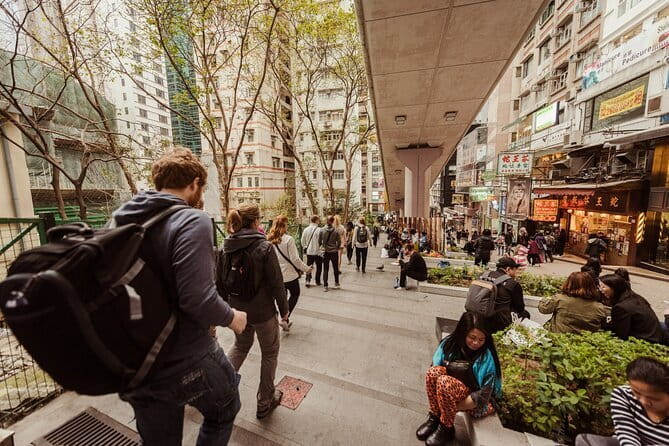
Then the route turns toward Queen’s Road Central and the extreme rental economy. This is where the tour stops being only about politics and starts showing how economics changes everyday space.
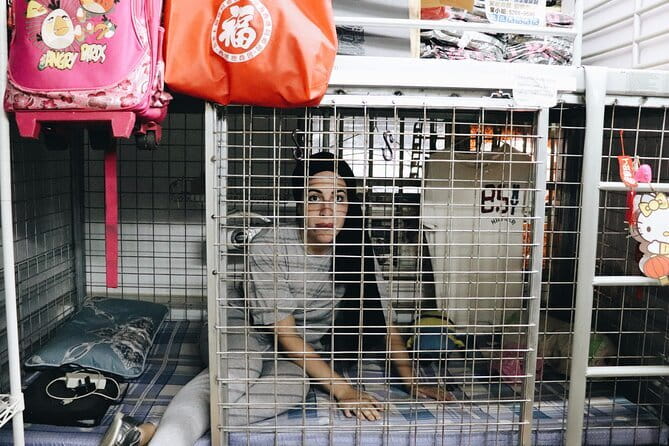
You’ll learn how Hong Kong’s rent pressure has shaped the urban layout, including the reality of subdivided living units. Even if you already knew the headlines, I find it helps to see the city blocks that created the conditions for that housing story, rather than reading it in an article.
Watch for:
- How the street looks in layers, older structures and newer towers sitting side by side.
- How commercial density and sidewalk patterns hint at where space gets squeezed.
This is also a good moment to ask your guide a question like, What does this neighborhood feel like to locals day to day?
Central-Mid-Levels Escalators: the world-famous ride as urban engineering
Now you get the signature Hong Kong movement system: the Central-Mid-Levels Escalators. The tour frames them as more than a tourist gimmick, it’s an urban solution connecting steep hillside neighborhoods.
The key idea is engineering shaped by daily geography. Hong Kong’s hills make walking tough, so the city built a vertical transit shortcut that became part of the neighborhood experience. You’ll get the story behind the world’s longest outdoor escalator system and the engineering challenges involved.
This stop has two benefits:
- It gives your legs a break while still keeping you moving through the city.
- It shows how Hong Kong solves problems with infrastructure that doubles as public space.
My practical tip: dress for the outdoors. Even if you’re riding an escalator, you’re still exposed to weather, wind, and sun.
Wellington Street and the Hong Kong food identity you can keep using later
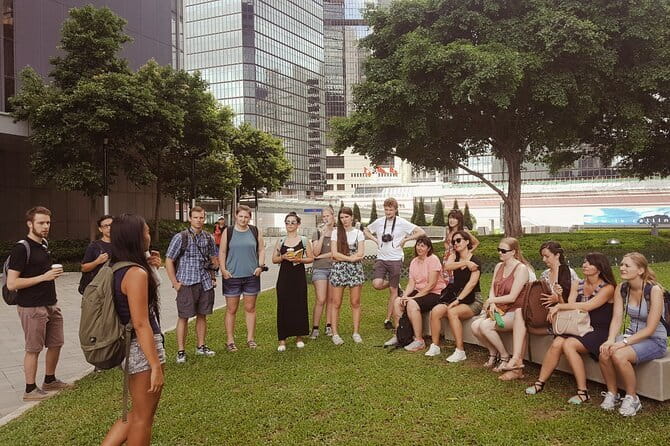
At Wellington Street, the tour shifts to food culture. You’ll get an intro to Hong Kong’s iconic culinary identity through dishes such as wonton noodles and egg tart.
The guide also provides a short list of area food ideas to use after the tour. Even if you’re only staying a few days, this is the useful kind of guidance because it helps you eat nearby, based on local context, not random tourist menus.
What I like here is the connection back to the theme of everyday life. You’ve been hearing about courts, banks, and urban planning. Then suddenly you’re in a street where food routines are part of the cultural map.
If you’re the type who wants a meal with a story, this is one of the more fun parts of the walk.
Man Mo Temple: hands-on incense, bell, drum, and the social side of belief
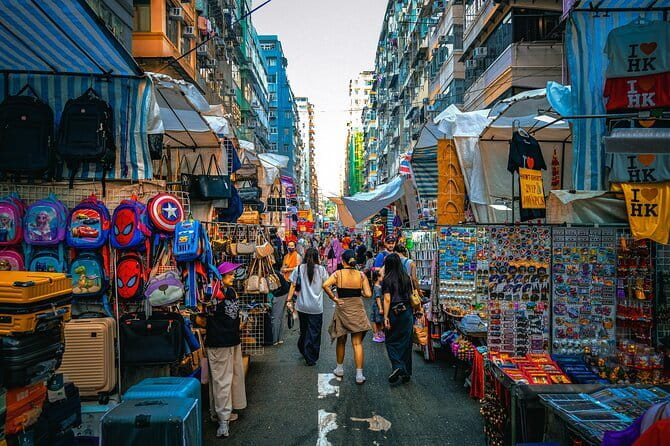
The finale is Man Mo Temple, in Sheung Wan, with the end point at 124-130 Hollywood Road. This is where the tour’s title theme comes alive in the most literal way.
You’ll join a guided practice of offering incenses, ringing the bell, and striking the drum. The experience is hands-on, and it’s described as socially engaging, which fits how temples often work in Hong Kong, people watch, participate, and share space.
I also like that this stop ties back to the earlier theme about incense coils and how ritual can tell a story about a city’s evolving identity. If you’ve walked through formal institutions earlier, this temple moment gives you a counterpoint: Hong Kong isn’t only built with banks and courts, it’s also built with daily practices of hope, luck, and community.
Practical note: the temple space can feel smoky and crowded depending on the time. Go in with patience, keep your phone steady for photos, and follow your guide’s lead for how to participate respectfully.
Why the guide’s approach is the real value (and what to look for)
The tour is led by a professional local guide, and the strongest feedback centers on how clearly they connect the dots. People have praised guides for being intelligent and helpful, and for combining patience with well-timed explanations.
Two guide names show up in the guide quality highlights: Andy and Stephen. The common threads are clear. They’re good at explaining the city’s changes, they share personal Hong Kong perspectives, and they keep the pace friendly without turning the walk into a lecture.
You can test this quickly in the moment. If you ask a question and your guide answers in a way that makes you see the street differently afterward, you’re in the right hands. That’s what you should aim for on a walking tour.
Price and value: how this $2.63 listed cost makes sense in context
At $2.63 per person for a roughly 2-hour guided walk, this is priced like a bargain. The key reason it can feel like good value is that you’re paying for interpretation, not for add-ons.
What helps the cost make sense:
- A professional local guide and personal storytelling style.
- Stops that are listed with free admission ticket during the walk.
- A route that combines multiple major Central and Sheung Wan landmarks in one go.
- A mobile ticket, which reduces hassle on the day.
The “tip-based” setup is the part to plan for. Think of the listed price as your entry to the experience, and then tip based on how much you enjoyed the guide’s effort and explanations.
Logistics that matter on the day
This tour runs for about 2 hours and starts at 11:00 am. The meeting point is Central MTR Station, exit K, in Central. It ends at Man Mo Temple in Sheung Wan, at 124-130 Hollywood Road.
Group size stays capped at 30 travelers, which helps keep the walk comfortable. It also has a minimum traveler requirement, so if that threshold isn’t met, the experience may be rescheduled or refunded.
Weather matters too. Since much of the walk is outdoors, the tour requires good weather. If rain threatens your day, plan a backup outfit and check conditions.
Who this tour suits best
I’d put this tour at the top of your list if you want:
- A big picture understanding of Central Hong Kong without reading a book.
- A walk that connects politics, architecture, and everyday culture.
- A route that works well when you only have a couple hours.
It’s also a great fit if you like practical context, the kind that helps you understand why Hong Kong looks the way it does and why it works the way it does.
If you hate walking or you’re very sensitive to crowds, note that this is a city-center route and includes outdoor stretches. You can still enjoy it, but wear comfortable shoes and take small breaks.
Should you book this Central tip-based Hong Kong walk?
Yes, I think you should consider booking if you want to get oriented fast and still go beyond the basic skyline photos. The combination of Court of Final Appeal context, HSBC and Bank of China symbolism, the Central-Mid-Levels Escalators, and a hands-on Man Mo Temple finish makes this more than a standard landmark stroll.
Also, it’s a very safe bet on quality. The tour has a strong performance record, with a 5-star average rating and 100% recommendation, and it keeps drawing repeat bookings recently.
Do it if you’ll pay attention. You’ll get more from this tour if you’re curious and willing to ask one question at the next stop. If you want pure sightseeing with zero story, you might feel it’s more talk than you expect. But if you want meaning, this is a smart, good-value way to spend your morning.
FAQ
What is the duration of the Hong Kong Central tip-based walking tour?
It runs for about 2 hours.
Where does the tour start and end?
It starts at Central MTR Station, exit K, in Central, and ends at Man Mo Temple, 124-130 Hollywood Road, Sheung Wan.
What time does the tour begin?
The start time is 11:00 am.
How much does it cost?
The price is $2.63 per person.
Is this tour guided?
Yes. It includes a professional local guide.
Is food included in the tour?
No. Food or beverage tasting is not included.
What is the group size?
The tour has a maximum of 30 travelers.
Do I need to buy tickets for the stops?
The stops are listed with free admission tickets.
What if the weather is bad?
The tour requires good weather. If it’s canceled due to poor weather, you’ll be offered another date or a full refund.
Are there cancellation options?
Free cancellation is available. You can cancel up to 24 hours in advance for a full refund.
Latest reviews from Hong Kong
- Lantau Island Private Tour to Big Buddha and Tai O Village★ 5.0 · 24 reviews
- Private custom tour of Hong Kong – 3 hours★ 5.0 · 25 reviews
- Hong Kong: Airport Express e-Ticket (Kowloon/HK/Tsing Yi)★ 4.0 · 25 reviews
- Tram & Treats – Private Culinary tour of Hong Kong★ 5.0 · 26 reviews
- Best Seller: VIP Lantau Tai O Tour Priority Cable Car, Big Buddha★ 4.5 · 28 reviews
- Private custom tour of Hong Kong – Full day★ 5.0 · 28 reviews
- Private 4-Hour Hong Kong City Tour – Customized Experience★ 5.0 · 30 reviews
- Hong Kong: Lantau Big Buddha Tour with Cable Car★ 4.5 · 31 reviews
Walking Tours, compared.

Beijing Hutong Walking Food and Beer Tour at Hidden Restaurants
Read our review →
Private Beijing Walking Tour of the Forbidden City with 7 Options
Read our review →
Dark Side of Hong Kong – Kowloon Caged Homes Walking Tour
Read our review →
Forbidden City Private Walking Tour with Optional Sights
Read our review →
Forbidden City and Tian’anmen Square Walking Tour
Read our review →
Shanghai City Guided Walking Tour | China’s 1st and Best Rated
Read our review →
Browse the lists this tour appears in