
Reviewed · FOOD & DRINK
Hong Kong: Kowloon Street Market & Food Culture Walking Tour
Kowloon has a talent for feeding you while it teaches you, and this walking tour is built for both. You get a local guide to handle navigation through working neighborhoods, so you can focus on food, stories, and what makes Mong Kok tick. I also like that snacks are included, which turns the tour into a real value, not just a walking lecture.
One possible drawback: it’s a street-food style route, so you’ll be on your feet a good chunk of the time. If you have strong food limits or you really need frequent seated breaks, plan with that in mind.
Key things I’d highlight before you go
- Small group, street-level pace: max 6 people keeps it personal and easier to ask questions.
- Snack budget is covered: you won’t have to add tastings on top of the ticket price.
- Food tied to Hong Kong history: each stop connects food to trade, industry, and daily life.
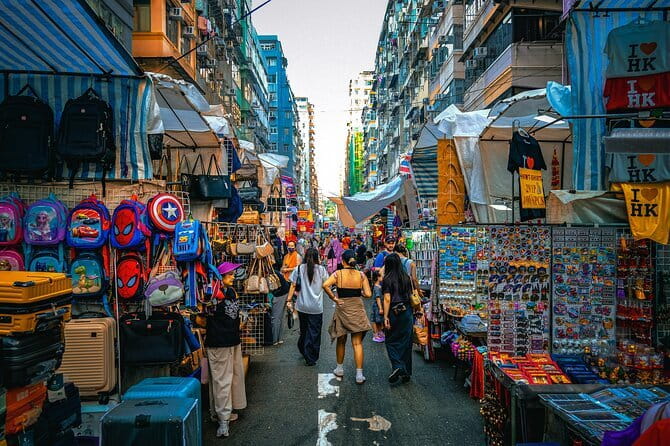
- You follow local routes, not checklist attractions: places like wet market style streets are the point.
- A guided story makes the details click: expect cultural context as you walk.
Why This Kowloon Street Food Tour Feels Practical, Not Tourist-Perfume
What makes this experience work is the structure: you move stop to stop, and each stop has a reason. You’re not wandering randomly, and you’re not stuck reading signs you can’t translate. A good guide can turn a “what is that?” moment into a real understanding of how Hong Kong runs.
I also like how the tour is built for people who don’t want the hassle of planning. You get navigation handled, plus the snacks are included, so you don’t have to keep deciding what to buy. That matters in Hong Kong, where you can easily burn time figuring out what’s worth the money.
The food angle is smart, too. The stops focus on places visitors often skip, including market streets and small specialty shops, so you’re seeing how locals eat and shop on normal days.
More Food & Drink in Hong Kong
- Hong Kong’s Tin Hau Hidden Eats Food Tour with 7+ Local Tastings
★ 5.0 · 352 reviews - Small-Group Hong Kong Island Food Tour
★ 5.0 · 343 reviews - Hong Kong Food Tour: Central and Sheung Wan Districts
★ 5.0 · 333 reviews
Meeting at Prince Edward, Ending at Ladies Market (and Why That Route Makes Sense)
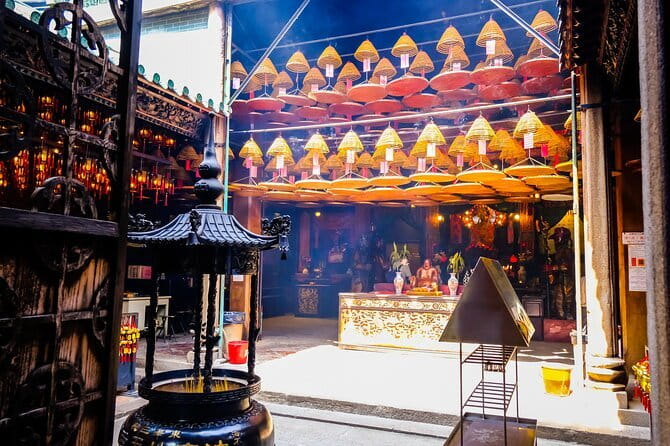
You start at Prince Edward Station, Prince Edward Road West, and you finish at Ladies’ Market on Tung Choi Street in Mong Kok. That line alone is a hint at the tour’s theme: you’re moving through areas where everyday commerce and food culture blend together.
The start time is 3:00 pm. Late afternoon works well for street food because you get that in-between light, when markets and shopfronts feel active without the day fully burning off.
Also, the tour uses a mobile ticket, which is a small detail but a real time saver. In a city that runs on transit and quick moves, not dealing with paperwork helps.
Goldfish Street (Tung Choi Street): When Rent, Trade, and Curiosity Collide
Your walk begins at Goldfish Street (Tung Choi Street). This street uses goldfish as the entry point, but the story is really about economics and how changing costs reshape what people can do.
You learn how multi-million dollar shop sales and soaring rents push local culture upward, into “upstairs” businesses that many visitors never notice. It’s a great first stop because it sets your expectations: Hong Kong isn’t just food, it’s systems, schedules, and survival.
What you should pay attention to here: look up as you walk. Shopfronts can be the visible layer, while the real action happens behind doors, floors above, or in spaces that don’t look like much at street level.
Possible drawback: the emphasis is more on the cultural explanation than on sampling. If you’re hoping for immediate mouthfuls in the first minutes, bring the mindset that the food comes quickly after.
Kiu Ming Mansion: Hong Kong’s Ultra-Import Reality, Served as Fruit

Next is Kiu Ming Mansion, and the point is blunt but fascinating: Hong Kong grows almost nothing. With agriculture at about 0.1%, the city depends on logistics, daily planning, and airlift connections to feed its own tastes.
You’ll hear how fruit arrives on schedules that feel almost overnight. The tour frames it as a kind of culinary math: you don’t just buy fruit, you buy timing.
What’s useful for you: this stop changes how you read the rest of the food scene. When you understand that freshness depends on movement, you’ll get why certain shops talk about preservation, climate, and delivery like it’s part of the recipe.
More Walking Tours in Hong Kong
- Dark Side of Hong Kong – Kowloon Caged Homes Walking Tour
★ 5.0 · 418 reviews - Introduction to Hong Kong: Central Tip Based Walking Tour
★ 5.0 · 202 reviews - Full-Day Private Customized Walking Tour of Hong Kong
★ 5.0 · 106 reviews - Organic Chinese Dumpling Class with Market Walk
★ 5.0 · 88 reviews
Ki Tsui Cake Shop: Walnut Cookies as Cultural Memory
At Ki Tsui Cake Shop, the theme shifts from supply chains to what food preserves. The focus here is on baking as memory, and you’ll taste walnut cookies that help explain how small treats carry identity.
This is the kind of stop I love when I’m trying to understand a place beyond “what should I eat.” It shows how Hong Kong turns tradition into something you can hold in your hand, bring home, and share.
How to get the most out of it: take a second after you taste to think about texture and sweetness level. The guide’s explanations are meant to connect flavor to heritage and Hong Kong’s evolving identity.
136A Fa Yuen St and Pat Chun: The Post-War Boom, Bottled
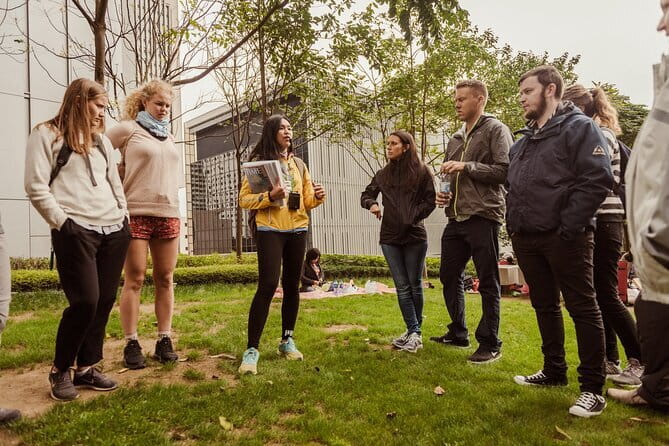
Then you head to 136A Fa Yuen St for Pat Chun. The story here is about the post-war baby boom and how one brand’s commitment to Hong Kong meant resisting made-in-China pressures, preserving tradition in what ends up in the bottle.
This stop is a good reminder that Hong Kong has always been adapting, even when it insists on keeping certain standards. Food culture is not only about ingredients, it’s also about who made it, where it came from, and what choices a company keeps repeating.
What you might notice: shops like this often feel old-world even when the products are still very current. If you like brands with a visible line from past to present, this is a satisfying moment.
Hong Kong Jockey Club Off-Course Betting Branches: Gambling, Law, and Public Services
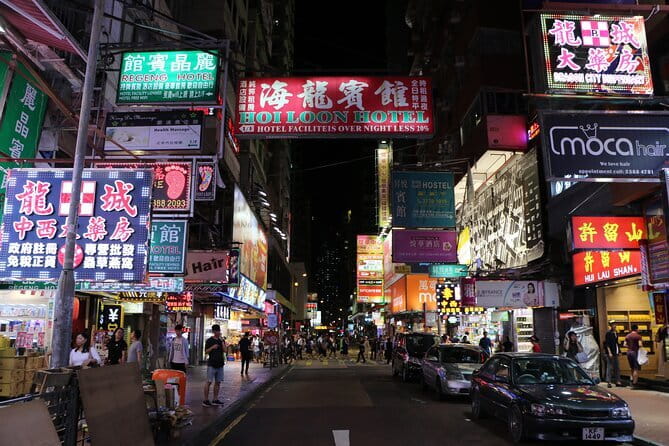
At Arygle Street in Mong Kok, you’ll stop at Hong Kong Jockey Club off-course betting branches. The tour connects mahjong and the Jockey Club to a unique social contract shaped by colonial law meeting local tradition.
The takeaway is practical: money from gambling has historically been tied to public services. So instead of treating gambling as just a vice, the tour shows it as part of how Hong Kong funds its civic life.
Why this matters for a food tour: because Hong Kong street food doesn’t exist in a vacuum. Everything you eat sits inside a city structure, with laws, institutions, and money flows.
Possible drawback: this is less about tasting and more about understanding. If you want food-only, you’ll still learn something, but you may feel this portion is more lecture-style than snack-heavy.
1031A Canton Rd Marinated Store: Preservation as a Creative Answer to Climate
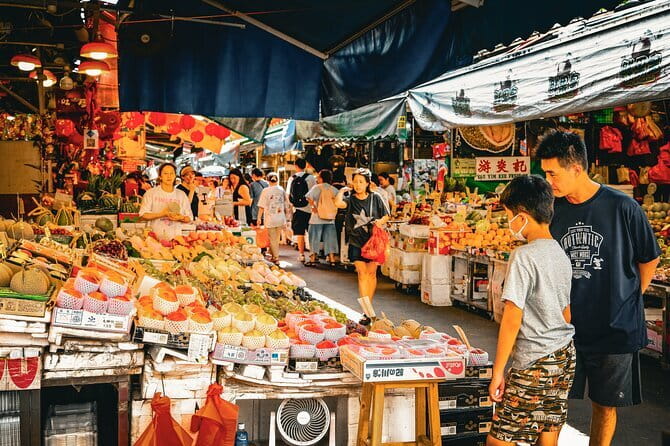
At 1031A Canton Rd, you’ll meet a Marinated Store. The story turns climate challenges into culinary invention, with a focus on preserved items such as preserved eggs and sausages.
This stop gives you a very Hong Kong kind of logic: food tastes good, yes, but it also solves practical problems. Preservation means you don’t need perfect conditions to enjoy flavors that last.
What to do with your taste buds: go slow here and notice how preservation changes saltiness, aroma, and texture. The guide’s framing is about time and dialogue with nature, which makes these flavors feel less random and more intentional.
Lok Yuen House: Seafood Logistics and the Freshness Mindset
Next is Lok Yuen House, a Seafood Store stop. Here the key idea is Hong Kong’s role as a conductor of ocean bounty, including items like geoduck from Canada reaching stalls within hours.
That freshness mindset is a theme throughout the tour: Hong Kong treats food as a schedule, not just a product. The city pulls in global ingredients, then focuses on simplicity and quick movement so the final taste doesn’t get dulled by delays.
Why this is valuable: even if you never eat geoduck, you’ll understand what local markets do better than many places. Timing is part of the flavor system.
Paper Offering Store (1028-1036 Canton Rd): Tradition That Outlives Branding
At 1028-1036 Canton Rd, you’ll visit a Paper Offering Store. This stop covers how Chinese families care for ancestors by burning paper replicas, and how cultural tradition can resist outside pressure even when it becomes a legal fight.
The tour mentions that when Gucci tried to stop these shops, Hong Kong’s tradition held strong. It’s a blunt example of how local practice can outlast luxury marketing and legal attempts to reframe it.
What to keep in mind: this stop may not be about food in the usual sense. It’s still part of the street food ecosystem, because it shows how everyday commerce mixes with ritual life.
How the Snacks Actually Fit Into the Stories
One of the best values here is that you’re not paying twice. The ticket price includes snacks, which is a big deal on any walking tour in a city where everything has a price tag and the line between a snack and a meal can disappear fast.
The tour’s described tastings line up with the stop themes:
- fruit tied to daily airlift timing
- walnut cookies at Ki Tsui Cake Shop
- preserved items like eggs and sausages at the marinated store
- seafood like geoduck via the seafood store theme
That connection is what makes the food feel earned. You don’t just eat because someone says eat, you eat because you now understand what you’re tasting and why the shop does what it does.
The Guide Makes or Breaks It, and This One Has Star Power
This is a guided tour with a professional local guide, and the quality shows up in the way people talk about the experience. I’ve seen guides described as friendly, enthusiastic, patient, and strong storytellers, including names like Stephen, Michael, Alice, and Isaac.
That matters because a street market is loud, fast, and full of choices. When your guide is good, they help you read the place instead of just passing by it.
Practical tip: come with curiosity. If you’re willing to try things you wouldn’t pick yourself, you’ll get more out of each stop, especially the preservation and snack-style tastings.
Walking Time, Comfort, and Who This Tour Suits Best
The tour is about 2 hours (approx.) and most stops are short, around 10 minutes each. That keeps it manageable, especially compared with longer food crawls where you spend too much time traveling between far-flung neighborhoods.
That said, this is still a walking tour. If you’re older or you just know you’ll want a breather, wear comfortable shoes and plan to take your time at the curb where you can.
This tour is also described as suitable for most travelers, and it’s near public transportation, so you can fit it into a larger Hong Kong day. The group size cap at 6 travelers makes it feel less like a mass-tour photo line and more like a guided neighborhood walk with snacks.
Price and Value: $32.80 for 2 Hours of Food, Context, and No Map Work
At $32.80 per person for about two hours, the pricing works out to roughly $16 to $17 per hour, depending on how the walk lands in real time. That’s not just about time. You’re paying for a guide, snack inclusions, and navigation through spots that many visitors never find on their own.
What makes it feel like value is the package:
- professional local guide
- snacks included
- small group size
- multiple food-related stops with cultural context
When street food is on your own dime, costs can sneak upward fast. Here, the tour is set up so you can focus on taste and story without doing constant math.
Should You Book This Kowloon Street Market and Food Culture Walking Tour?
Book it if you want Hong Kong food culture in a way that makes sense. This works best when you like real neighborhoods, enjoy learning through what you eat, and you’re open to trying snacks beyond the safe, familiar picks.
Pass or consider something else if you want a food-only route with no cultural context stops, or if you’re very strict about what you’ll eat and won’t deviate. Also keep your comfort needs in mind since it’s a walking experience.
FAQ
How long is the Hong Kong: Kowloon Street Market & Food Culture Walking Tour?
It’s about 2 hours (approx.).
How much does the tour cost?
The price is $32.80 per person.
Is food tasting included in the tour price?
Yes. Snacks are included as part of the tour.
What is the group size limit?
The tour has a maximum of 6 travelers.
Where do I meet the tour, and where does it end?
You start at Prince Edward Station (Prince Edward Road West) and finish at Ladies’ Market on Tung Choi St, Mong Kok.
What time does the tour start?
The start time listed is 3:00 pm.
What is the cancellation policy?
You can cancel for free up to 24 hours in advance for a full refund. If it’s canceled due to poor weather, you’ll be offered a different date or a full refund.
More Shopping Tours in Hong Kong
- Organic Xiao Long Bao Soup Dumpling Class & Market Walk
★ 5.0 · 62 reviews - Hong Kong Market Walking Tour & Chinese Cooking Class
★ 5.0 · 24 reviews - Organic Combo Dumplings & Xiao Long Bao Class with Market Walk)
★ 5.0 · 12 reviews - Mini Group Xian Day Tour to Terracotta Army, City Wall, Pagoda and Muslim Bazaar
★ 5.0 · 1,320 reviews
Latest reviews from Hong Kong
- Hong Kong Layover Tour Private & Personalized with Local Guide★ 5.0 · 5 reviews
- Experience Hong Kong in 1 day: discover the best★ 5.0 · 5 reviews
- Small-Group Gong Relaxation Experience in Hong Kong★ 5.0 · 5 reviews
- Hong Kong Photography Masterclass – Private Photography Lesson★ 5.0 · 5 reviews
- Live Hong Kong Island: Private Tour★ 5.0 · 5 reviews
- Small-Group Tour: Temples & Markets Discovering [PROMOTION]★ 5.0 · 6 reviews
- Dialogue in the Dark Tour [Recommended!]★ 5.0 · 6 reviews
- Hong Kong Private Walking Tour with a Local★ 5.0 · 6 reviews
Food & Drink, compared.
Authentic Local Food Tour in Central Shanghai
Read our review →
Beijing Hutong Walking Food and Beer Tour at Hidden Restaurants
Read our review →
Hong Kong’s Tin Hau Hidden Eats Food Tour with 7+ Local Tastings
Read our review →
Browse the lists this tour appears in