
Reviewed · FOOD & DRINK
Small-Group Hong Kong Island Food Tour
Hong Kong Island has a way of mixing old and new without apologizing. This small-group food tour takes you through classic neighborhoods like Sheung Wan and ends in Wan Chai, using the city’s food as the guidebook.
I love how the tastings feel local on purpose, not like a parade of tourist plates. I also like the mix of Cantonese staples and British-influenced desserts, so you get story with every bite. One thing to consider: this tour is not suitable for vegetarians, gluten-free diets, or seafood allergies, so you’ll want to check your needs early.
Key highlights to look for
- Yum cha by trolley at a long-running tea house, the kind of place you would never find on your own
- Wonton noodle soup at a family-run spot recommended by the Michelin Guide
- Milk tea and sweets tied to Hong Kong’s British-era influence
- Ding Ding (double-decker) tram ride to connect the neighborhoods without getting lost
- Dan tat egg tart at a 60-year-old bakery near Hong Kong Hennessy Road, finished with a classic Cantonese-leaning twist
- Small group size (max 9) so questions, pacing, and routing stay friendly and manageable
The Best Way to Taste Hong Kong Island Fast
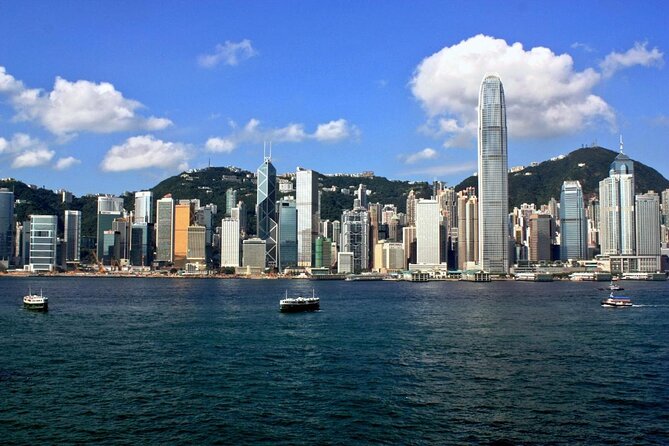
This is a half-day plan built for real appetite. The tour runs about 4 hours and focuses on five main food moments plus tea and snack stops, all around Hong Kong Island. You start in the Sheung Wan area and work your way toward Wan Chai, with walking, short transfers, and a tram ride.
At $115.52 per person, you’re not just paying for food. You’re paying for someone to steer you into old neighborhoods, explain what you’re eating in English, and smooth out the parts that can get awkward when your Chinese is limited. And because the group is capped at 9 people, the experience tends to feel like you’re tagging along with a local who knows the shortcuts, not line-standing among strangers.
If you’re the type who likes your food tours to be more than sampling, the Hong Kong angle matters. The tour connects Cantonese food culture with British influence and with earlier Guangzhou traditions. That history is not taught as a lecture. It shows up in what you eat, like why milk tea is everywhere, and how egg tart got reworked into something distinctly Hong Kong.
More Food & Drink in Hong Kong
- Hong Kong’s Tin Hau Hidden Eats Food Tour with 7+ Local Tastings
★ 5.0 · 352 reviews - Hong Kong Food Tour: Central and Sheung Wan Districts
★ 5.0 · 333 reviews - Hong Kong Street Food Tour with Locals – Dim Sum, Wonton & more
★ 5.0 · 226 reviews
Sheung Wan Yum Cha, Dim Sum the Way the City Eats It
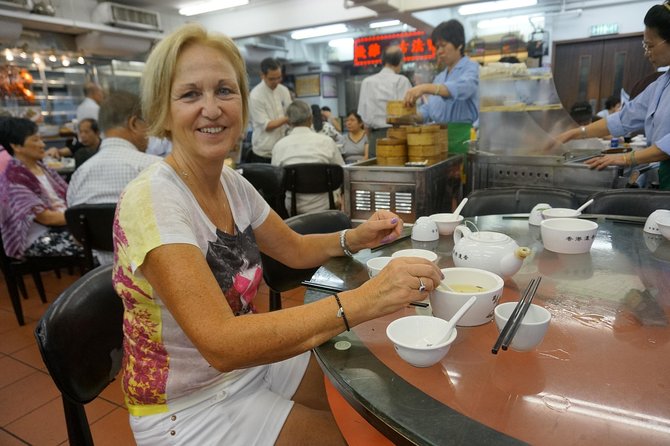
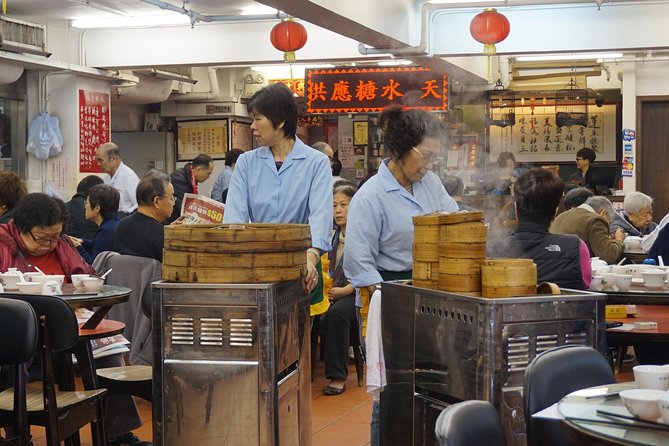
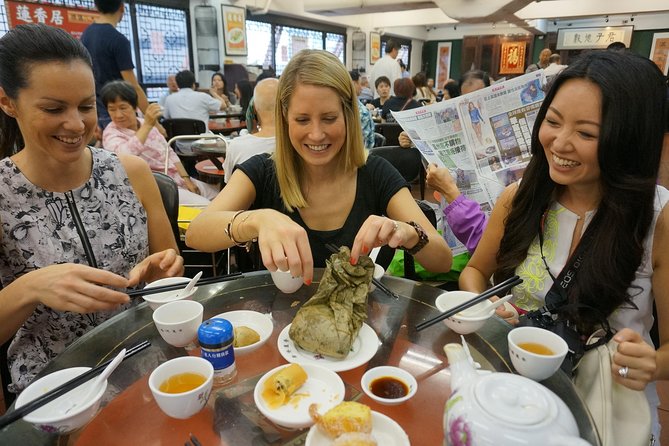
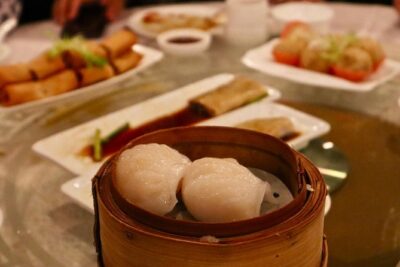
You begin around 9:30 am at 28號 Des Voeux Rd W, Sheung Wan. The first stop is an old tea house for yum cha, with dim sum served the traditional way, often by trolley. This matters because dim sum is not only food, it is also atmosphere. The restaurants that do this well are lively and crowded, and you get the sense that people come here as part of daily life.
You’ll try classic breakfast-style dim sum items, and the guide helps you understand what you’re looking at. Yum cha can be chaotic if you don’t know what to order, so the value here is having someone who can say, eat this first, then this, and not waste your hunger.
What I like most: the tour starts with the hardest-to-nail-without-help meal type. If you can handle this, you’ll glide through the rest of the day.
Watch-outs: the tour asks you to arrive hungry and says not to eat breakfast beforehand. If you show up full, you’ll still enjoy it, but you’ll feel rushed instead of grateful.
Wonton Noodle Soup and the Local-Art Skill of Simple Food
Next you head to a family-run business from the 1960s, recommended by the Michelin Guide, for wonton noodle soup. This is a great choice for a food tour because wonton noodles are simple on paper, but hard in practice. The broth, the noodle texture, the dumpling filling, and the seasoning balance all have to be right.
The guide’s explanations make a difference here. Hong Kong wonton noodles can look similar from afar, but the details are what separate an okay bowl from a great one. You learn what to notice, like the flavor direction of the broth and how the wontons should taste in proportion to everything else in the bowl.
Possible drawback: if you are a picky eater who only likes very mild flavors, ask your guide how spicy or seasoned items tend to be. This tour is still designed for most people, but it is not set up as a bland-safety net.
Hong Kong Milk Tea, British Influence in a Cup
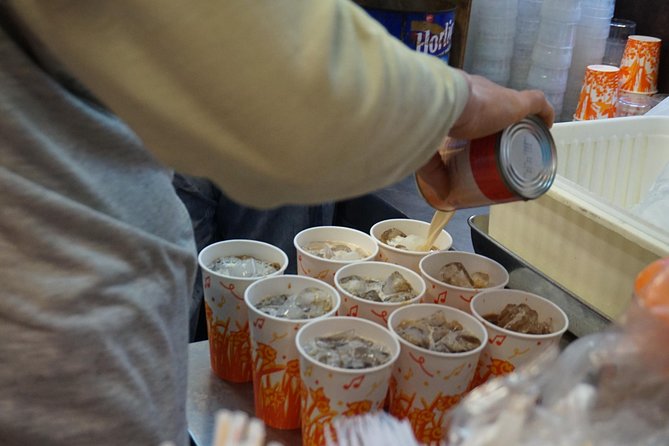
After noodles, you pause for Hong Kong milk tea, one of the most recognizable parts of the city’s food culture. The tour connects it to Hong Kong’s British-era heritage. That connection is easy to miss when you just treat milk tea as a sweet drink, so it helps to get the story while you taste it.
Milk tea also works as a “reset” between stronger savory items. It gives you sweetness and comfort, and it helps you keep enjoying food without feeling like you’re eating non-stop meat and dumplings. Pair that with the fact that the tour also includes traditional sweets, and you get a sensible rhythm.
If you’ve ever wondered why custard desserts and tea culture can feel connected in Hong Kong, this is where it starts to click. You’ll see how British-style influence and Cantonese preferences blended into everyday habits.
More eating and drinking in Hong Kong:
- Small Group Kowloon Michelin Rated Street Food and Culture Tour
★ 5.0 · 170 reviews - Hong Kong Food Tour: Sham Shui Po District
★ 5.0 · 167 reviews - The 10 Tastings of Hong Kong With Locals: Private Street Food Tour
★ 4.5 · 124 reviews - Hong Kong: Kowloon Street Market & Food Culture Walking Tour
★ 5.0 · 105 reviews
Seafood Street and Tea-Shop Candies You Won’t Find in a Mall
One of the smarter parts of this tour is how it includes the ingredients and snack world around the main meals. You spend time around Seafood Street, where dried seafood is clustered around Des Voeux Road West in Sheung Wan. Dried seafood is a common ingredient in Chinese cooking and traditional tonics, and the tour uses the area to show how ingrained it is in everyday pantry life.
You also stop at Kai Fat Tea, tucked away on a narrow road, selling tea and assorted candies and fruit-based Chinese sweets. The shop has been around for more than 30 years, which means you’re seeing a business built for repeat locals, not a rotating pop-up concept.
You’ll likely try preserved or candy-style sweets at a tea shop stop. This is a fun moment because snacks like this are often what you remember later, during the plane ride home. They’re also a low-stakes way to expand your flavor comfort zone.
Small consideration: this segment leans into traditional ingredients and sweets. If you have strong dislikes for seafood-based aromas or very herbal flavors, let the guide know early.
Graham Street Market and the City Between Food Stops
The tour includes Graham Street Market, an old sloped street with food stalls on both sides and more than a century’s history. This is where you get the sense of Hong Kong as a place that keeps shopping and eating close to where people work and live.
The walking rhythm changes here. You’re not only tasting. You’re watching how the market works, what people buy, and how the street layout affects your movement. It’s also a helpful breather after earlier stops, especially because your guide keeps the timing tight.
From the provided itinerary details, you’ll also pass by or spend time near specialty shops tied to Hong Kong life: a soy sauce producer, a dried seafood shop, a Chinese medicine shop from the 1940s, and even the city’s oldest wet market. You might not taste everything there, but you do get context for how food, medicine, and daily routines overlap in the city.
That context matters. It turns the tour from a list of dishes into an explanation of why those dishes exist where they do.
Western District, Mid-Levels Escalator, and Tai Kwun as a Quick Reset
As the tour moves through the Central and Western District area, you get a change of scenery. This part of Hong Kong Island sits on the cusp of where European and Chinese communities have overlapped over time. The result is a mix of colonial-era streets and modern retail, plus small alleys you might miss if you were just power-walking for the next meal.
Then comes the Mid-Levels Escalator, the long outdoor escalator that stretches about 800 meters and rises around 135 meters up toward Conduit Road. Even if you never ride it at home, it’s a fun Hong Kong engineering fact that also helps you understand the city’s vertical layout. It’s a practical landmark, not just a photo stop.
The itinerary also references Tai Kwun, in the restored Central Police Station compound. This is a nice pause point. You’re still on the move, but it gives your feet a breather and adds a bit of heritage context before the next big food moment.
Ding Ding Tram Ride, a Classic British-Era Transit Moment
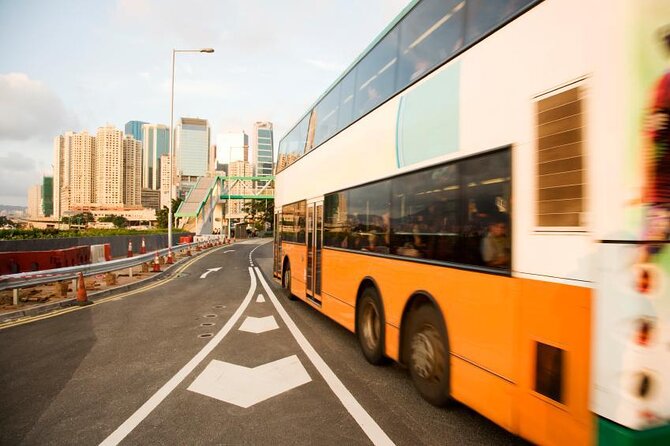
At some point, you board the Ding Ding, Hong Kong’s electric tram system. This is one of those experiences that feels made for a food tour because it links neighborhoods while giving you a story. The tram first operated in 1904 under British rule, and it is described as the world’s largest operational double-decker tram.
The narrative of the tour ties this back to British influence, and you feel it in the mode of travel as well as the food. Milk tea and egg tart fit the theme, but the tram ride makes it physical.
Important note: the tour details say Ding Ding is included, but one section also mentions tram ride as own expense. That conflict is worth checking during booking. If there’s a small fare, it’s not likely to derail the value, but it’s better to confirm than assume.
Wan Chai Char Siu Fan, Where the Meat Meets the Rice
You then reach Wan Chai for a stop at another family-run restaurant recommended by the Michelin Guide, described as dating back to pre-20th-century Qing Dynasty times. You’re eating Char Siu Fan, roast BBQ pork rice.
This dish is a crowd-pleaser for a reason. Char siu is deeply Cantonese, and it’s also built for comfort. The pork is sweet and savory, and it works with the rice and sauces in a way that feels like a complete meal, not just an appetizer.
This stop also benefits from the small-group setup. When the guide knows the menu and pacing, you can focus on tasting, not translating. In the reviews, guides like Ivy and Andy were praised for making sure people got enough at each stop and stayed happy with the pacing.
Possible drawback: roasted meat stops can be a lot if you’re sensitive to fatty flavors. Still, this tour portion is controlled, and the guide’s pacing is part of what you’re paying for.
Dan Tat Egg Tart at the 60-Year Bakery Finish
The grand finale is an egg tart, called dan tat in Cantonese. You stop at a well-established bakery along Hong Kong Hennessy Road. The tour notes the bakery has about 60 years of history and is a favorite of one former Hong Kong governor.
Egg tart is a great closing dish because it connects the Cantonese side to British influence. The custard-style dessert has Western roots, but Hong Kong baked versions taste like they belong to the city. This is where you should slow down and pay attention. Look for the custard texture and how the crust holds up.
The tour also includes traditional dried fruit sweets earlier, so by the time you reach dan tat, you’ve usually trained your palate to enjoy sweet Cantonese flavors without feeling like you’ve been overdosed on sugar.
How Much Walking, How Much Time, and What to Bring
This is a walking + transit half-day through multiple neighborhoods on Hong Kong Island, capped at 4 hours. The upside is you get to see a lot of city texture. The downside is you should plan for being on your feet for stretches.
Do these practical things:
- Wear comfortable shoes. You will move between streets, markets, and sights.
- Bring a camera, since tram ride and escalator moments are built for photos.
- Don’t eat breakfast. The tour explicitly recommends arriving hungry.
The tour is also conducted in English, so you’ll get help with language barriers inside shops and restaurants. It’s designed for most travelers, and the max group size helps keep the experience smooth.
If you have diet restrictions, be strict. The tour is not suitable for vegetarians, gluten-free diets, or seafood allergies, so you’ll want another option if you need those accommodations.
Value Check: Is $115.52 Worth It?
For $115.52, you’re getting:
- A professional guide
- Multiple food tastings, including dim sum, wonton noodle soup, milk tea, char siu, and egg tart
- Traditional sweets
- A tram ride experience (with the earlier note to confirm fare details)
- A route that mixes food with transit landmarks like the Mid-Levels Escalator and the Ding Ding tram
The best way to judge value is to ask: would you realistically find these places and order the right things without help? On your own, you would probably spend time guessing menus, getting stuck in language barriers, and picking restaurants that are convenient rather than authentic. Here, the guide does that work, and you get a paced sequence of stops designed for eating well, not just walking.
And the reviews show a pattern: guides such as Ivy, Andy, Mel, Sinclair, and Alex were repeatedly praised for being engaging, good at explaining food and Hong Kong history, and for keeping the group well-fed. That matters because a food tour lives or dies by pacing and clarity.
Should You Book This Hong Kong Island Food Tour?
Book it if you want a concentrated Hong Kong Island experience with real local eating habits. This tour is especially good if it’s your first time on the island and you want Sheung Wan to Wan Chai in one organized half-day, with Cantonese classics plus British-influenced desserts like milk tea and dan tat.
Skip or consider a different option if your diet is vegetarian, gluten-free, or you have a seafood allergy. Also skip if you hate walking or you can’t skip breakfast, because the tour is built around arriving ready to eat.
If you’re curious about how Hong Kong food got to where it is, from Cantonese traditions to British-era influence, this is one of the easiest ways to learn by tasting, while riding the Ding Ding and watching the city move around you.
FAQ
How long is the Small-Group Hong Kong Island Food Tour?
It runs about 4 hours.
Where do I meet the tour, and what time does it start?
The meeting point is 28號 Des Voeux Rd W, Sheung Wan, Hong Kong, and the start time is 9:30 am.
What is the maximum group size?
The tour has a maximum of 9 travelers per booking.
What foods and drinks are included?
Included tastings include dim sum or yum cha, wonton noodle soup, Hong Kong milk tea, egg tart (dan tat), traditional dried fruit sweets, and char siu (BBQ pork).
Is there a tram ride included?
The tour includes a Ding Ding tram ride, but one tour description notes tram is own expense, so it is smart to confirm the fare detail at booking.
Is the tour vegetarian-friendly or gluten-free-friendly?
No. The tour is not suitable for vegetarians or for gluten-free diets.
Is it safe for people with seafood allergies?
No. The tour is not suitable for people with seafood allergies.
What language is the tour in?
The tour is conducted in English.
Do I need to eat breakfast before the tour?
No. You should arrive hungry, and it is recommended that you do not eat breakfast before the tour.
What is the cancellation policy?
You can cancel for a full refund up to 24 hours in advance of the experience start time. Free cancellation is available if you meet that 24-hour cutoff.
Latest reviews from Hong Kong
- Hong Kong Layover Tour Private & Personalized with Local Guide★ 5.0 · 5 reviews
- Experience Hong Kong in 1 day: discover the best★ 5.0 · 5 reviews
- Small-Group Gong Relaxation Experience in Hong Kong★ 5.0 · 5 reviews
- Hong Kong Photography Masterclass – Private Photography Lesson★ 5.0 · 5 reviews
- Live Hong Kong Island: Private Tour★ 5.0 · 5 reviews
- Small-Group Tour: Temples & Markets Discovering [PROMOTION]★ 5.0 · 6 reviews
- Dialogue in the Dark Tour [Recommended!]★ 5.0 · 6 reviews
- Hong Kong Private Walking Tour with a Local★ 5.0 · 6 reviews
Food & Drink, compared.
Authentic Local Food Tour in Central Shanghai
Read our review →
Beijing Hutong Walking Food and Beer Tour at Hidden Restaurants
Read our review →
Hong Kong’s Tin Hau Hidden Eats Food Tour with 7+ Local Tastings
Read our review →
Hong Kong Food Tour: Central and Sheung Wan Districts
Read our review →Browse the lists this tour appears in