
Reviewed · FOOD & DRINK
Hong Kong Street Food Tour with Locals – Dim Sum, Wonton & more
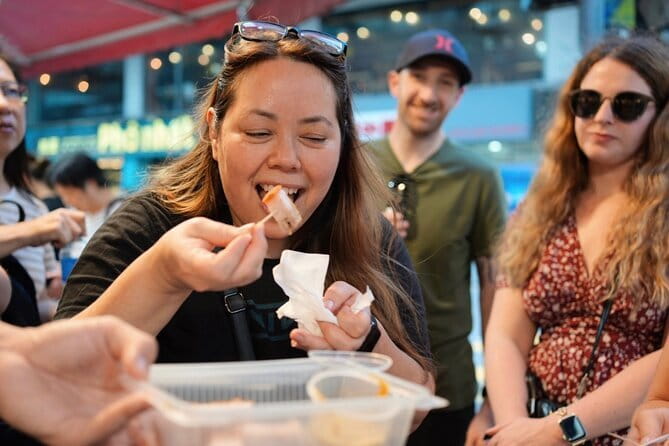
This tour is interesting because it turns Central and Sheung Wan from a place you pass through into a place you understand. You follow a local guide down busy side streets and hidden alleys, with tastings built in and explanations you can actually use. Guides like Summer and Wind are mentioned often, and they focus on both what you are eating and why it matters.
I like two things most. First, the food is classic Hong Kong, from har gow and wonton noodles to char siu and the egg tart, not just whatever is trending online. Second, you get a cultural thread that runs through the bites, including Hong Kong’s shift from trading roots to a financial hub, plus Cantonese culinary stories along the way.
One thing to consider before you book: it is not vegetarian, and halal food is not provided. If you do not eat fish or seafood, or you have dietary limits, this may be frustrating since several stops feature seafood and pork.
Key highlights worth planning for
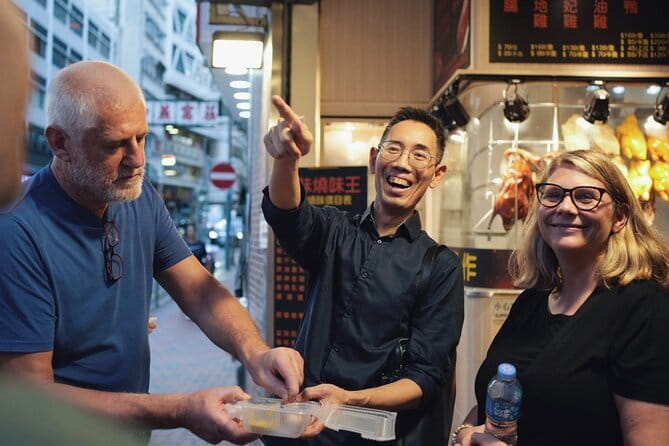
- A guide handles the route so you do not waste time guessing where to eat
- Dim sum stops that connect street food to older imperial and trade-era roots
- Cha chaan teng comfort food, plus traditional herbal tea
- Historic Possession Point tastings, including Cantonese BBQ and egg tart
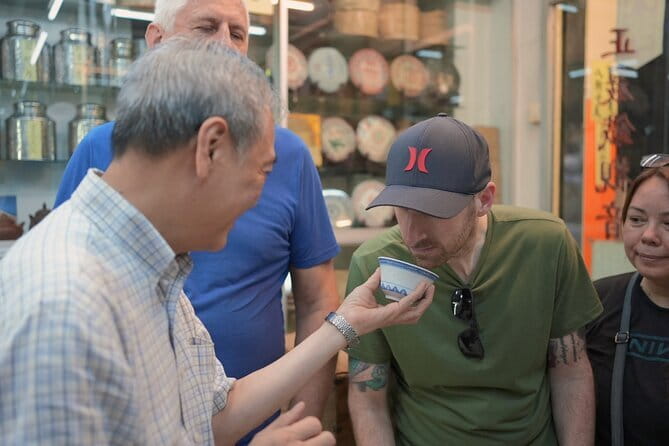
- A tea stop focused on aged pu-erh brewing in unglazed clay pots
- Small group size (maximum 20) that keeps the walk manageable
Central Hong Kong, simplified: 3 hours of street food with a local guide
You meet at Grand Millennium Plaza Garden near Queen’s Road Central, with the start time at 3:00 pm. The end point is Central Market at 93 Queen’s Road Central, so you finish right where it is easy to keep exploring on your own.
This is a walking tour with a moderate amount of walking. That matters because Hong Kong’s best food streets are not always the ones with the most obvious signage. A local guide is the whole point here, and the route helps you avoid the “stand in front of 20 menus and panic” moment.
Groups are capped at 20 travelers, and you should have an easy time keeping up at a relaxed pace. Many guides are friendly about interaction too, including quick introductions early in the walk, which helps if you want a social vibe without turning it into a party.
No hotel pickup or drop-off is included, so you will want to plan your own arrival and departure. The good news is the meeting area is near public transportation, so you are not dependent on taxis.
More Food & Drink in Hong Kong
- Hong Kong’s Tin Hau Hidden Eats Food Tour with 7+ Local Tastings
★ 5.0 · 352 reviews - Small-Group Hong Kong Island Food Tour
★ 5.0 · 343 reviews - Hong Kong Food Tour: Central and Sheung Wan Districts
★ 5.0 · 333 reviews
Wing Lok Street: har gow dim sum plus a dried seafood reality check
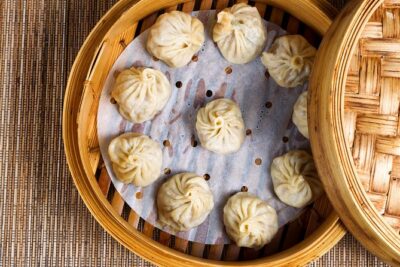
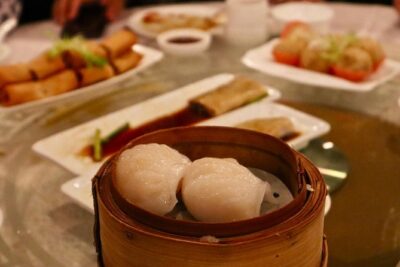
The first stop is at Wing Lok Street, where you start with har gow steamed in bamboo baskets. This is not just a dumpling stop. You get the story of how dim sum evolved, and the guide ties it to older trade connections and how that food culture shows up in today’s Hong Kong routines.
Then you head to another Wing Lok Street moment focused on the dried seafood market. You will hear about prized ingredients like shark fin, bird’s nest, and cordyceps, and why they became symbols of prosperity in Cantonese dining.
If you are curious about how Hong Kong food culture thinks, this is one of the most “you are in the real place” stops. If you are sensitive to the idea of eating rare seafood ingredients, mentally prepare for it. This is not a gentle, all-kid-friendly tour theme.
Sheung Wan Market and Cooked Food Centre: Cha chaan teng comfort, not fine dining
Next comes the heart of everyday Hong Kong eating at the Sheung Wan Market and Cooked Food Centre. The focus here is on Cha Chaan Teng classics, the postwar Hong Kong cafes that took Western comfort foods and made them local.
You sample things like milk tea and crispy peanut butter French toast. Milk tea is the kind of drink that can seem simple until you try it in the setting where locals order it without thinking. The toast matters too because it shows the Hong Kong talent for taking an idea from somewhere else and making it distinctly Cantonese-flavored and street-friendly.
This stop is a good “reset” between heavier savory items and the next round of historic tastings. It also helps if you want something familiar but still worth learning about.
Bonham Strand West: the Korean War trade embargo and Hong Kong’s pivot
At Bonham Strand West, the tour shifts from tasting to history, and it does so in a way that makes sense for food lovers. You hear how the 1953 Korean War trade embargo on China hit Hong Kong’s trade economy, and how merchants adapted by pushing the city toward a global financial center.
The translation is simple and relevant: when the economy changes, the food culture changes too. The guide connects those pressure points to the kinds of business instincts that keep Hong Kong moving, especially in markets and storefront eateries where resilience shows up every day.
If you usually skip history on food tours, this section is worth leaning into. It explains why the city looks like it does, and why so many dishes have layered origins.
More eating and drinking in Hong Kong:
- Small Group Kowloon Michelin Rated Street Food and Culture Tour
★ 5.0 · 170 reviews - Hong Kong Food Tour: Sham Shui Po District
★ 5.0 · 167 reviews - The 10 Tastings of Hong Kong With Locals: Private Street Food Tour
★ 4.5 · 124 reviews - Hong Kong: Kowloon Street Market & Food Culture Walking Tour
★ 5.0 · 105 reviews
Possession Point and Possession Street: char siu crackle, egg tart, and Five Flowers tea
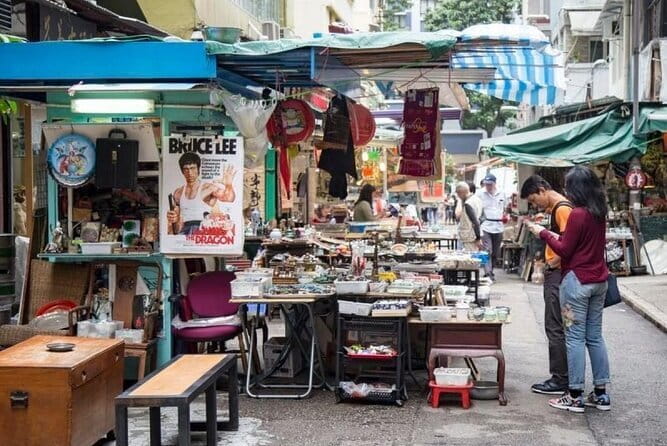
Now you hit the stops that feel most like classic Central Hong Kong street food theatre.
At Hong Kong Queen’s Road West, you watch char siu being made, with that famous glass-like crackling skin. The guide also ties this to Possession Point and the period when British forces claimed Hong Kong in 1842, showing how food identities hardened and adapted through political change.
Then you move to Possession Street for one of the city’s most iconic sweets: the egg tart. You will learn why it is often described as a Cantonese lard-pastry innovation, and how it is distinct from Portuguese custard styles. That comparison helps you stop thinking of egg tarts as one thing and start noticing what makes the texture and crust different.
The tour then includes a tea moment at Hong Kong Queen’s Road West with traditional herbal brews such as Five Flowers tea. The angle here is “toxin-clearing” style tradition, and the guide frames it as a communal ritual and a balance-based approach rooted in Traditional Chinese Medicine ideas about coping with local climate.
This cluster is great because it gives you the savory salt hit, the buttery sweet hit, then the warm finish from tea. If you pace yourself, it feels like a complete meal rather than random snacks.
Wonton noodles at Queen’s Road Central, plus egg waffles at Central Market
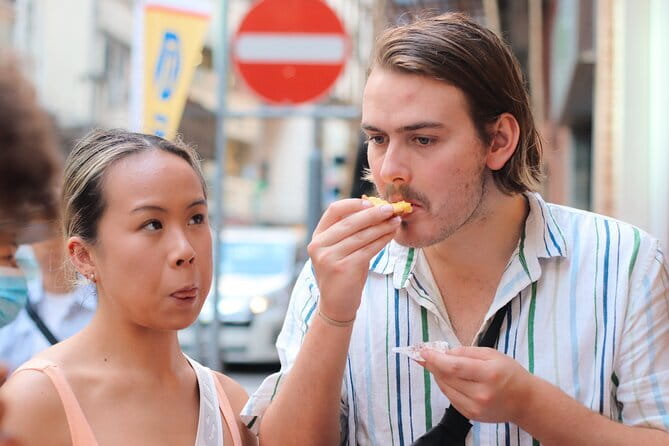
At Queen’s Road Central, you get wonton noodles. The guide talks about how wontons evolved from bite-sized snacks into hearty bowls, and you taste shrimp-packed dumplings in amber monkfish broth. This stop is usually where people realize Hong Kong dumpling culture is not just dim sum on a trolley. It is also deep in everyday bowl food.
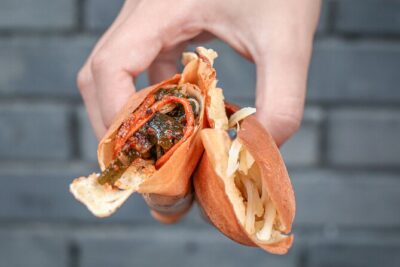
Then you finish at Central Market with the famous egg waffle. It is described as a 1950s ingenuity story using leftover lard and cracked eggs, and you learn what makes the crisp lattice shell different from lighter, flatter versions you might find elsewhere.
If you want a souvenir you can eat on the spot, this is it. The best part is you are not stuck with a single sweet item to end on. You end after savory dumplings, then switch to something crispy and custardy.
Gilman’s Bazaar Chinese Tea House: aged pu-erh, clay pots, and multiple infusions
One of the most distinctive stops is at Gilman’s Bazaar, where the tour takes you to a Chinese Tea House. You learn about aged pu-erh tea cakes and ritual brewing, including the idea of multiple infusions.
The tour description also mentions handling HK$80,000 aged pu-erh tea cakes. Even if you are just observing, that detail tells you what kind of tea experience this is. This is not the quick sip-and-go sort of stop.
If you are a tea person, you’ll appreciate it. If you are not, you still benefit because tea in Hong Kong is not just a drink, it is part of how people slow down, share, and talk through the meal.
What you actually need to do during the walk
Bring your appetite and your curiosity, but also bring basic planning.
First, do not eat a full meal right before. Multiple guides and many people mention that you will walk away full. A light snack is fine, but you want room for the dumpling stops, the BBQ, and the sweets.
Second, expect a lot of carbs. You will get dim sum, noodles, toast, and desserts. One review noted the tour can feel a bit carb-heavy in how it is paced. Your move is to eat slower, taste, and save some sips of tea as a palate reset.
Third, hydration is worth thinking about. The tour runs about 3 hours, and you will be walking through warm street areas when weather cooperates. The safest approach is to carry a small bottle of water or plan to buy one near a stop if needed. Do not assume it is always handed to you.
Finally, check your diet ahead of time. The tour is not suitable for vegetarian, and halal food will not be provided. The lineup includes dried seafood themes and pork-based items like char siu, so this tour is best for people who eat broadly and enjoy trying foods in Hong Kong’s real street setting.
If you have allergies, you should be proactive. One guide experience shared involved help with a nut allergy, but the only honest advice is to message your provider ahead of time with specifics.
Price and value: why $52.51 can work out well
At $52.51 per person, this tour feels like good value if you want both food and guidance. You are paying for a professional local guide plus multiple street food tastings in several different kinds of spots, from markets to tea houses.
If you tried to replicate this on your own, you would likely spend money on individual meals, plus you would still miss the “why this dish exists” explanations. The history layer is part of the value too, because it connects Hong Kong’s evolution to food choices, rather than treating the city like a random buffet of snacks.
The biggest “cost” is time. You are giving up about half a day in Central. But if you are in town for a short trip, this is one of those experiences that gives you both direction and a hit of local culture in one go.
Who should book this tour, and who should skip it
You should book if you want a guided way to sample classic Central Hong Kong food without chasing down places yourself. It is also a strong choice if you enjoy history that explains culture, not history as a lecture.
You will get the most out of it if you are comfortable eating items that include seafood and pork. The herbal tea stop and tea house visit also make it a good fit if you like drinks that go beyond soda and water.
Skip it or rethink it if you are vegetarian, avoid seafood, or need halal options. The tour clearly is not set up for those needs.
Also consider your fitness. The walking is described as moderate, but it is still a walking tour through urban areas. If you know you tire quickly, plan breaks and wear comfortable shoes.
Should you book? My practical take
If you are doing Central and Sheung Wan anyway, this tour is an efficient way to eat well and understand what you are looking at. I like that you start with dim sum, move through BBQ and sweets, and end with noodles and egg waffles, so you get a full sweep instead of just one food genre.
Book it early in your trip if you want a foundation. After you eat these dishes and hear the stories, Hong Kong restaurants become easier to decode on the fly.
Pass on it if your diet is narrow. This one is built around Hong Kong’s food reality, including seafood and pork themes, so it is not the right choice for everyone.
FAQ
Is the tour vegetarian friendly?
No. This tour is not suitable for vegetarian.
Is halal food included?
Halal food will not be provided.
How long is the Hong Kong street food tour?
It runs for about 3 hours.
Where does the tour start and end?
It starts at Grand Millennium Plaza Garden on Queen’s Road Central, near Sheung Wan, and ends at Central Market, 93 Queen’s Road Central.
What time does it begin?
The start time listed is 3:00 pm.
Is hotel pickup included?
No. Hotel pickup and drop off are not included.
What is included in the price?
Included are a professional local guide and street food tastings.
Is it accessible for everyone?
It involves a moderate amount of walking and is best for people with moderate physical fitness. It is also near public transportation.
What happens if the weather is bad?
The tour is subject to favorable weather. If canceled due to poor weather, you will be offered an alternative date or a full refund.
How big is the group?
The tour has a maximum of 20 travelers.
Latest reviews from Hong Kong
- Lantau Island Private Tour to Big Buddha and Tai O Village★ 5.0 · 24 reviews
- Private custom tour of Hong Kong – 3 hours★ 5.0 · 25 reviews
- Hong Kong: Airport Express e-Ticket (Kowloon/HK/Tsing Yi)★ 4.0 · 25 reviews
- Tram & Treats – Private Culinary tour of Hong Kong★ 5.0 · 26 reviews
- Best Seller: VIP Lantau Tai O Tour Priority Cable Car, Big Buddha★ 4.5 · 28 reviews
- Private custom tour of Hong Kong – Full day★ 5.0 · 28 reviews
- Private 4-Hour Hong Kong City Tour – Customized Experience★ 5.0 · 30 reviews
- Hong Kong: Lantau Big Buddha Tour with Cable Car★ 4.5 · 31 reviews
Food & Drink, compared.
Authentic Local Food Tour in Central Shanghai
Read our review →
Beijing Hutong Walking Food and Beer Tour at Hidden Restaurants
Read our review →
Hong Kong’s Tin Hau Hidden Eats Food Tour with 7+ Local Tastings
Read our review →
Browse the lists this tour appears in