
Reviewed · SUMMER PALACE
Summer Palace Ticket with optional Guided Tour
The Summer Palace is one of those places where the scale can feel a bit like a whole city. Doing it with a guided group entrance ticket keeps you focused on the core sights without wandering in circles. I also like how this plan links the architecture to the people who used these spaces, especially Empress Dowager Cixi.
Two things I really like about this experience are the 2-hour pacing and the small group size (up to 15). One thing to consider: the ticket is for entrance only, so you still need to plan for what is not included, like the Tower of Buddhist Incense.
Key Highlights You Should Not Miss
- 4-stop route that hits the Hall of Benevolence and Longevity, Kunming Lake, Cixi’s living quarters, and the Long Corridor
- Long Corridor facts that you can actually use on site, 728 meters long, with four seasonal octagonal pavilions
- Mobile QR entry sent ahead of time for easier check-in
- Small groups with a max of 15 people, which helps with timing and questions
- Cixi-linked sights, including the Hall of Happiness and Longevity facing Kunming Lake and backed by Longevity Hill
Why This Summer Palace Ticket Works in 2 Hours
If you only have a short window in Beijing, this format makes sense. You get an entrance ticket plus a tight route that covers the most famous parts of the Summer Palace grounds in about two hours. You do not have to plot your own route, guess which paths connect best, or wonder where your time went.
The biggest value is that you are not just looking at pretty buildings. You are getting the human story behind them, from imperial administration spaces to Cixi’s residence, and then to the ornamental engineering of Kunming Lake. It turns the visit from sightseeing into understanding.
The guided option also gives you momentum. When you arrive at the first stop, you can focus on what matters instead of figuring out where everyone else is going. And if you do choose the self-guided entrance ticket, you still have the helpful structure of a set meeting point and a clear route expectation.
More Summer Palace visits:
- Beijing: The Temple of Heaven or Summer Palace Entry Ticket
★ 4.6 · 1,286 reviews - Mubus: Mutianyu Great Wall Bus Tour with Summer Palace Options
★ 5.0 · 1,272 reviews - Beijing: Mutianyu Great Wall & Summer Palace Day Tour
★ 4.8 · 1,004 reviews
Price and What You Actually Get for $8
At $8 per person, this is priced like an entrance ticket with a service add-on, not like a fancy all-day premium tour. That matters because you should think of this as a “high value highlights” experience, not a deep, slow exploration.
Here is what you can count on:
- Entrance ticket included (not a combo)
- Guided tour only if you pick the guided option
- Optional pickup is tied to the guided option, not the ticket-only choice
So if you want the guide to help you interpret what you are seeing, the guided option is the cleaner value. If you prefer wandering on your own, the ticket-only option still works, but you should expect less context and no pickup.
I also like that the booking is set up around a mobile ticket approach. In plain terms, you get a QR code in advance and you are less likely to end up stuck at the gate. One practical note from real on-site experience: the Tower of Buddhist Incense is not included. That is not a problem if you already plan for it, but it can be a surprise if you were hoping it would be part of the packaged stops.
Meeting Point, Small Group Size, and How the QR Entry Helps
The meeting point is clearly defined, which is a big deal at a complex site like the Summer Palace. You will meet at East Gongmen Post And Telecommunication Office (Yi He Yuan Lu area), Hai Dian District, Beijing, 100091. The location is described as near public transportation, so you can likely reach it without relying entirely on private rides.
The tour caps at 15 travelers. For me, that sweet spot is important. Too many people and you feel rushed. Too few and the experience can drag. Here, you should be able to hear directions and ask questions without constantly waiting.
Once you book, you receive confirmation at booking time, and you are told to provide participant details needed for ticketing. That includes full name, passport number, and birth date, plus a scanned copy of the passport front page. This is normal for official ticketing in China, but it’s still worth doing early so you are not scrambling later.
Also, if you care about language, note your language request during booking. The tour setup explicitly asks for that, so it is not something you want to treat as a last-minute wish.
Stop 1: Hall of Benevolence and Longevity (1750, 1860 Fire, 1888 Rebuild)
This first stop is the best example of how the tour connects buildings to power. You spend about 20 minutes here, and the highlight is not just the looks. It is the timeline.
The Hall of Benevolence and Longevity was built in 1750, later burned down in 1860 by English and French troops, then rebuilt in 1888 by Empress Dowager Cixi. That sequence gives you a real sense of interruption and reinvention, which is exactly what you want early in the visit. It frames everything else you will see afterward.
The function of the hall is also part of the story. It was used for administering government affairs, receiving greetings, and receiving foreign envoys. So when you look at the space, try imagining how a state meeting or formal reception would feel here. That mental image turns the architecture into something human.
One small consideration: because this is the first stop, you will want to arrive ready. If you show up late, you can end up spending less time with the most layered information of the day. I recommend using the meeting point guidance early, not as a suggestion for later.
A different sort of day out of Beijing:
- From Beijing: Mutianyu Great Wall Tours with Options
★ 4.9 · 9,216 reviews - Beijing: Forbidden City Tour(Group/Private)-Tickets Included
★ 4.8 · 7,974 reviews - Beijing: T-Square & Forbidden City Group or Private Tour
★ 4.8 · 4,446 reviews - All-Inclusive Tour: Tiananmen Square, Forbidden City, Great Wall
★ 5.0 · 2,873 reviews
Stop 2: Kunming Lake, 75 Percent of the Park
Kunming Lake is the giant centerpiece. It takes up about 75% of the park, and the tour gives you around 20 minutes here. Even in a short visit, it is enough time to clock the scale and understand how the lake organizes the whole site.
You also get a useful context point: Kunming Lake started as a much smaller water source near Beijing. It later became a man-made lake, with expansions added over time. That matters because it explains why you feel both natural and engineered at once. You are looking at water shaped for imperial pleasure and display, not a random pond that happened to fit nicely.
In practical terms, this is where you can slow down your pace. Take a moment to orient yourself, because the lake views are what link several buildings visually. If you are the type who likes photos, this is likely your easiest backdrop. If you are the type who hates photos, use this stop to mentally map where you are headed next.
Stop 3: Hall of Happiness and Longevity, Cixi’s Residence Views
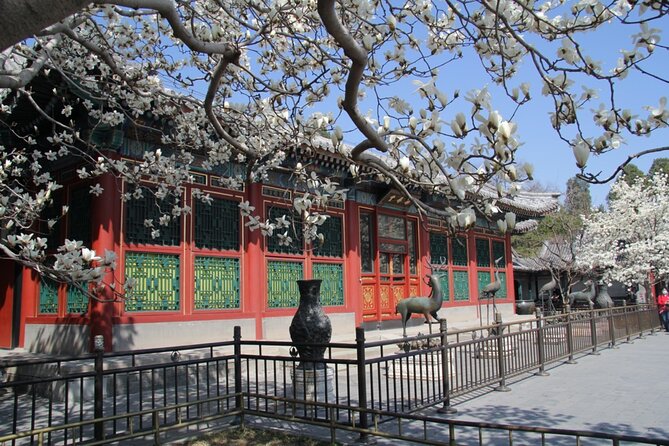
This stop is about home and authority, and it lasts about 30 minutes, which is longer than the earlier stops. The Hall of Happiness and Longevity was the living quarters of Empress Dowager Cixi.
Two location details are especially worth paying attention to. The hall faces Kunming Lake, and it backs onto Longevity Hill. That positioning explains the feeling of the space. You are not just looking outward at scenery. You are also seeing how the setting supports the mood of privacy and power at the same time.
As you move through, keep an eye on sightlines. You can often tell where imperial life prioritized views, breezes, and dramatic framing. Even if you cannot identify every structure at a glance, you can still appreciate the planning logic.
This stop is also a good moment to ask questions if you have a guide. Cixi’s presence is more than a name. When you understand how these rooms relate to the surrounding features, the Summer Palace feels less like a museum and more like a working, lived-in landscape.
Stop 4: Long Corridor (728 Meters) and Its Four Seasonal Pavilions
The Long Corridor is one of those sights you hear about once and then never really forget. It is 728 meters long, and it includes four octagonal gazebos that represent the four seasons.
You are also told about the decoration scale: the beams and ceilings are covered with over 14,000 paintings. Even if you cannot read every scene in a quick walk, the sheer number changes the way you experience the corridor. You stop looking at it as a hallway and start seeing it as an art program stretching for hundreds of meters.
In this tour, you get about 20 minutes here. That means you will not see every detail like a full museum visit. But you can still make the time count by doing two things:
- Walk with intention, not speed, so you catch the rhythm of the artwork.
- Pause briefly at the octagonal gazebo points, because those are natural “checkpoints” along the corridor.
If you are traveling with kids or anyone who gets tired easily, this is also a good stop to break up movement. The corridor can feel long, but the repeating pavilions help the walk feel organized.
What Is Not Included: Tower of Buddhist Incense
One practical heads-up: the Tower of Buddhist Incense is not included in this tour’s packaged stops. You can purchase a separate, inexpensive ticket at the tower entrance.
This matters because it is easy to assume the most famous tower on the site would be part of a highlights route. If that tower is a must for you, plan extra time to add it on. If it is optional, you can treat it like a bonus detour only if you still have energy after the Long Corridor.
Guided Tour vs Ticket-Only: Choose Based on How You Like to Travel
You basically have two modes here.
Guided Tour option
Pick this if you want a smoother route and built-in interpretation. The guided option includes the guide and may include pickup, and you meet at the fixed start point. For example, one guide named Jenny is specifically mentioned as amazing for being both charismatic and very informed. That matches the type of guide experience you should look for: someone who makes the site readable fast.
You will also benefit from the group structure when things feel crowded or confusing. Summer Palace can be big, and a guided route helps you keep momentum without guessing.
Ticket-only option
Pick this if you are comfortable exploring on your own and you do not need context. The key tradeoff is clear: ticket-only means no guide and no pickup. You still get entrance admission, and you can follow the same core sights at your own pace, but you will be on your own for timing and navigation.
If you choose ticket-only, I recommend you research your path quickly ahead of time. Otherwise, you can waste your limited time figuring out where each stop sits relative to the others.
Timing, Comfort, and Small Tips That Make the Whole Thing Easier
Even though the route is only about two hours, you will be walking. Wear comfortable shoes, bring water, and plan for weather. In summer Beijing, sun can be intense, and shade inside palace grounds is not evenly distributed.
A few extra practical points:
- Start by getting your bearings at the meeting point. Then let the guide do the pacing.
- Keep your QR code ready on your phone. One of the smoother parts of this setup is that the QR code can arrive a few days before your visit.
- If you want photos, prioritize them around the lake and the corridor, because those are the most visually dramatic backdrops.
Also, do not underestimate how much you can learn in a short visit when the stops are chosen well. This route is designed around major meaning points, not random buildings.
Should You Book This Summer Palace Tour Ticket and Guide?
Book it if:
- You want the Summer Palace highlights in about two hours without stress.
- You like your sightseeing with context, especially around Cixi and the imperial function of key halls.
- You appreciate a small group and a defined meeting point.
Consider a different plan if:
- You want a long, unhurried visit with fewer scheduled stops.
- You care most about attractions beyond the stated stops, especially the Tower of Buddhist Incense, since that is not included.
- You are the kind of traveler who gets more out of total freedom than structured pacing.
My bottom line: at $8, this is a smart way to see the main beats of the Summer Palace without turning your day into a logistics puzzle. The guided option is the best match for most first-timers, and the ticket-only option is a good backup if you already know your route and just want admission.
Latest reviews from Beijing
- 11-Day Private China Tour: Beijing, Lhasa, Xi’an and Shanghai★ 5.0 · 5 reviews
- From Beijing: JinShanLing Great Wall Bus Tour with Ticket★ 4.2 · 5 reviews
- Beijing: Jingshan Park Entry Ticket★ 5.0 · 5 reviews
- Beijing: Top Michelin Vegetarian Restaurant Reservation★ 5.0 · 5 reviews
- Beijing Culture Event: Tea Ceremony, Music Show, Calligraphy★ 5.0 · 5 reviews
- Lama Temple, Hutong and Silk & Pearl Market Private Day Tour★ 5.0 · 5 reviews
- Private Great Wall Hiking Tour: Jiankou to Mutianyu★ 5.0 · 5 reviews
- Beijing Golden Mask Dynasty Show With Private Transfer★ 4.8 · 5 reviews
Summer Palace, compared.
The Temple of Heaven or Summer Palace Entry Ticket
Read our review →
Mubus: Mutianyu Great Wall Bus Tour with Summer Palace Options
Read our review →
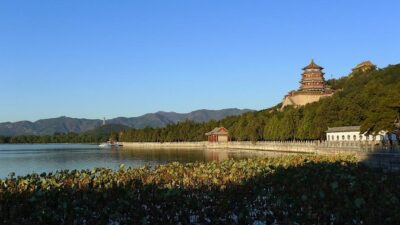
Mutianyu Great Wall&Summer Palace Excursion:Group/Private Options
Read our review →
Summer Palace Entry Ticket and Optional Guided Tour
Read our review →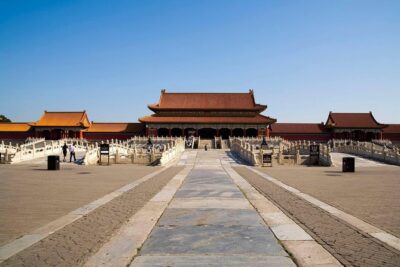
Beijing Classic Full-Day Tour including the Forbidden City, Tiananmen Square, Summer Palace and Temple of Heaven
Read our review →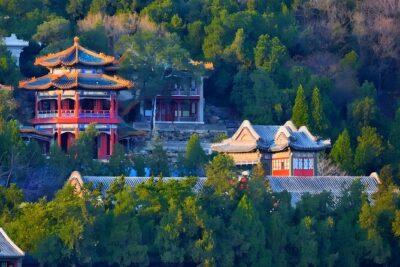
Mutianyu Great Wall and Summer Palace One Day Bus Tour
Read our review →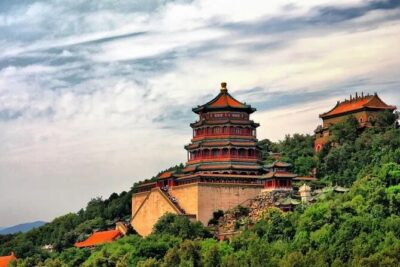
Temple Heaven, Lama Temple, Summer Palace & Peking Duck Bus Tour
Read our review →Browse the lists this tour appears in