

Reviewed · TICKETS
Beijing: Beihai Park Full Access Ticket – Must-See in China
Beihai Park is one of those Beijing sights that feels quietly grand, not loud or rushed, because it is built like an old imperial retreat. I love the chance to wander a well-preserved ancient garden at your own pace, and I also like that you get access to the iconic White Dagoba area, so your walk ends with a reward. The one thing to consider is that this is not a live guided tour, so you will get the most out of it if you actually use the visual guide as you go.
This experience works because it is set up for self-entry. You receive QR codes ahead of time, so there is no meet-up, no waiting around, and you can go straight into the park. If you want a structured route without hiring a person, the combination of park entry plus the White Dagoba ticket and an English textual and visual guide is a smart value.
Key things to know before you go
- QR entry without a meet-up: you use the electronic tickets to enter directly.
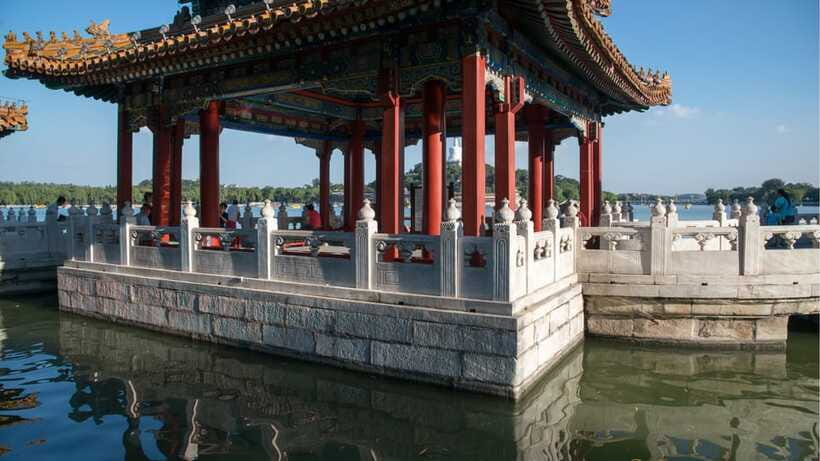
- A calm, historic garden layout: lake views, pavilions, bridges, temples, and rock formations give you variety in one place.
- White Dagoba access is built in: you are not just taking photos at the base, you can go up via the included ticket.
- A visual guide to keep you oriented: it helps you connect the garden details into a route that makes sense in a few hours.
- Real-world time management: the experience is designed around a 4-hour visit, not a half-day that turns into a half-dozen stops.
- Good sign from the basics: fast info and smooth gate entry show up in the feedback, which matters when you are doing QR tickets abroad.
Why Beihai Park is worth your time in Beijing
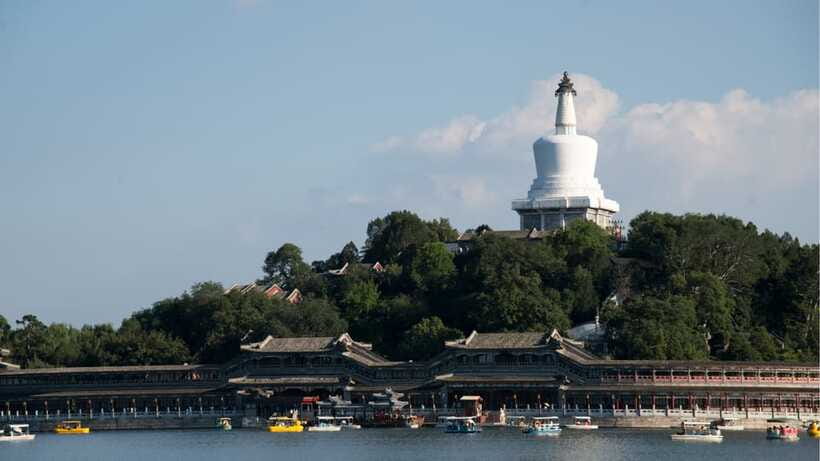
Beijing has famous sights that can feel like an amusement park for history fans. Beihai Park is different. It is old-school, walkable, and designed for lingering. The whole experience centers on the main lake, willow-lined shores, and a mix of imperial-era architecture tucked into landscaped grounds.
I like that the park gives you multiple types of “wow” in a single loop. You get the visual pleasure of traditional garden design, but you also get practical variety, like bridges, pavilions, and temple buildings spaced along the route. If you enjoy travel that feels like you are seeing how people actually planned leisure spaces, this place clicks fast.
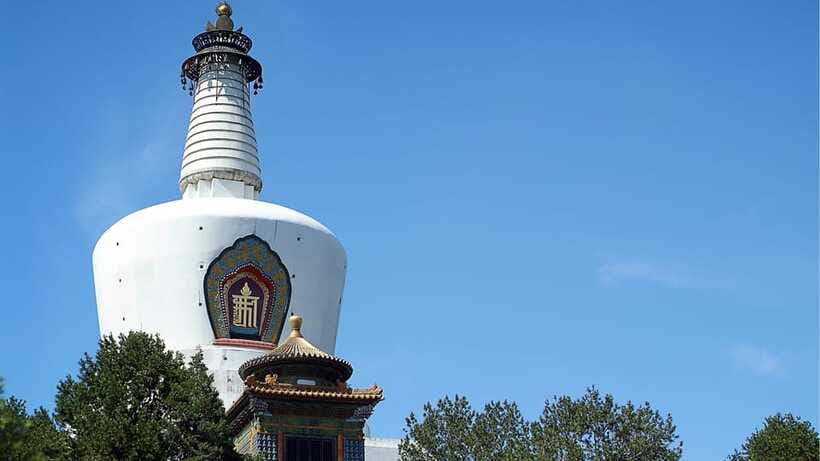
And yes, the White Dagoba is a big deal. It is a Tibetan-style stupa and it is built for views, so it gives your walk an end point that feels earned. In a city where you can spend hours trying to find the next viewpoint, this helps you finish the day with purpose.
What else people fit into the same Beijing trip:
- From Beijing: Mutianyu Great Wall Tours with Options
★ 4.9 · 9,216 reviews - Beijing: Forbidden City Tour(Group/Private)-Tickets Included
★ 4.8 · 7,974 reviews - Beijing: T-Square & Forbidden City Group or Private Tour
★ 4.8 · 4,446 reviews
QR entry and what you need to send after booking
This is a self-guided ticket, but it is not chaotic. Once you place your order, you send your passport name and number to Hua Hua Explore China via email or WhatsApp. Then, about 6 days before your visit, you receive the electronic tickets and the QR codes through email or WhatsApp.
The big practical win here is simplicity at the gate. There is no need to meet anyone in person. You just use the QR codes to enter the attraction directly and follow your own pace using the provided materials.
Bring your passport or ID card on the day. That is the one “don’t forget” item that actually matters.
One more small point that affects your day: the ticket includes skip-the-ticket-line entry. Even if you love waiting, saving time here lets you spend more of your limited four hours doing the walking and less doing queues.
Four hours in the park: a smart walk from the lake to the White Dagoba
Think of your 4 hours as a full park loop with a clear priority. You are not trying to memorize every single pavilion. You are aiming for the garden’s core experiences: lakeside strolling, the standout architecture, and then the White Dagoba payoff.
A good way to pace it is to start with the lake and work toward the White Dagoba as you go. That way, you do the easy, scenic walking while you still have energy, and you leave the “climb to viewpoint” moment for when you are ready to focus.
Here is how your self-guided route can feel, without pretending it is a rigid timeline:
1) Enter and orient fast using the visual guide
The English textual and visual guide is the tool that keeps your route from becoming a wandering puzzle. Use it early to identify the major zones: lakeshore paths, key bridges, temple areas, and where the White Dagoba fits into your movement. This is how you turn a big park into something manageable in one half-day.
2) Walk the willow-lined shores and enjoy the lake views
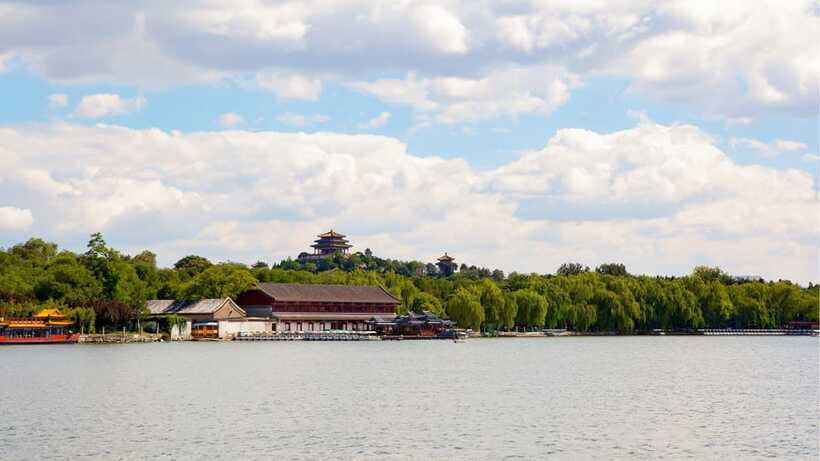
Beihai Park is built around a big central lake, and the shoreline paths are where you feel the park’s calm. You will see the garden’s architecture play against water, which makes even simple scenes look planned. If the weather is decent, take it slow here. This is where the park’s “imperial garden” vibe shows up most clearly.
3) Pause for traditional details, bridges, and pavilions
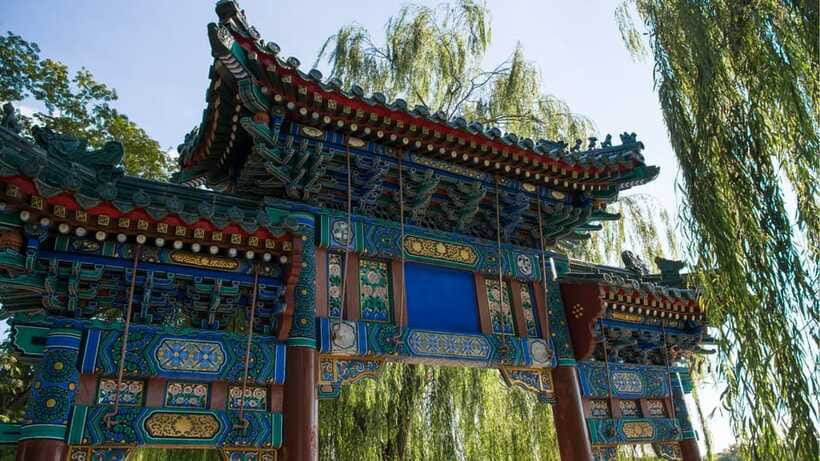
The park has intricate rock formations, traditional pavilions, and beautifully designed bridges. You do not need to treat every single structure like a museum exhibit. Instead, look for patterns. For example, notice how bridges connect garden spaces and how pavilions frame views back toward the lake.
This is also where you can use the guide to connect what you are seeing to why it matters. The value of a guide in a self-walk is that it nudges you beyond surface photos.
4) Stop at the historic temple areas
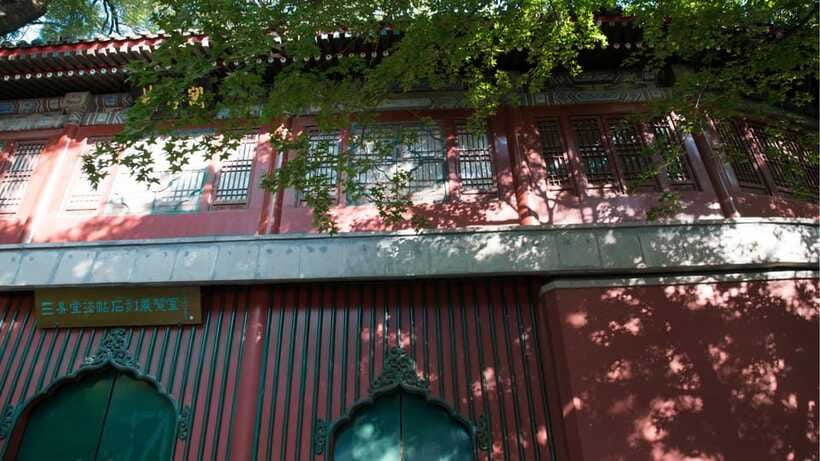
Beihai Park includes historic temple buildings along the grounds. These spots add a different mood to the walk, compared with the open lakeshore paths. Even if you are not a religious history deep diver, it helps to notice the change in setting: more stillness, more architecture, more “place of worship” energy.
5) Move toward the White Dagoba for the viewpoint moment
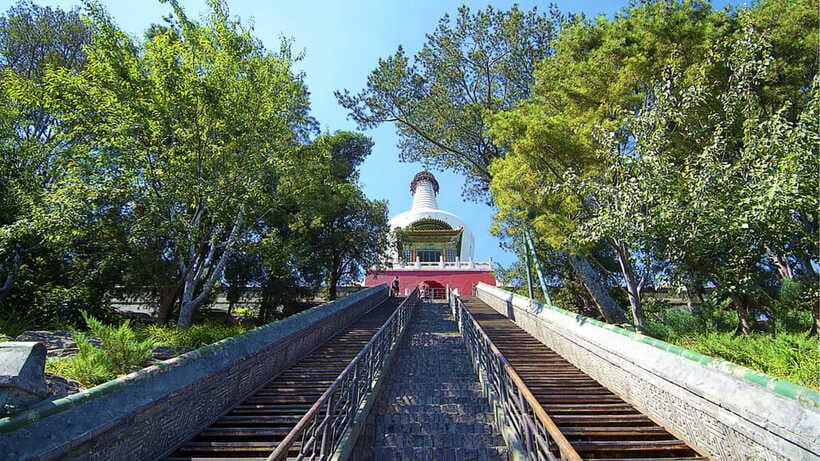
Plan to end with the White Dagoba area. The stupa is Tibetan-style and offers panoramic views, so going up near the end tends to make the visit feel like it has a finish line. You get your broad “I see Beijing from up here” payoff after you have already warmed up with the garden walking.
Optional bonus: you can take a boat ride on the lake if you want a slower perspective. Just treat it as an optional add-on because it is not listed as part of the included package.
White Dagoba: the included tower ticket and the view payoff
The most obvious reason to care about the White Dagoba is that it is not just a photo spot. The ticket package includes access to it, which matters because viewpoints can otherwise turn into a separate purchase at the site.
The White Dagoba is described as a Tibetan-style stupa, and the reason it is popular is simple: from the top, you can see a wider panorama of the park and beyond. That “lookout effect” is extra satisfying when you have already spent time walking the gardens below, because you understand the geometry of the place.
Practical tip for your climb: even if the park walk feels easy, the tower moment is where you may slow down a bit. Build in some time to take photos, catch your breath, and actually enjoy the view instead of speed-running it.
If you are someone who likes your best viewpoint moments organized, having this ticket included saves you from the classic Beijing problem: planning a great day but losing time and focus at the point where you want to see the city from above.
A different sort of day out of Beijing:
- All-Inclusive Tour: Tiananmen Square, Forbidden City, Great Wall
★ 5.0 · 2,873 reviews - MuBus: Mutianyu Great Wall ENG/ESP/RUS Guided Bus Tour
★ 5.0 · 2,361 reviews - 4-Hour Small Group Tour to Forbidden City with Entry Tickets
★ 5.0 · 1,863 reviews - Beijing: Tiananmen Square Registration Service(Ticket)
★ 4.5 · 1,704 reviews
Temples, bridges, and rock formations: where the garden tells its story
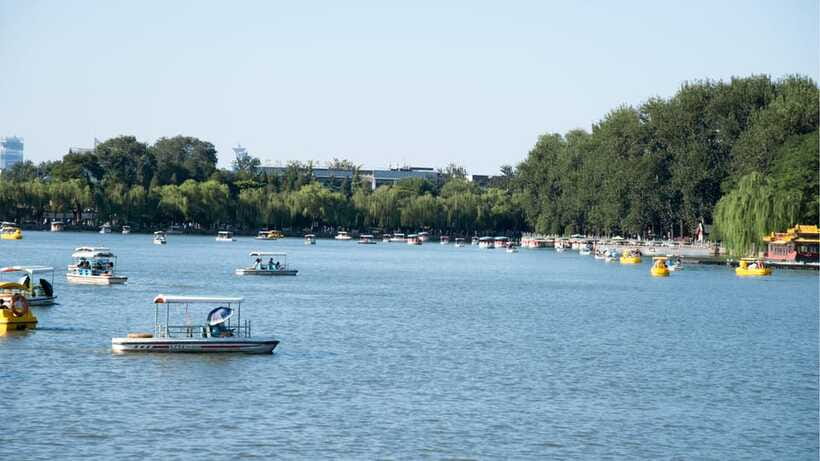
Beihai Park is often described as one of the oldest and best-preserved imperial gardens in China. You can feel that preservation in the details. The park is not just open space. It is full of built elements: rock formations, traditional pavilions, bridges, and temple areas.
Here is what I think you will find valuable: the park design rewards attention more than athletic effort. The garden layout tends to create a sequence of “frame, reveal, pause.” A bridge gives you a new angle. A pavilion gives you a place to stop and look. A rock formation adds texture so the scene never feels flat.
The supplied guide helps you move through those elements with less guesswork. In a self-guided setting, it is the difference between seeing random scenery and recognizing you are walking through a curated imperial leisure space.
Also, this is a good spot to experience a quieter side of Beijing tourism. The park is in the heart of the city, but it is still a pocket of calm, especially if you show up with a plan and a relaxed pace.
Value check: does $9 for Beihai Park feel fair
At about $9 per person for the full access ticket, this is priced like a practical add-on that covers the essentials rather than a premium guided day.
What you are paying for includes:
- Beihai Park entry
- White Dagoba (white tower) ticket
- An English textual and visual guide for navigating and sightseeing
The value is strongest when you want three things at once: entry, access to the main stupa, and guidance that helps you stay oriented. If you were doing this on your own, you would still pay for entry and you would likely have to figure out what is worth your time. Here, the guide reduces decision fatigue, which is real value when your day is short.
And the QR setup adds another layer of savings, not just money. Skip-the-ticket-line entry means less time stalled at checkpoints.
If you want an easy, structured self-walk at a low price, this package fits well.
Who should book, and who should skip
This ticket is best for you if:
- You prefer a self-guided style where you control pace and stops.
- You want access to both Beihai Park and White Dagoba without buying separate pieces.
- You like gardens, traditional architecture, and the slow pleasure of walking.
It might be less ideal if:
- You want a live person to explain every site in depth. This package does not include a live tour guide.
- You rely on audio guides. There is no audio guide included either.
One more fit note based on how this experience is set up: if you enjoy building your own itinerary but hate guessing where to start, the visual guide is a helpful middle path. You get structure without losing flexibility.
Should you book this Beihai Park full access ticket?
Yes, I would book it if your goal is a calm, rewarding half-day in central Beijing with a clear highlight at White Dagoba. The price makes sense because it bundles entry plus the tower access, and the guide gives you enough direction to make the walking meaningful.
Skip booking only if you strongly need a live guide to decode the sites for you. If you are comfortable using a visual guide and following a simple route, this is one of the most straightforward ways to experience Beihai Park without adding friction to your day.
If you want, tell me what day of the week you are going and what time you plan to arrive in Beijing. I can suggest a pacing plan for a smooth 4-hour loop that naturally ends at White Dagoba.
FAQ

How do I enter Beihai Park with this ticket?
You will receive electronic tickets and QR codes about 6 days before your visit by email or WhatsApp. There is no need to meet anyone in person, you use the QR codes to enter the attraction directly.
What is included in the price?
The package includes Beihai Park entry, a White tower (White Dagoba) ticket, and an English textual and visual guide for Beihai Park.
Is there a live tour guide or an audio guide?
No. This experience does not include a live tour guide or an audio guide.
What information do I need to send after booking, and what should I bring on the day?
After you book, you need to send your passport name and number via email or WhatsApp. On the day of your visit, bring your passport or ID card.
When will I get the electronic tickets and QR codes?
The electronic tickets and relevant information are sent about 6 days before your visit through email or WhatsApp.
How long is the visit, and is it refundable?
The experience is set for about 4 hours. You can cancel up to 24 hours in advance for a full refund.
Latest reviews from Beijing
- 11-Day Private China Tour: Beijing, Lhasa, Xi’an and Shanghai★ 5.0 · 5 reviews
- From Beijing: JinShanLing Great Wall Bus Tour with Ticket★ 4.2 · 5 reviews
- Beijing: Jingshan Park Entry Ticket★ 5.0 · 5 reviews
- Beijing: Top Michelin Vegetarian Restaurant Reservation★ 5.0 · 5 reviews
- Lama Temple, Hutong and Silk & Pearl Market Private Day Tour★ 5.0 · 5 reviews
- Beijing Culture Event: Tea Ceremony, Music Show, Calligraphy★ 5.0 · 5 reviews
- Private Great Wall Hiking Tour: Jiankou to Mutianyu★ 5.0 · 5 reviews
- Beijing Golden Mask Dynasty Show With Private Transfer★ 4.8 · 5 reviews
Tickets, compared.
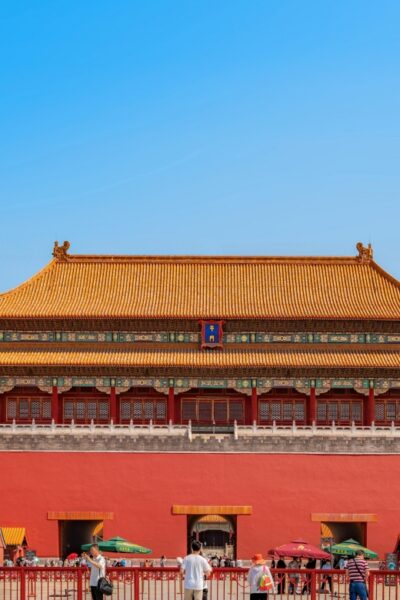
Forbidden City Tour(Group/Private)-Tickets Included
Read our review →
Mutianyu Great Wall Daily Tour with Ticket & Lunch
Read our review →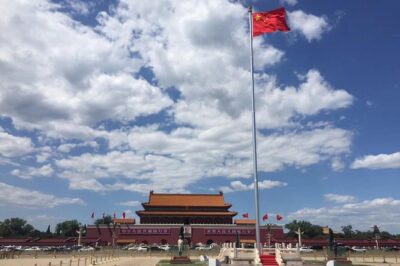
4-Hour Small Group Tour to Forbidden City with Entry Tickets
Read our review →
Ngong Ping 360: Cable Car Return Tickets & Combos
Read our review →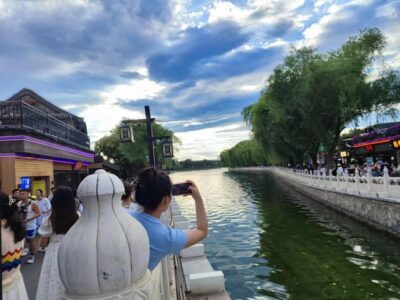
The Temple of Heaven or Summer Palace Entry Ticket
Read our review →
Beijing Forbidden City Ticket Booking (Optional: guide service)
Read our review →