
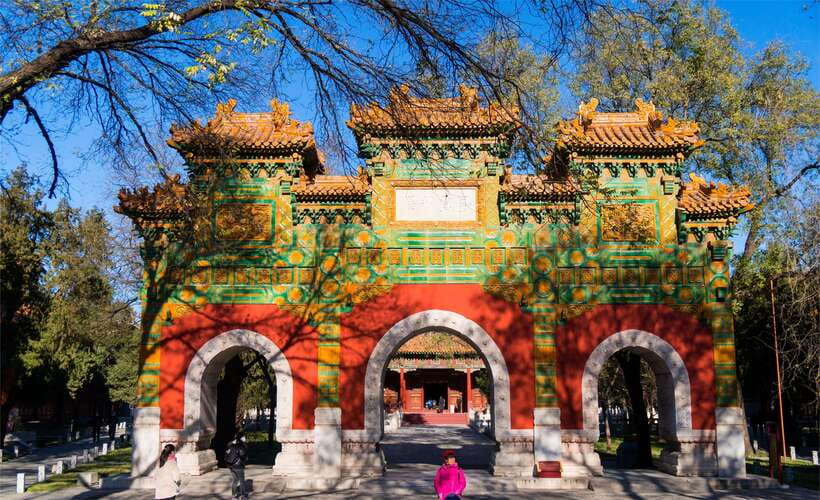
Reviewed · TICKETS
Beijing: Confucius Temple and the Impercial College E-ticket
This is interesting because you get to walk through a left-right pair of scholar sites, Confucian Temple and Guozijian (Imperial College), both tied to the big idea of learning and exams that shaped imperial China. The buildings date to the Yuan dynasty, and the layout is designed like a living diagram of how ceremonies and education worked.
I especially love the Imperial Examination angle, because the complex includes the stone tablets listing huge numbers of Jinshi names. I also like that your entry is straightforward, scan the QR code and use your passport or ID to get in. One consideration: the site is spread across courtyards with lots of indoor-outdoor transitions, so go in with a simple plan for the parts you truly want to see.
Key points at a glance
- QR code plus passport/ID entry makes your visit fast at the gate
- Yuan Dynasty layout as a left temple and right college, built on a clear central axis
- 198 stone tablets connected to the Imperial Examination, with 51,624 Jinshi records
- Three Confucius Temple exhibitions help you decode what you are looking at
- Guozijian’s state education design, with major gates and halls lined symmetrically
- Audioguide option at the entrance if you want extra narration while you walk
Why This Confucius Temple and Imperial College Combo Matters
In Beijing, it is easy to bounce from palace to park and end up with a blur of sights. This pairing is different. You are not just looking at old buildings. You are seeing two sides of the same system: reverence for Confucius and state-backed education for future officials.
The key is how the complex is organized. The Confucian Temple sits on the left and Guozijian sits on the right. That left-right rule is not random. It reflects how the place functioned over time, with ceremonies and learning treated as related but distinct roles.
Also, the architecture is Yuan dynasty in spirit and origin. The Confucian Temple was built in the early 14th century (in the Yuan Dade decade, 1306), and the overall academy complex dates to 1308. If you care about how China’s institutions evolved across dynasties, these courtyards give you something concrete to hold onto, not just general ideas.
What else people fit into the same Beijing trip:
- From Beijing: Mutianyu Great Wall Tours with Options
★ 4.9 · 9,216 reviews - Beijing: Forbidden City Tour(Group/Private)-Tickets Included
★ 4.8 · 7,974 reviews - Beijing: T-Square & Forbidden City Group or Private Tour
★ 4.8 · 4,446 reviews
The 1-Day Plan: Seeing the Courtyards in a Logical Order
This is a 1-day visit, and you can move at your own pace. The layout is built for a walk that follows the central south-to-north axis, so the trick is to let the site guide you instead of trying to “speed-run” everything.
Confucian Temple first: follow the axis
Start with the Confucian Temple sequence. Along the central axis, the main stops you will naturally hit are:
- Teacher Gate
- Dacheng Gate
- Dacheng Hall
- Chong Sheng Temple
These names matter because they signal changing “zones” in the experience, like passing from an outer approach into ceremonial importance.
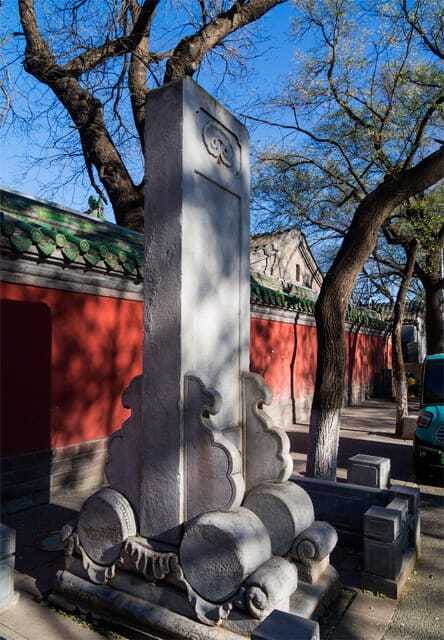
In front courtyards, you will also notice those signature stone tablet installations on either side. They feel like museum objects, but they are arranged like part of the original scholarly landscape.
Then Guozijian: continue into the education world
Next, shift over to Guozijian, the Imperial College, which served as the top educational institution and state education administration in the Yuan, Ming, and Qing dynasties. The space is also organized around a central axis and courtyards, so the mood changes from temple ceremony to education discipline.
Along the axes, you will see key elements such as:
- Jixian Gate
- Taixue Gate
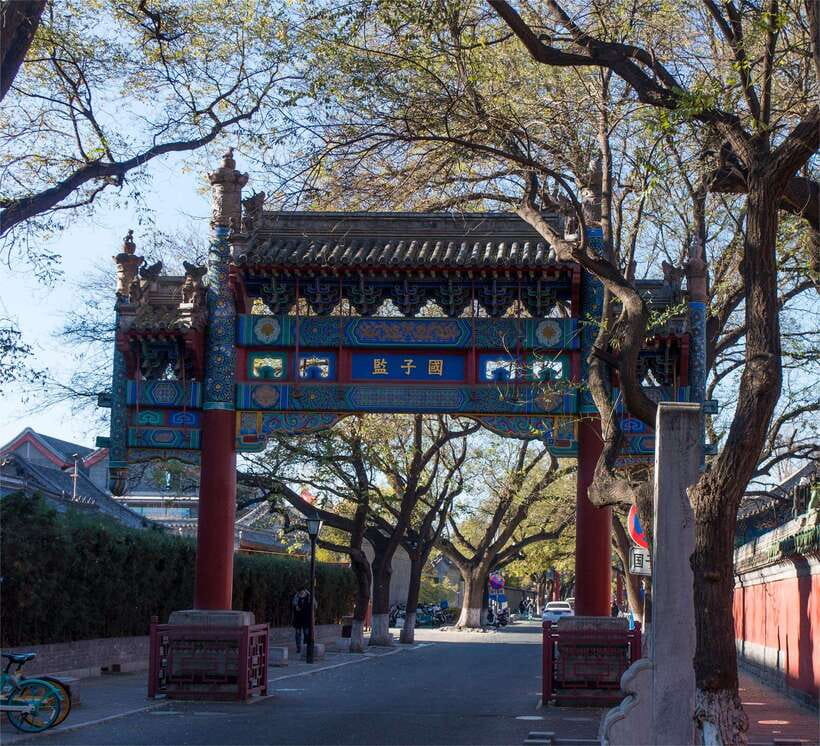
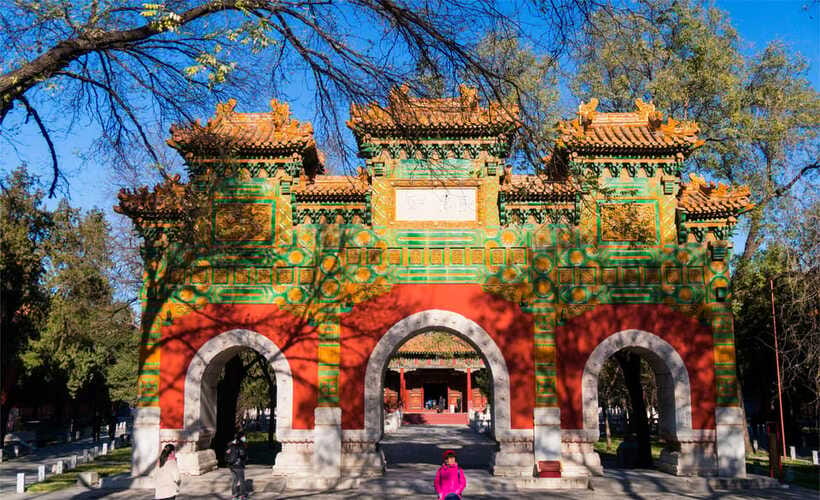
- Glazed memorial arch
- Biyong Hall
- Yilun Hall
- Jingyi Hall
It is the same “walk in order” logic, just focused on learning institutions.
A different sort of day out of Beijing:
- All-Inclusive Tour: Tiananmen Square, Forbidden City, Great Wall
★ 5.0 · 2,873 reviews - MuBus: Mutianyu Great Wall ENG/ESP/RUS Guided Bus Tour
★ 5.0 · 2,361 reviews - 4-Hour Small Group Tour to Forbidden City with Entry Tickets
★ 5.0 · 1,863 reviews - Beijing: Tiananmen Square Registration Service(Ticket)
★ 4.5 · 1,704 reviews
Confucius Temple: The Buildings and Ceremonies You Can Actually Read
The Confucian Temple covers over 22,000 square meters, with a construction area of about 7,400 square meters and three courtyards. That scale is big enough to feel like a full visit, but not so large that you will get lost if you stick to the main axis.
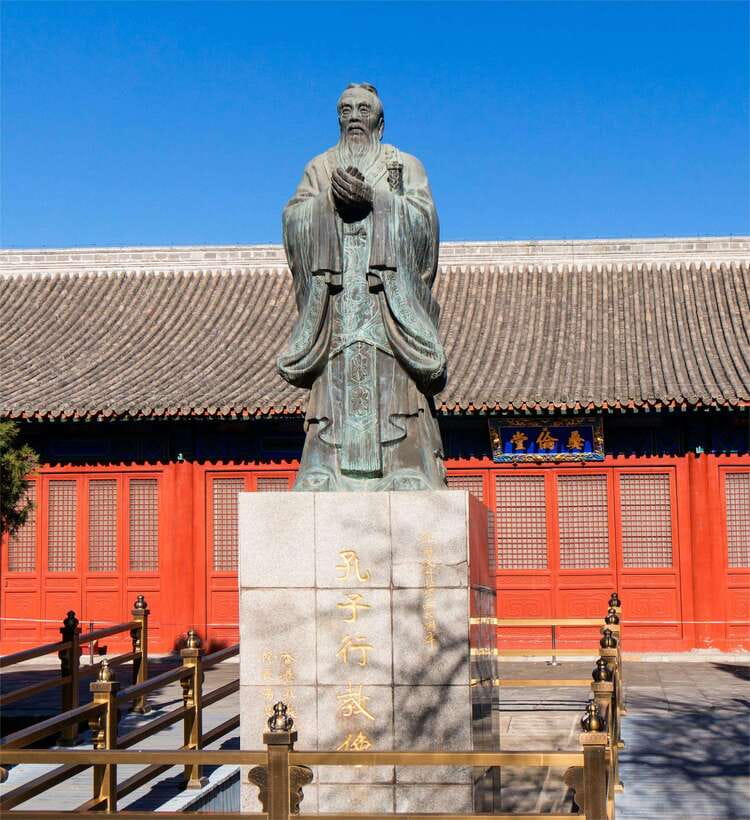
The temple was also used for memorial ceremonies for Confucius across multiple dynasties: Yuan, Ming, and Qing. That is a useful context when you stand in different halls. It helps you see the space as an active institution for remembrance, not only a static monument.
What to look for in the main courtyards
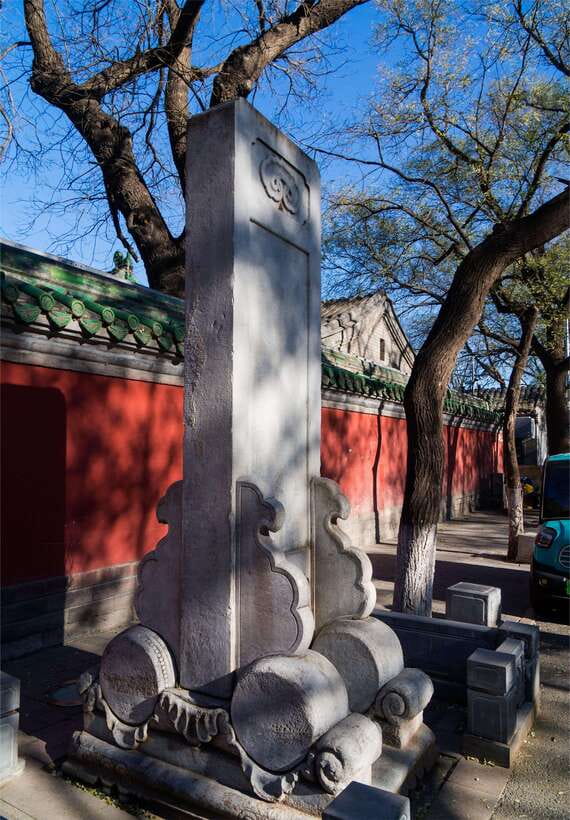
In the front courtyard areas, the large number of stone tablets is hard to miss. These are arranged into four groups positioned on both sides of the courtyard. Instead of random displays, the grouping helps you read the system as a structured record, like a library catalog turned into outdoor scholarship.
The exhibitions that help you connect the dots
Right now, the Confucian Temple includes three exhibitions, and I think these are worth your time because they translate the architectural experience into story:
- Exhibition of the Restored Dacheng Hall
- Exhibition of the Great Confucius
- Exhibition of the History of Beijing Confucius Temple
If you skip the exhibitions, you can still enjoy the courtyards. But if you take even a bit of time inside, the names and spaces make more sense, especially the ceremonial logic of Dacheng Hall and the cultural meaning tied to Confucius.
Dacheng Hall, the Great Confucius, and How to Not Miss the Point
Dacheng Hall is one of the ceremonial anchors of the Confucian Temple. Even if you are not a scholar, the building’s role is easy to grasp: it is the sort of hall you would associate with major ritual respect.
That is why the exhibition about the restored Dacheng Hall is a strong “pause spot.” Restoration exhibits are not only about repairs. They help you understand what the hall was intended to communicate.
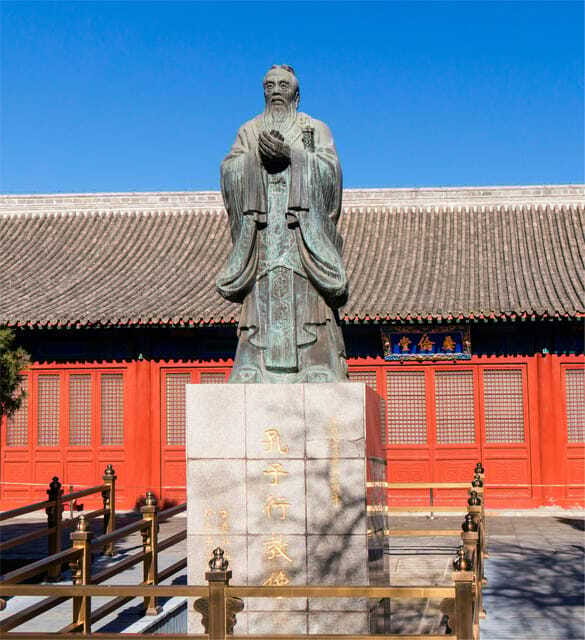
Then there is the Exhibition of the Great Confucius. This one is useful if you want your visit to feel like more than architecture appreciation. You get the chance to connect the site’s identity to the person and teachings that gave the place its name.
Finally, the Beijing Confucius Temple history exhibition helps you see how this specific location became important over time, including the way ceremonies were maintained across dynasties.
Imperial Examination Power: 198 Stone Tablets and 51,624 Jinshi Names
This is the part of the experience that feels most “real” for anyone curious about how education shaped careers.
On the temple side, there are 198 stone tables, divided into four groups in the front courtyard area. They record a staggering total: 51,624 names, including birthplaces and ranks of Jinshi. Those stone records are valuable for research into the Chinese imperial examination system.
Even if you cannot read every carved detail, the sheer scale tells you the truth of the system. This was not a small, symbolic tradition. It became an official pipeline, with records treated as long-term public knowledge.
Practical tip: when you stand near a cluster of tablets, look at the layout and groupings first. Then pick one tablet group and focus on how the inscriptions are arranged. That small strategy keeps the experience from turning into visual overwhelm.
Guozijian (Imperial College): Beijing’s Top State Education Center
Guozijian was the highest educational institution and the state’s administering organ for education during the Yuan, Ming, and Qing dynasties. Built in 1308 (early Yuan Zhida reign), it covers about 28,000 square meters and includes three courtyards.
It is not just “a school.” It is an official system made visible in architecture. As you walk the central axis, you can feel the intention behind symmetrical planning and staged entry.
The key gates and halls on the education axis
The main sequence along the axis includes:
- Jixian Gate
- Taixue Gate (Imperial College Gate)
- Glazed memorial arch
- Biyong Hall
- Yilun Hall
- Jingyi Hall
Each named spot helps you keep track of where you are in the academy’s structure. You are not wandering around random rooms. You are moving through a designed education environment.
Side pavilions you will want to notice
Beside the central axes, the design includes:
- Imperial tablet Pavilion
- Bell and Drum Pavilion
Those add ceremony and rhythm to the academic feel. Again, it shows you that learning and state culture were tied together.
Price and Value: Why $7 Can Actually Be a Good Deal Here
At $7 per person for a full 1-day ticket to the complex, this is strong value if you want the exam-and-learning story without paying for multiple separate admissions.
The big reason it is good value is not only the price tag. It is the breadth packed into one visit:
- Confucius Temple with multiple exhibitions
- Guozijian as the top-state education site
- A direct link to the Imperial Examination through the massive stone tablet records
Also, the entry method matters for value in a practical sense. If you can scan your QR code and use your passport or ID, you waste less time on the logistics side. That gives you more time for the courtyards and the indoor exhibitions that actually explain what you are seeing.
Practical Details You’ll Care About on Arrival
Entry: QR code, original passport, and e-ticket
You can enter by using your QR code along with your original passport (or your ID card, depending on what you prepared for). The key instruction is to have the original document and your electronic ticket ready.
If you forget your passport or arrive with only a photocopy, you can’t count on being able to solve that on the spot. Beijing site entry tends to be strict about matching the ticket details to the person.
Skip-the-line is real time you can spend inside
The experience includes skipping the ticket line. On busy days, that can be the difference between “I saw the courtyards” and “I actually had time to read.”
Audioguide option at the temple entrance
One nice add-on: there is the possibility to buy an audioguide at the entrance of the temple. If you like walking with narration, this is an easy way to fill the gaps when you want more context for inscriptions, halls, and the meaning behind the layout.
Wheelchair accessible
The ticket is listed as wheelchair accessible. If you use a mobility aid, this is a major plus. Still, give yourself a slower pace because courtyard routes can involve changes in ground conditions.
Who This Experience Suits Best
This visit works especially well if you:
- Want a focused day on education and bureaucracy in imperial China
- Like architecture that has a purpose, not just a pretty facade
- Are curious about the Imperial Examination and want a physical anchor
- Prefer a “walk-with-meaning” site where the layout guides you
It might be less perfect if you:
- Only want a short, casual outdoor stop and dislike indoor exhibitions
- Are expecting a full museum-style collection with lots of modern interpretive panels (this place is more about space, axis, and inscriptions)
- Want a nightlife or shopping-heavy day, because this is a quiet, ceremonial, scholarly setting
Should You Book This Confucius Temple and Imperial College E-Ticket?
I recommend booking this if you want a smart, affordable way to understand how Confucius worship and state education connected in imperial China. At $7, it is hard to match the value: two major scholar sites, plus the exhibitions and the imperial-exam stone tablet records.
Book it if you like structured wandering. The layout practically tells you where to go next, and the axis makes the visit feel coherent.
Skip it only if you are already fully saturated with historic campuses and temples, and you know you would rather spend your day on other priorities in Beijing. If that is you, you may find yourself wishing for something with more hands-on museum material.
If you want my practical call: this is a great “knowledge-building day” ticket, especially if you show up with your passport ready, scan quickly at the gate, and give yourself enough time to slow down in front of those stone tablets.
FAQ
Do I need a passport for entry?
Yes. You enter with your original passport, and an ID card is also listed as acceptable.
Can I enter with just a QR code and my document?
Yes. The experience states that you can use the QR code together with your passport or ID to enter.
How long is the visit?
It is valid for 1 day. You can check availability for starting times.
What do I get with the ticket?
The included item is the tourist attraction ticket for the Confucian Temple and the Imperial College complex.
Is there a way to avoid the ticket line?
Yes. The experience includes skipping the ticket line.
Is it wheelchair accessible?
Yes, it is listed as wheelchair accessible.
Is this a private group experience?
Yes, it is listed as a private group.
What should I bring with me?
Bring your passport or ID card, and use your electronic ticket for entry.
What is the cancellation policy?
Free cancellation is offered up to 24 hours in advance for a full refund.
Latest reviews from Beijing
- 11-Day Private China Tour: Beijing, Lhasa, Xi’an and Shanghai★ 5.0 · 5 reviews
- From Beijing: JinShanLing Great Wall Bus Tour with Ticket★ 4.2 · 5 reviews
- Beijing: Jingshan Park Entry Ticket★ 5.0 · 5 reviews
- Beijing: Top Michelin Vegetarian Restaurant Reservation★ 5.0 · 5 reviews
- Lama Temple, Hutong and Silk & Pearl Market Private Day Tour★ 5.0 · 5 reviews
- Beijing Culture Event: Tea Ceremony, Music Show, Calligraphy★ 5.0 · 5 reviews
- Private Great Wall Hiking Tour: Jiankou to Mutianyu★ 5.0 · 5 reviews
- Beijing Golden Mask Dynasty Show With Private Transfer★ 4.8 · 5 reviews
Tickets, compared.
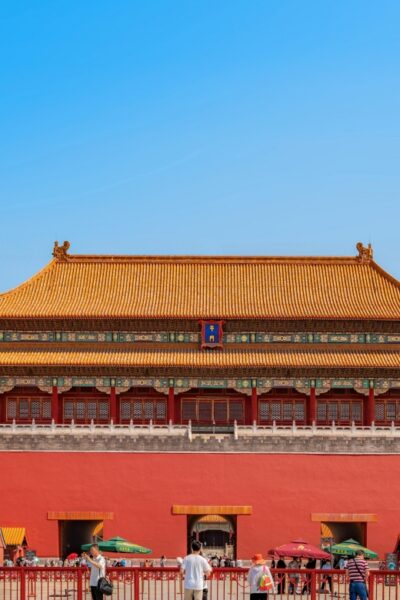
Forbidden City Tour(Group/Private)-Tickets Included
Read our review →
Mutianyu Great Wall Daily Tour with Ticket & Lunch
Read our review →
4-Hour Small Group Tour to Forbidden City with Entry Tickets
Read our review →
Ngong Ping 360: Cable Car Return Tickets & Combos
Read our review →
The Temple of Heaven or Summer Palace Entry Ticket
Read our review →
Beijing Forbidden City Ticket Booking (Optional: guide service)
Read our review →