
Reviewed · HISTORICAL TOURS
Shanghai Uncommon Historic Sites Tour
This tour works because it takes you off the usual Shanghai loop and swaps in specific historic places tied to real people and real industry. You’re not just snapping photos, you’re getting a guided storyline that links colonial architecture, early Communist Party milestones, and engineering landmarks.
I especially like the mix of French Concession-era buildings and sites that feel slightly strange in the best way, like the former slaughterhouse complex now known for food and shopping. I also like that your day is built for comfort, with hotel pickup and an air-conditioned vehicle, plus lunch included.
One consideration: this is a full 8-hour day with several stops, so if you hate walking between sights or prefer long unstructured time, you may find the pace a bit tight.
Key highlights that make this tour worth your time
- French Concession architecture at Moller Residence, including its brown tiled Gothic-Tudor look
- 1933 Old Millfun, a repurposed industrial site with a chilling past as Shanghai’s largest slaughterhouse
- Zhou Enlai’s former residence, a French-style home built in the 1920s tied to the PRC’s first Premier
- Shanghai Ancient City Wall framing, where the Ming Dynasty defensive line shows up in today’s street layout
- Early Communist Party history at the Site of the Second National Congress in Shanghai (July 16 to 23, 1922)
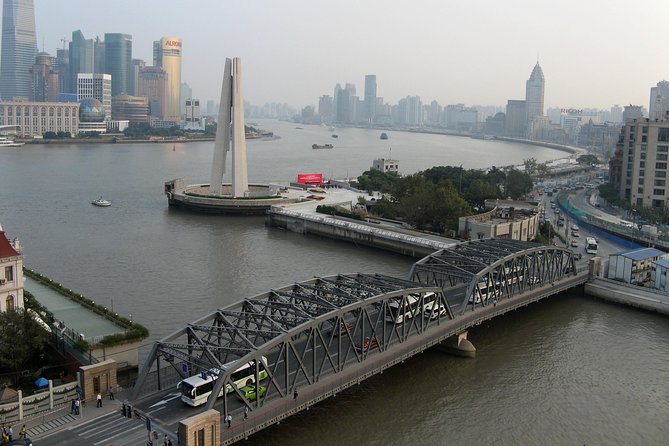
- Waibaidu Bridge, the first all-steel bridge in China and a rare surviving camelback truss example (opened January 20, 1908)
A Day of Shanghai Contrasts, Without the Usual Detour
Shanghai can feel like two cities at once. One side is colonial-era elegance, strict geometry, and old mansions with surprising design choices. The other side is political history, industry, and infrastructure that still shapes how the city moves today.
That contrast is exactly why this tour works. You start with a colonial villa, then step into a repurposed slaughterhouse complex, then into a home linked to Zhou Enlai, and later you shift to Ming Dynasty defenses and early Communist Party milestones. The day ends with an engineering landmark, so your final photos don’t look like the same skyline shot over and over.
Your best outcome depends on how you like to travel. If you enjoy context, signage, and a guide who helps you connect the dots, this is a strong choice.
More Historical Tours in Shanghai
- Tour of Jewish Shanghai led by a Jewish History Expert
★ 5.0 · 106 reviews - 4-Hour Private Shanghai Art and History Tour
★ 5.0 · 8 reviews - Shanghai Propaganda and History Walking Tour
★ 5.0 · 5 reviews
Price and logistics: what $175 buys you (and what it doesn’t)
At $175 per person for about 8 hours, the value is in three things: you get pickup and A/C transport, you get lunch, and you get admission and taxes covered (with “all fees and taxes” explicitly included). On a city like Shanghai, that combo matters because it reduces the time you would spend hunting tickets, figuring out routes, and bargaining for basic logistics.
Tips are not included, and that’s worth planning for. If you budget a bit extra for your guide and driver, the total cost feels fair for the amount of guided time you’re getting.
Also, this tour is booked about 32 days in advance on average. That’s a hint it’s popular, especially with visitors who want a private group experience without having to build the day themselves.
Hotel pickup and an A/C vehicle that lets you focus on the stops
The tour includes pickup, which is one of those “small” benefits that turns into a big day-saver. In practice, it means you spend more of the morning on-site rather than navigating the first commute.
You also travel by an air-conditioned vehicle. Even if you handle walking fine, heat and humidity can steal your energy quickly in Shanghai. Having climate control between stops helps you actually enjoy the details at each stop.
Since it’s a private tour where only your group participates, you’re not squeezed into a crowd rhythm. That tends to make photography and question-asking easier, especially at sites where the interesting parts are in small architectural or interpretive details.
Stop 1: Moller Residence in the French Concession
Moller Residence is the kind of place that makes you pause because it doesn’t look like what you expected in Shanghai. It’s a colonial-era mansion in the French Concession area, built by Eric Moller, who became wealthy from British shipping, in 1936.
The standout here is the design language. You get brown tiled Gothic and Tudor features, and the whole facade reads like a European house transplanted into a Chinese city. It’s an hour long visit and admission is listed as free, which makes it an easy first stop to enjoy without nickel-and-diming your time.
What I like about this stop is how it sets the tone for the rest of the day. You’re not just seeing “old buildings,” you’re seeing how Shanghai attracted foreign wealth, foreign taste, and foreign builders, then blended them into local life.
Practical note: bring your camera and take your time. The details are part of the story here, and you’ll get more out of the building if you slow down for a few minutes.
More history days in Shanghai:
- Beijing Historical Tour II including Summer Palace, Lama Temple & Panda Garden
★ 4.0 · 187 reviews - Beijing Historical Tour I – Forbidden City, Tiananmen Square & Temple of Heaven
★ 4.0 · 120 reviews - Beijing Historic City Guided Walking Tour + Calligraphy Creation
★ 5.0 · 59 reviews - All inclusive Two-Day Xi’an private Heritage Tour
★ 5.0 · 33 reviews
Stop 2: 1933 Old Millfun, an old slaughterhouse turned into modern life
Then the tour jumps to something that feels almost unreal at first: 1933 Old Millfun, a complex of restaurants and shops that used to be Shanghai’s Municipal Council slaughterhouse.
This was the Shanghai Municipal Council Slaughterhouse, described as the largest slaughterhouse in Shanghai. That past adds a layer of tension to the visit, even though the buildings are now used for everyday leisure.
It’s easy to walk through and just treat it like another “cool photo spot,” but the value is in understanding the transformation. Industrial sites like this are the blueprint for how cities change their functions without wiping their memory. You’re watching history get reused, not erased.
The visit is about an hour and admission is free. That makes it a good mid-morning stop when your energy is still good and you can switch mental gears from architecture to social history.
Stop 3: Zhou Enlai’s former residence, a French-style home tied to the PRC’s early years
Next is the Former Residence of Zhou Enlai. Zhou Enlai (1898?1976) was the first Premier of the People’s Republic of China from 1949 until his death.
You’ll see a three-story French style house built in the 1920s. That date matters because it places the home in the Shanghai of before the PRC became a governing reality, in the era when foreign influence in design and neighborhood layout was still strong.
What I like here is how the house itself supports the story. It’s not just a name on a plaque. The architectural style helps you picture how Shanghai looked during the period when Zhou Enlai lived and worked through major political shifts.
This stop is also about an hour with admission free. If you care about political history but dislike museum-style lectures, this format can feel more human, because you’re standing where the person lived.
Stop 4: Shanghai Ancient City Wall, Ming Dynasty defense you can trace in the streets
The Shanghai Ancient City Wall stop is shorter, about 30 minutes, but it’s a smart use of time. In 1553 during the Ming Dynasty, Shanghai built a city wall to defend itself against Japanese pirates.
The tour focuses on where the wall sat in today’s city map. It followed the course of what are now Renmin Lu and Zhonghua Lu. The wall is described as measuring 8.1 meters high (27 ft) and 4.8 km (3 mi) long.
Here’s how to make the most of this short stop: don’t rush your eyes. City walls are easy to treat like a historical trivia fact. Instead, use this time to understand how defenses shaped urban layout. Even when only parts remain, street alignments and neighborhood boundaries can still reflect the old fortification line.
Admission is listed as included here. Since the stop is not long, plan to use it for interpretation rather than trying to “collect” everything.
Stop 5: Site of the Second National Congress of the Communist Party of China (July 16 to 23, 1922)
Now you shift to a key political milestone: the Site of the Second National Congress of the Communist Party of China. The congress was held in Shanghai between July 16 and 23, 1922, and the tour explains why that meeting mattered in the party’s development.
This stop runs about an hour, and admission is included. The time length is helpful because the context behind early party meetings can be confusing if you only read headlines. With a guide, it becomes clearer why Shanghai was chosen and what the outcome of the congress helped set in motion.
One reason I like including political sites in a history tour is that it prevents Shanghai from becoming only “architecture and shopping.” This adds the other Shanghai layer: the one tied to ideology, organization, and the early formation period that later shaped national decisions.
Final stop: Waibaidu Bridge, China’s first all-steel bridge (opened January 20, 1908)
The day ends at Waibaidu Bridge, also known as the same name in most guides. It’s described as the first all-steel bridge and the only surviving example of a camelback truss bridge in China.
The present bridge was opened on January 20, 1908. Even if you’re not a structural engineering fan, the design tells a story because it’s specific, not generic. A camelback truss shape is recognizable, and it’s rare enough in China that it deserves a closer look.
This is a good “last photo” stop because it gives you something different from buildings. You get lines, symmetry, and a sense of how Shanghai connected neighborhoods and commerce over time.
If you care about photography, take a moment to step back and frame the bridge with nearby streets. The bridge works best when you show it as part of the city rather than as an isolated object.
Lunch that actually helps: authentic dumpling lunch included
Lunch is included, and it’s described as an authentic dumpling lunch. That matters because dumplings are Shanghai-style comfort food, and having lunch handled for you keeps the day smooth.
Even if you’re picky, dumpling meals tend to give options. And since lunch is included, you’re not forced to hunt for something open during the middle of an itinerary.
This is also a practical “value” point in the price. If you were to add lunch plus admissions plus guided time on your own, the cost adds up fast in a major city.
What the reviews help you plan for, especially with the guide
One of the strongest praise points is how well the guide can shape the experience day-to-day. Peggy is specifically mentioned as an excellent guide: easy to get along with, speaking amazing English, taking great photos, and helping plan a unique trip around the city.
That matters because “historic sites” tours can be hit-or-miss. The difference is often not the places themselves, it’s the guidance. If your guide can spot what you care about, answer questions clearly, and help you take better photos without turning every stop into a performance, the entire day feels smoother.
If you’re booking and you want that high-touch experience, it’s worth paying attention to whether the tour is positioned as a private group day. Private tours leave more room for a guide to adjust to your interests.
Who should book this tour, and who might not love it
This tour is a great fit if you:
- Want less obvious Shanghai stops, including a French Concession mansion and a former slaughterhouse turned complex
- Like history that’s tied to places you can still see and walk around
- Appreciate a mix of architecture, political milestones, and engineering landmarks in one day
- Prefer having pickup and transport handled so you can spend your energy on the sights
You might consider a different option if you:
- Prefer extremely flexible itineraries with long free time
- Hate short stops and would rather do one or two attractions for half a day each
- Need a fully unstructured day with minimal scheduled walking
Should you book the Shanghai Uncommon Historic Sites Tour?
I think you should book it if you want a guided day that feels specific, not generic. The stop selection is unusual in a way that makes Shanghai feel real, from French Concession design at Moller Residence to the eerie industrial past of 1933 Old Millfun, then into Zhou Enlai’s French style home and the city’s defensive and political story arcs.
The value math works too: $175 for about 8 hours with pickup, air-conditioned transport, an included dumpling lunch, and admissions and taxes covered is a solid deal for a private group day. Add in the fact that a guide like Peggy can make the experience smoother and more photo-friendly, and it becomes an easy “yes” for travelers who enjoy context.
Book if you’re curious, comfortable walking a bit between stops, and happy to spend your day connecting Shanghai’s layers instead of only collecting sights.
FAQ
How long is the Shanghai Uncommon Historic Sites Tour?
It runs for about 8 hours.
What time does the tour start?
The start time is 9:00 am.
Is lunch included?
Yes. Lunch is an authentic dumpling lunch.
Does the tour price include admission fees?
Yes. All fees and taxes are included, and admission is listed as free or included for the stops.
Is hotel pickup included?
Pickup is offered.
Is this tour private?
Yes. Only your group will participate.
Are service animals allowed?
Yes, service animals are allowed.
What is the cancellation policy?
You can cancel for a full refund up to 24 hours before the experience’s start time. If you cancel less than 24 hours before, the amount paid will not be refunded.
Latest reviews from Shanghai
- Suzhou and Zhujiajiao Water Town Private Customized Day Tour from Shanghai★ 5.0 · 24 reviews
- 4-Hour Private Flexible Photography Tour of Best Shanghai Scenes★ 5.0 · 24 reviews
- Suzhou and Zhujiajiao Private Guided Day Trip from Shanghai★ 5.0 · 27 reviews
- Private Cooking Class: Make Your Own Dim Sum In Shanghai★ 5.0 · 27 reviews
- Shanghai Huangpu River Night Cruise with Buffet Dinner★ 5.0 · 28 reviews
- Private Customized Tour: Shanghai in One Day★ 4.0 · 28 reviews
- Zhouzhuang Water Village Tour from Shanghai★ 3.5 · 28 reviews
- Private Day Excursion to Suzhou and ZhouZhuang Water Village from Shanghai★ 5.0 · 29 reviews
Historical Tours, compared.

Beijing Historical Tour II including Summer Palace, Lama Temple & Panda Garden
Read our review →
Beijing Historical Tour I – Forbidden City, Tiananmen Square & Temple of Heaven
Read our review →
Tour of Jewish Shanghai led by a Jewish History Expert
Read our review →
Beijing Historic City Guided Walking Tour + Calligraphy Creation
Read our review →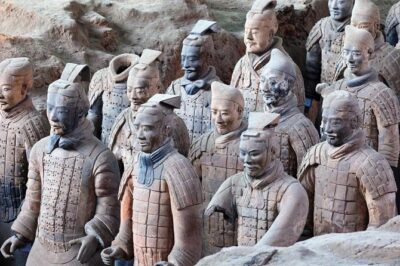
All inclusive Two-Day Xi’an private Heritage Tour
Read our review →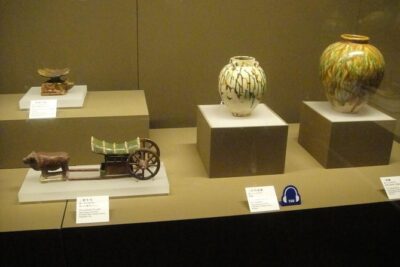
Xi’an Full Day Sightseeing Tour – Shaanxi History Museum, Big Wild Goose Pagoda, Ancient City Wall
Read our review →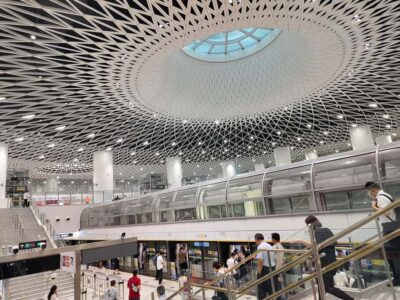
Shenzhen History , Culture & Scenic + (Drone Delivery) tour
Read our review →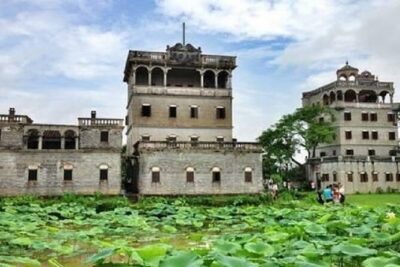
UNESCO Watchtowers World Heritage Ancient Villages Private Tour
Read our review →Browse the lists this tour appears in