
Reviewed · COOKING CLASSES
Half-Day steamed Buns Cooking Class with a Local Market Visit
Steamed buns sound simple, until you see how Sichuan cooks build flavor from scratch. This half-day experience links a local spice market walk with hands-on bao zi making, so you learn what ingredients mean before you start mixing. I especially like the market-first approach and the fact you leave with something you made and can eat right away. One thing to consider is that you do need a little walking and you’ll be moving at a group pace, so it is not the slow, wandering kind of food tour.
You start at Chilli Cool China, then head out with an English-speaking guide for a market visit built around tasting, comparing, and small learning challenges. After that, you return for the cooking lesson in a traditional Sichuan-style courtyard kitchen at Chilli Cool’s Kitchen. If you end up with a guide like Lance or Jerry, you’ll likely get lots of clear explanations, plus helpful photo stops along the way.
Key highlights worth your time
- Market visit with learning challenges that help you spot Sichuan spices and key ingredients fast
- English-speaking guidance that makes it easier to understand what you buy and why it matters
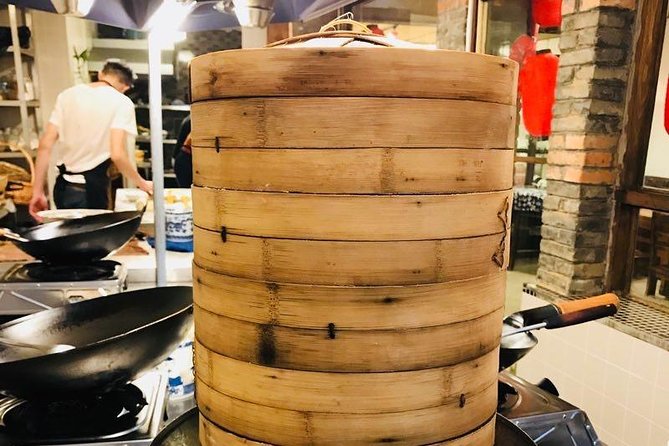
- Bao zi instruction focused on doing, not watching in a traditional Sichuan-style courtyard kitchen
- Sichuan local tea offered at the start, following a local hospitality custom
- You eat your own steamed bao zi at the end, with beers or beverages and light refreshments
- Small group size (max 15) helps keep the class personal
The real value: why a spice market first beats a cooking class alone
If you have ever watched cooking videos and thought, I get the idea, but I still would not know what to buy, this tour solves that problem. You do not begin with flour and filling. You begin with ingredients, including Sichuan spices, and you get coached on what to look for.
That order matters. When you understand what a spice smells like and how it is used, the later cooking steps make more sense. You also pick up practical language for describing ingredients, which makes you more confident when you shop on your own afterward.
It is also a time win. In about 4 hours, you do two things that usually take separate days: ingredient shopping and cooking practice. For a short stay in Chengdu, that combo is hard to beat.
More Cooking Classes in Chengdu
- Half-Day Chengdu Cooking Class with a Local Market Visit
★ 5.0 · 465 reviews - Chengdu: Cooking Class with Fresh Market Half Day Experience
★ 5.0 · 42 reviews - Half-Day Sichuan Cooking Class Experience in Chengdu
★ 4.0 · 17 reviews
Meeting at Chilli Cool China, then heading out with an English-speaking guide
Your experience starts back at the meeting point at 167 Yi Huan Lu Bei San Duan, Jin Niu Qu, Chengdu Shi, Sichuan Sheng, 610051. Then you move into the local food world with an English speaking guide who explains what you are seeing and how it connects to the buns you will make.
This is not just a lecture. You are guided through the market with learning tasks, which is a smart way to keep your attention while you’re walking. The reviews also point to guides who stay organized and patient, like Lance taking lots of photos and Jerry helping translate unfamiliar vegetables so you could participate more fully.
What I like about this start is how quickly it gets useful. You can ask questions right away, and the answers plug directly into your later cooking.
Chilli Cool’s market stop: how the spice walk is structured
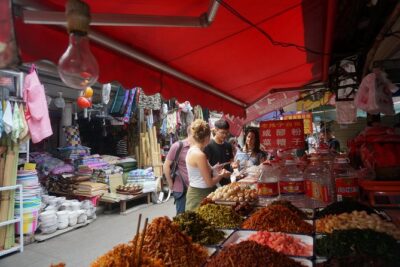
In the market, you will explore spices and ingredients that are used in the bao zi process. The experience is described as fun and challenge based, so you are not just passively looking at shelves. You learn different species of Sichuan spices and how they’re used, which is the whole point of the market portion.
Expect a practical flow. You look, you compare, and you connect it to what the chef will use later. This is the part that makes your cooking feel grounded in real local shopping habits, not just a staged demo.
One possible drawback here is that markets can vary in crowd level and footing. Wear comfortable walking shoes, because you will likely do some steady walking and turning in busy areas. If you get tired easily, slow down your own pace and still try to engage with the guide when you spot something interesting.
Sichuan local tea: the small pause that sets the tone
Before cooking, you get treated with Sichuan local tea as it’s done as a local custom to welcome friends and visitors. This is brief, but it helps reset your energy after the market walk.
The tea also gives you context. Sichuan food often pairs flavors with a sense of warmth, comfort, and depth. Even if you do not know the tea style yet, the moment makes the cooking class feel less like a factory and more like a shared table.
If you are the type who likes food culture details, this stop will land well. If you are more practical, it still functions as a quick break before you handle dough.
More Half-Day Tours in Chengdu
- Private Half-Day Chengdu Panda Breeding Center Tour with Optional Volunteer
★ 5.0 · 353 reviews - Half-Day Chengdu Back Alley Foodie Tour
★ 5.0 · 58 reviews - Half-day Private Mahjong course in Local Tea House
★ 5.0 · 16 reviews - Private Half-Day Tour in Sichuan Culture Show with Hot Pot Dinner in Chengdu
★ 4.5 · 15 reviews
Getting your hands on bao zi: the courtyard kitchen lesson
The cooking class happens in a traditional Sichuan style courtyard. That setting is not just decoration. It tends to make classes feel communal and grounded, with fewer distractions than a modern studio kitchen.
A professional chef leads the session, and you follow along step-by-step. Your goal is to make steamed bao zi buns with filling, the classic bun that people in Sichuan love for everyday meals and special cravings.
Because you are learning by doing, you will likely repeat motions you might think are too detailed if you were only watching. That repetition is exactly how you improve. By the time you steam, you understand the dough feel and the filling balance enough to adjust on the fly.
If you have not worked with yeast dough or dumpling-style wrappers before, do not panic. The value here is that the instructions are paired with clear ingredient context from the market. You know what the spices are and what role they play, so you can focus on technique without guessing the flavor logic.
What you will eat, and why the final meal matters
At the end, you feast on the bao zi you created. The description also includes beers or other beverages and light refreshments. It is a full circle moment: you shop, you cook, you eat.
This is more satisfying than classes where you only sample a bite and then leave. Here, your work becomes the meal, and you can judge what you made while it is fresh. You also get a social payoff because everyone’s buns come from the same shared process.
If you have any dietary preferences, there is a vegetarian option available. You need to advise at booking, so do it early. That matters because fillings and flavor balance change, and vegetarian cooks need time to plan.
Price and value: is $80 fair for a half-day?
At $80 per person, the price is in the mid-range for an organized food class in a major city. What makes it feel more reasonable is that you are not paying for one activity. You are paying for:
- A guided market visit focused on Sichuan spices and ingredients
- A structured cooking session led by a professional chef
- Ingredients and light refreshments
- Beverages or beer
- Lunch or dinner depending on your class schedule
In other words, you are buying both experiences plus a meal. If you were to recreate the same day on your own, you would still need to spend time figuring out where to shop, which ingredients to buy, and then how to turn them into a bao zi filling without a guide.
Group discounts are mentioned as well, and the group size is capped at 15 travelers. That small cap can make a difference for getting questions answered and for keeping the class moving smoothly.
Timing, pacing, and who this suits best
The duration is about 4 hours. That is short enough to fit into a sightseeing day, but long enough to include a real market walk and hands-on cooking.
The pacing can feel lively, because market learning and kitchen technique move on a schedule. If you love slow food wandering with zero structure, you might prefer a standalone market tour. If you want to learn and make something, this format is a strong match.
This is a great fit if you:
- Want authentic Sichuan ingredient learning, not just generic spice talk
- Like cooking classes where you actually touch the dough
- Prefer a guided day over planning your own market shopping route
- Travel with moderate flexibility and comfortable walking shoes
It may be less ideal if you dislike markets or if you need a quiet, fully private experience.
Logistics that can affect your day (small but real)
You will operate in all weather conditions, so dress appropriately. Chengdu weather can shift, and even a light rain can change how comfortable outdoor walking feels. Bring layers you can adjust quickly.
You also need to wear comfortable walking shoes, because the market portion is active. This matters more than people think, since dumpling making itself is mostly seated or short standing, but market walking is the big physical part.
One other detail you should plan for: the booking requires passport name, number, expiry, and country for all participants. That is easy to handle if you have your details ready, but it can slow you down if you are booking last minute without the info.
Vegetarian option: how to make it work for your bun
A vegetarian option is available, but you must advise at booking if needed. That is important because fillings and spice balance need to match the bun style without meat-based ingredients.
If you have specific dietary needs beyond vegetarian, you should advise at booking as well. The more accurate you are, the better chance the kitchen can handle it smoothly within a small class group.
Photos, guide style, and the small moments that stick
Two guide names show up clearly in the experience: Lance and Jerry. Lance is noted for taking lots of fabulous pictures, which is helpful because you might not think to document the market and dough prep the way you would in a museum.
Jerry is described as patient and helpful, including translating unfamiliar vegetables and giving people chances to use a little Chinese language. That kind of interaction turns a class into a conversation, and it makes the market visit feel less like shopping and more like learning.
Even if you do not care about photos, guide energy affects the class. When explanations are calm and specific, you get better at the dough and feel less stressed.
Should you book this bao zi class?
Book it if you want a short, structured food day that teaches Sichuan spices before you cook and ends with a meal you made yourself. The combination of market learning, a professional chef, and a traditional courtyard kitchen is exactly the kind of value that works well for first-time Sichuan food learners.
Skip it if you want a fully flexible, no-schedule market wander, or if you dislike active walking. This is hands-on and guided, and it will keep moving.
If you do book, go in hungry and bring your curiosity. Wear shoes you can stand in, and if you are vegetarian, lock in that option when you reserve. Then show up ready to learn the ingredients first, and the bun skills will click faster than you expect.
FAQ
How long is the bao zi cooking class with the market visit?
It runs for about 4 hours (approximately 4 to 5 hours).
What is included in the tour price?
You get an English speaking guide, a market tour, food ingredients, beverages or beer, light refreshments, and lunch or dinner based on your class schedule.
Is there a vegetarian option?
Yes. A vegetarian option is available, but you need to advise when booking.
What is the minimum age for this experience?
The minimum age is 5 years.
Does it operate in bad weather?
Yes, it operates in all weather conditions, so you should dress appropriately.
Can I get a refund if I cancel?
Yes, you can cancel for a full refund if you cancel at least 24 hours before the experience’s start time.
More Shopping Tours in Chengdu
- Half-day Dandan Noodles Cooking Class with a Local Market Visit
★ 5.0 · 8 reviews - Three-Hour Private Chengdu Tea Wholesale Market Tour
★ 5.0 · 4 reviews - Mini Group Xian Day Tour to Terracotta Army, City Wall, Pagoda and Muslim Bazaar
★ 5.0 · 1,320 reviews - Shanghai Day Tour to Zhujiajiao Water Town, Yu Garden, Bazaar, Bund
★ 5.0 · 162 reviews
Latest reviews from Chengdu
- Chengdu: Giant Panda Base Reservation and Entry★ 5.0 · 5 reviews
- Private Day Tour: Chengdu Panda and Leshan Buddha★ 4.0 · 5 reviews
- Full-Day Tour of Leshan’s Giant Buddha from Chengdu★ 5.0 · 5 reviews
- Half-Day Tour at Chengdu Panda Breeding Research Base★ 4.0 · 5 reviews
- Huanglong Scenic Area: Explore Stunning Five-Colored Ponds★ 5.0 · 6 reviews
- 3 Day Private Tour to Jiuzhai Valley and Huanglong★ 5.0 · 6 reviews
- From Chengdu: Tibetan Village Live as a Tibetan Day Tour★ 5.0 · 6 reviews
- Chengdu: Private Tour at Panda Base with Guide★ 5.0 · 6 reviews
Cooking Classes, compared.
Half-Day Chengdu Cooking Class with a Local Market Visit
Read our review →
Online Cooking Class Beijing Dumplings and Cuisine by Sunflowerli Renowned Chef
Read our review →
Half-Day Xi’an Biang Biang Noodles Cooking with a Market Visit
Read our review →
Cooking Class with Fresh Market Half Day Experience
Read our review →
Private Cooking Class: Make Your Own Dim Sum In Shanghai
Read our review →
Hong Kong Market Walking Tour & Chinese Cooking Class
Read our review →Browse the lists this tour appears in