
Reviewed · WALKING TOURS
Dark Side of Hong Kong – Kowloon Caged Homes Walking Tour
Hong Kong is famous for its sleek skyline and fast-moving streets. This tour is interesting because it forces you to slow down and look at what that skyline costs, in real living space, real rent pressure, and real consequences for families.
I especially love the stop-by-stop housing math that turns headlines into something you can picture. And I really like the guide storytelling, with guides such as Alice, Isaac, Grace Wu, Wind, and Summer bringing both facts and lived-in context to what you see on the ground. One possible drawback: you may not be walking through real lived-in cage homes. Some stops include displays, so if you expect the most intimate, behind-the-wall look possible, you could feel a bit let down.
Key Points You Will Notice
- Housing crisis explained through specific streets and apartment sizes
- A guided contrast between new luxury flats and subdivided living
- Candid, firsthand accounts from the people teaching you the history
- Sham Shui Po backstreets included, with discussion of illicit networks
- A charity stop with a 50-year focus on the marginalized
- A short 2-hour route that still packs a lot of human context
From Prince Edward to Sham Shui Po: What This Tour Actually Shows
If your Hong Kong trip plan is mostly about views, ferries, and polished neighborhoods, this walk changes your angle fast. You start around Nathan Rd, Prince Edward, and the tour ends in Sham Shui Po. Along the way, you’re taken through Kowloon streets where housing gets described in square footage you can mentally hold onto, not slogans you forget the next day.
This isn’t a shopping tour. It’s not designed for fun facts and photos only. It’s a guided look at how the city’s housing crisis works, and why the gap between wealth and everyday life can look so extreme when you’re standing in it.
The route is about 2 hours, and the group size is up to 30 people, which keeps it moving but still gives time for questions. You’ll want moderate physical fitness, since it is still a walking tour across city blocks.
More Walking Tours in Hong Kong
- Introduction to Hong Kong: Central Tip Based Walking Tour
★ 5.0 · 202 reviews - Full-Day Private Customized Walking Tour of Hong Kong
★ 5.0 · 106 reviews - Hong Kong: Kowloon Street Market & Food Culture Walking Tour
★ 5.0 · 105 reviews
Price and Value: Why It Costs $32.82 (and When It Feels Worth It)
At $32.82 per person for a guided, purpose-built walk, this can feel inexpensive for what you get. You’re paying for interpretation and context, not for a ticketed attraction. The price also buys you a local guide who can connect what you see at each stop to the bigger picture: post-war population growth, land scarcity, and the economic choices that shaped Hong Kong’s housing market.
That said, value depends on what you want from Hong Kong. If your goal is to see luxury and landmarks, this may feel heavy for the time you have. If your goal is to understand how people actually live in the world’s most expensive property market, then the cost looks like a bargain because you are getting a compact lesson you cannot really replicate alone.
Getting Your Bearings: How the Walking Portion Works
The tour runs from 11:00 am and uses a mobile ticket. There is no hotel pickup or drop-off, so you’ll meet and finish at transit-friendly spots. The meeting point is around Prince Edward, and the walk ends at Sham Shui Po MTR station.
Expect a steady pace rather than a long hike. The stops are short, so your job is mostly to pay attention, ask questions, and be ready for moments that feel uncomfortable. One review-style theme that shows up again and again is how emotional the subject matter can be, even for people who thought they were ready.
Stop 1 on Cedar Street: The Housing Math Behind the Headlines
The first stop sets the tone with an apartment-size reality check. You’re shown why Hong Kong can be ranked as one of the world’s least affordable cities, then grounded in a simple example: a typical 500 sq ft apartment can be subdivided into five units, each around 100 sq ft.
This is one of the most practical stops because it changes how you interpret what you see later. Once you understand how that 500 sq ft number gets chopped up, the “dense” look of Kowloon makes more sense. You also start noticing how the design of space becomes a survival strategy.
Practical tip: When the guide shares the numbers, take a moment to picture it in your own terms. A 100 sq ft unit is small enough that it stops being a home in the way most of us imagine, and becomes a tightly managed daily routine.
More walks in Hong Kong:
- Organic Chinese Dumpling Class with Market Walk
★ 5.0 · 88 reviews - Private Half-Day Real Hong Kong Walking Tour
★ 5.0 · 70 reviews - Organic Xiao Long Bao Soup Dumpling Class & Market Walk
★ 5.0 · 62 reviews - The Authentic Hong Kong – Private Walking Tour
★ 5.0 · 55 reviews
Stop 2 on Ki Lung Street: The Perfect Storm Explanation
On Ki Lung Street, the tour tackles the bigger causes instead of only the outcomes. You’ll hear how post-war population growth, a low-tax capitalistic economic model, and scarce land supply created the conditions for Hong Kong’s housing crisis.
This is valuable because it avoids the trap of blaming one villain. It’s more like weather patterns. When multiple forces hit at once, the result can look inevitable in hindsight, even if no one person intended it.
A good way to approach this stop is to ask yourself: what happens when housing supply can’t scale with population, and the market keeps chasing investment value? That question is what the tour keeps nudging you toward.
Stop 3 on Cedar Street: Subdivided Living Space, Including a Caged Home Concept
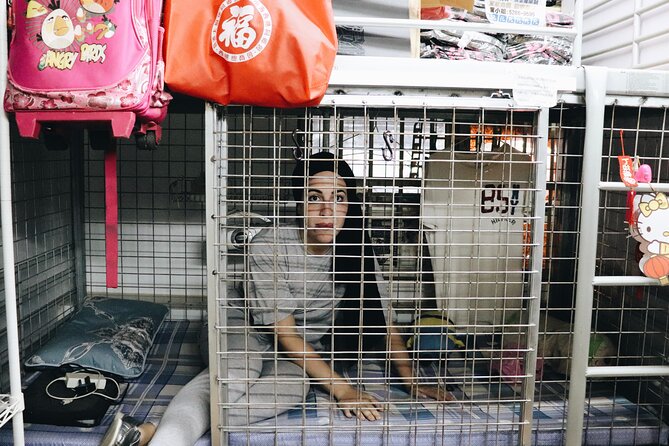
At the next Cedar Street stop, you move from theory to a modeled view of how a tiny unit is organized. You step inside a 100 sq ft subdivided flat where the layout is framed for a minimum-wage family, covering how the kitchen, bed, and living space get combined into one survival-sized zone.
The tour also references caged homes designed for single residents. Here’s the key consideration: you might not experience a true walk-through of an actual lived-in cage home. One guide-led point you should plan for is that at least one subdivided flat you see may be a staged display unit, not an exact snapshot of a real private room.
That is still useful, because it helps you understand the design logic quickly. Just go in with eyes open. This is education through examples and staging, not an open-doored permission slip into someone’s private home.
Stop 4 on Lui Seng Chun: A Firsthand Housing Story
On Lui Seng Chun, you hear a guide’s firsthand experience navigating housing in the toughest property market environment on earth. This stop matters because it turns the crisis from an economic diagram into a personal reality: how people plan, adapt, and keep going.
This is also where the quality of your guide can really show. Guides like Isaac and Alice are specifically praised in a number of accounts for being engaging and able to answer questions clearly, which makes this stop feel less like a lecture and more like a dialogue you can participate in.
Stop 5 on Yee Kuk Street: Sham Shui Po Backstreets and the Dark Economy
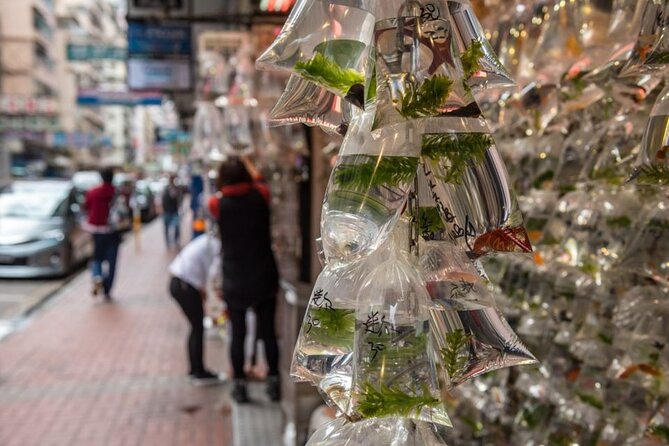
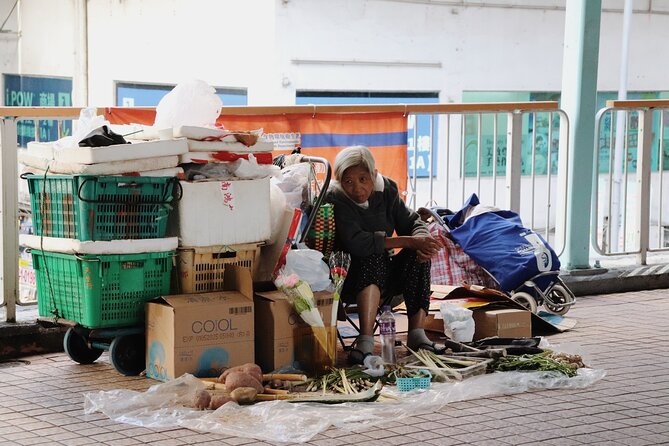
Then the tour moves into a more intense topic area on Yee Kuk Street. You get a glimpse of a hidden underworld in Sham Shui Po’s backstreets, including discussion of illicit ties between the drug and sex trades.
This is not included as sensational entertainment. It’s presented as part of the city’s housing and survival pressures, and how vulnerable people can get pulled into networks that exploit instability.
A heads-up: this is a stop that can feel heavy. If you’re sensitive to topics involving criminal exploitation, you may want to mentally prepare for that shift in tone.
Stop 6 on Hai Tan Street: Luxury Meets Subdivided Reality
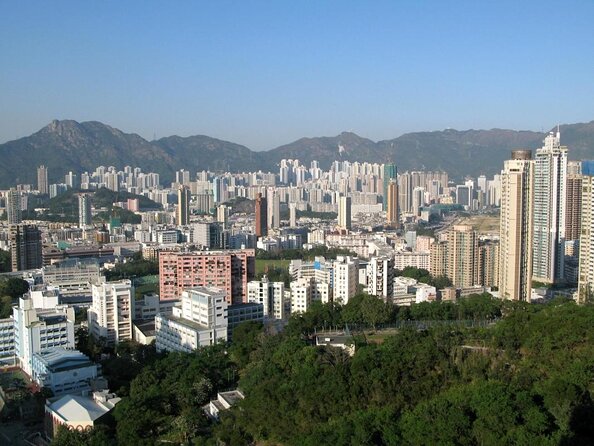
On Hai Tan Street, you get one of the most visually jarring contrasts. You’ll stand near new USD $1.5 million apartments and also look at dense clusters of subdivided units and caged homes that sit side-by-side in the same broader neighborhood fabric.
This stop is powerful because it’s not abstract inequality anymore. It becomes spatial inequality, the kind you can point to with your own eyes. You start understanding why people feel shocked when they first learn Hong Kong’s housing story, and why the shock can fade only if you keep seeing the facts in your head.
If you take anything away, take this: the crisis is not only about poverty. It’s about how the city organizes space for different classes of residents, and what that means for health, safety, dignity, and long-term opportunity.
Stop 7 on Pei Ho Street: A Rooftop Look at Hidden Slums
Next, you ascend to a rooftop in central Sham Shui Po at Pei Ho Street. Here the tour emphasizes hidden slums, meaning you get a higher viewpoint that changes how you interpret the neighborhood.
Rooftops can sound like just another photo stop, but in this context, the height helps you grasp how dense and layered the living situation can be. It also shows you that the crisis is not only inside buildings. It extends into the vertical spaces people use to survive.
Practical tip: Rooftops can be exposed. Wear comfortable shoes and think about weather and wind. You also want to keep your attention on your guide rather than stopping for long breaks if the group stays together.
Stop 8 on Kweilin Street: SoCo and Real-World Solutions
The walk ends at Kweilin Street with a visit to SoCo, a charity with 50 years of history advocating for marginalized people. This stop shifts from description to possible solutions, and the conversation is aimed at the city’s future.
I like this ending because it keeps the tour from becoming only despair. It doesn’t pretend that policy changes are easy, but it points you toward organized efforts already in motion, and gives you a place to direct your curiosity after you leave.
If you like travel with purpose, this last stop is the most constructive button on the experience.
Guides Make or Break It: The Human Side of the Tour
Across guides, a recurring theme is clear: the best versions of this tour are the ones where you feel safe asking questions. Guides including Grace Wu, Wind, Summer, Alice, and Isaac are described as smart, factual, and genuinely willing to answer, whether you ask for basic clarifications or more philosophical questions.
One reason that matters is that Hong Kong’s housing crisis can be emotionally polarizing. When the guide can explain it calmly, you get less chaos and more understanding.
Who Should Book This Walk (and Who Might Not)
This tour is a strong fit if you want:
- a real-life look at subdivided housing and the housing crisis
- the economic and urban planning angle, explained clearly at street level
- a short, structured route that still covers a lot of ground
It may be less fitting if you:
- hate uncomfortable topics, including discussion of illicit exploitation
- want only scenic, postcard-friendly sights
- expect to personally tour true real-world cage homes with full access
Also, go in with the right expectation about how the housing interiors are handled. Some units you see can be staged displays, and that can affect how emotionally intense the experience feels.
Practical Tips for Your Tour Day
- Wear comfortable shoes. Even on a 2-hour schedule, city blocks add up.
- Bring a bottle of water. You’ll be walking and standing at multiple stops.
- Plan for good weather. The experience requires good conditions, and the operator notes cancellations if the weather is poor, with alternative dates or full refunds offered.
- If you run hot, it helps that some stops can be indoors or air-conditioned. You might find parts of the route more comfortable than you expect.
Should You Book Dark Side of Hong Kong, Kowloon Caged Homes Walking Tour?
If your Hong Kong visit is mostly about shiny surfaces, this tour is a needed counterweight. It gives you a way to understand the housing crisis using concrete comparisons: square footage, street context, and the side-by-side realities of luxury apartments and subdivided living.
Book it if you want to leave Hong Kong with a sharper, more humane understanding of what “world-class city” can mean for the people living inside it. Skip it if you’re looking for a light, uplifting neighborhood walk, or if you want a true, unrestricted look into real private cage-home interiors.
If you do book, choose curiosity over judgment. Ask your questions. Let the numbers land in your mind. And when you finish near Sham Shui Po, you’ll likely look at the city differently, in a way you cannot unsee.
FAQ
Where does the tour start and end?
The tour starts at Nathan Rd, Prince Edward, Hong Kong. It ends in Sham Shui Po, Hong Kong, with the endpoint listed as Sham Shui Po MTR Station.
What time does the tour begin?
The start time is 11:00 am.
How long is the tour?
The duration is about 2 hours.
What is the price?
The price is $32.82 per person.
What is included in the tour price?
A local guide is included. There is no hotel pickup and drop-off included.
Is the tour affected by weather?
Yes. The experience requires good weather. If it is canceled due to poor weather, you will be offered a different date or a full refund.
Latest reviews from Hong Kong
- Hong Kong Layover Tour Private & Personalized with Local Guide★ 5.0 · 5 reviews
- Experience Hong Kong in 1 day: discover the best★ 5.0 · 5 reviews
- Small-Group Gong Relaxation Experience in Hong Kong★ 5.0 · 5 reviews
- Hong Kong Photography Masterclass – Private Photography Lesson★ 5.0 · 5 reviews
- Live Hong Kong Island: Private Tour★ 5.0 · 5 reviews
- Small-Group Tour: Temples & Markets Discovering [PROMOTION]★ 5.0 · 6 reviews
- Dialogue in the Dark Tour [Recommended!]★ 5.0 · 6 reviews
- Hong Kong Private Walking Tour with a Local★ 5.0 · 6 reviews
Walking Tours, compared.

Beijing Hutong Walking Food and Beer Tour at Hidden Restaurants
Read our review →
Private Beijing Walking Tour of the Forbidden City with 7 Options
Read our review →
Forbidden City Private Walking Tour with Optional Sights
Read our review →
Forbidden City and Tian’anmen Square Walking Tour
Read our review →
Shanghai City Guided Walking Tour | China’s 1st and Best Rated
Read our review →
Introduction to Hong Kong: Central Tip Based Walking Tour
Read our review →
Browse the lists this tour appears in