
Reviewed · SILK ROAD
Xinjiang Best Classic Silk Road Tour with Locals
This trip is interesting because it strings together the north and south routes of the Silk Road in one sweep, with dramatic changes in altitude, culture, and religion as you move from city bazaars to Buddhist cave art and desert highways. You get the feeling of being on Marco Polo’s general route, but with modern comfort and real local stops that make Xinjiang feel specific, not generic.
I really like how the tour uses a multi-lingual local guide to connect you to places that are otherwise hard to read on your own. I also like the mix of Kashgar and Hotan markets with big-ticket sights like Karakul Lake and the Buddhist cave complexes, so you see daily life next to UNESCO-era storytelling. One possible drawback is that the driving days are long and the altitude can be real at points like Karakul Lake, so you’ll want a calm pace mindset, not a sprint-it-all mindset.
Key points to know before you go
- Kashgar Sunday livestock market with a close look at Uyghur farm life and trading.
- Apak Hoja Tomb performances that add a lively cultural layer to the architecture.
- Karakoram Highway permits plus time in Tashkurgan’s mountain-town culture.
- Karakul Lake at 3,600 m where you can walk around and watch glaciers frame the view.
- Taklamakan Desert highway driving with photo stops and a preserved relic site on the way north.
- Kizil and Bezeklik cave art explanations so you don’t just see caves, you understand what you’re looking at.
Silk Road comfort, from Kashgar bazaars to desert highways
This is a private guided tour built around comfort and access. You travel in an air-conditioned vehicle for the road days, and you also get a sleeper train segment between Kuqa and Turpan, which helps you protect energy for sightseeing.
The other quiet win is that you’re not spending your time on paperwork and confusion. The tour includes entrance fees for the sites listed and the necessary permits for foreigners to travel on the Karakoram Highway to Tashkurgan. That matters here because some of the best scenery is in places that feel bureaucratic if you DIY.
Your food setup is simple. Breakfast is included in the hotels, but lunches and dinners are your responsibility. In a tour like this, that can be good (more flexible, you can choose what you feel like), or it can be a hassle if you prefer total predictability. If you’re the type who needs a timed lunch break to keep things smooth, plan to budget for meals and keep snacks handy for the longer road stretches.
One more thing I’d plan around is weather. Xinjiang can be calm and clear, or it can be windy and unpredictable, especially out by the desert and high passes. If conditions turn rough, the trip can change dates or adjust. Build in a little patience, and you’ll enjoy it more.
More of Xinjiang:
- Best of Kashgar tour with Karakoram Highway
★ 4.5 · 3 reviews
Kashgar: livestock trading, mosques, and Uyghur food you can actually taste
Kashgar is the kind of place where the Silk Road label finally makes sense, because the city still feels stitched to Central Asia more than to the rest of China. The tour gives you a full day to wander the old town areas with planned stops, including some of the most memorable experiences in the city.
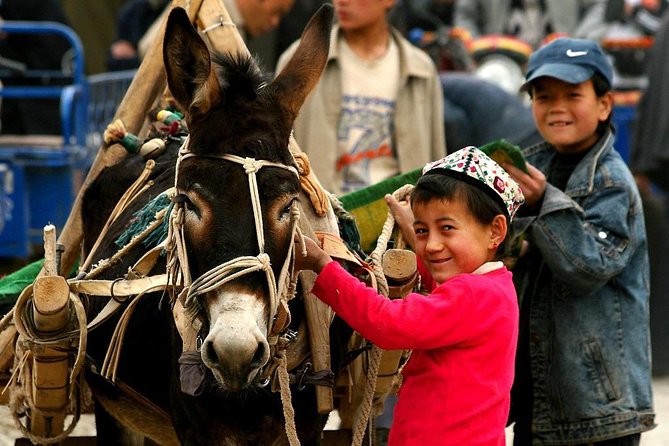
You start with Kashgar’s livestock market, where you see how Uyghur farmers bring animals into town and trade in a way that feels direct and real. It’s not staged for tourists, and that’s part of the point. Bring a respectful attitude, don’t treat it like a zoo, and you’ll get more out of it.
Next are cultural anchors that help you understand what you’re seeing. You visit the Idkah Mosque, along with the old town areas that help explain why Kashgar has long been a meeting point for languages, trade, and faith. Then comes the Apak Hoja Tomb, known for preserving shrine architecture from the 17th century, plus the chance to watch a live Uyghur wedding and dancing performance. That performance can feel like a shortcut to culture, because it gives you motion, costumes, and local rhythm, not just stone walls.
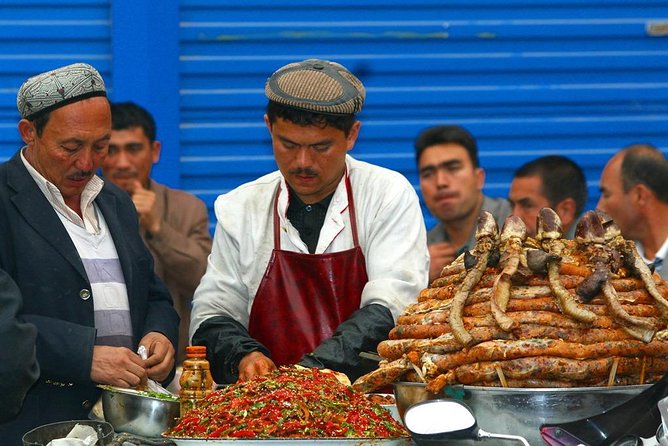
And yes, the food matters here. The tour builds in time for Uyghur classics like kebab and hand-pulled noodles, including a stop at a noted local restaurant for those dishes. If you’re worried about eating well in a remote region, this is the style of planning that makes the trip easier.
The Karakoram Highway to Tashkurgan: high-altitude walks and mountain villages
Day-to-day in Xinjiang can be a mix of big drives and sudden moments of beauty, and the Karakoram Highway section is where that contrast really sharpens. You head out toward the Pamir edge of western China, with Tashkurgan as the mountain base.
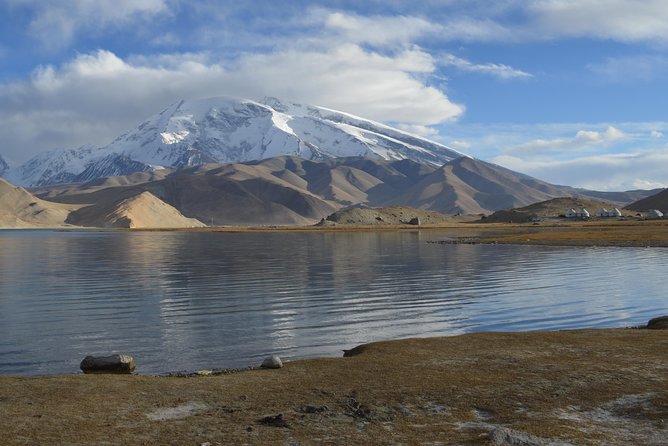
A key highlight is Karakul Lake, set at about 3,600 m elevation along the Karakoram Highway. The tour gives you time to hike around if timing allows. Even with just a short walk, it’s the kind of place where you feel how geography shapes culture. Snowcapped peaks sit close, and the air can feel thin in a way that slows you down.
Then you roll into Tashkurgan, a western gateway town with Tajik communities nearby and strong mountain identities. You visit the Ethnic Tajik Museum, see ruins tied to a stone fort that dates back to the 7th century, and get time for Pamir grassland scenery, often called the golden grassland. On a tour like this, that museum stop is more than a quick look. It gives you context for why the region feels more Central Asian than you might expect from a map.
Between stops, there are short add-ons that make the route feel alive. You can see Muztagh Ata peak from the area around Muztagata, and you pass Bulunkou Lakes Marsh, also called Bulunkul Lake, which is framed by sand mountains. Later you also visit Tashkurgan Fort and Shitou City Ruins. These are stone-and-history stops where time feels slower, even when the vehicle is still moving.
There is one extra benefit to this route: by the time you return toward Kashgar on the “dragon road” stretch, you’re not just riding. You’re looking back with better context. The tour’s approach helps you connect the dots between grasslands, lake viewpoints, and the mountain road itself.
Hotan on the south Silk Road: jade, silk, carpets, and Buddhist remnants
Hotan is where the Silk Road becomes about craft. The city’s story fits the “southern route” idea in a way that feels practical: you see why trade mattered, and you see how materials like jade and silk moved across centuries.
You drive from Kashgar to Hotan via oasis towns and villages, then you land in time for the Hotan night market, one of the larger food markets in Xinjiang. If you want one simple rule for this trip, it’s this: eat at the markets when they happen. That’s when you get the most local texture, from snacks to grilled meats to whatever locals are excited about that evening.
The next day focuses on Hotan’s trade and cultural bridge status. The tour visits the Ye’erqianghan Mausoleum and Shache old town areas, plus a Muqam world heritage center. Muqam is the kind of cultural tradition that can feel abstract unless someone helps you frame it, so having a guide to connect music and meaning is a real advantage.
You also get your hands-on style of sightseeing in Hotan. You visit the Hotan Grand Market, the Jade market, and several production focused stops, including a Hotan jade market experience, a silk factory stop, and carpet and handcraft workshops. This matters because it’s not only about buying souvenirs. It’s about seeing craft processes and understanding why certain textiles and materials became valuable enough to pull distant empires into the same trade web.
Then there’s the Buddhist thread. Hotan was an important Buddhist area early on, with sites and ruins connected to those centuries. The tour includes a mix of ancient remnants and ruins stops, including Yuetegan ruins and Malikewate Ancient City. These sites may not be as perfectly preserved as the major cave complexes, but they still add a sense of layered time, with religion and trade shifting over centuries.
A final stop in Hotan is the Hetian Museum, where you can see relics found in the Tarim basin. That museum layer helps tie together what you saw in markets and workshops with what archaeologists and historians found in the wider region.
Across the Taklamakan: desert highway realism and a 5th-century relic stop
The Taklamakan Desert segment is the most intense “moving through emptiness” part of the trip. You drive across the desert via the desert highway from south to north, targeting Kuqa, and the day is built for long-distance travel with photo stops and walking time on sand dunes.
What I like about this approach is that it’s not just scenic driving. The tour builds in lunch preparation in the morning, then sets you up with a realistic rhythm: drive, stop, take photos, walk a bit, repeat. If you’re prone to getting carsick or feel drained on long drives, this is still doable, but you’ll want water and comfortable layers.
There’s also a planned relic stop, the Rewake Fosi Relic Site, described as a Buddha tower preserved from the 5th century. It’s a strong contrast to the desert surroundings, because you go from shifting dunes and open air to a preserved monument tied to Buddhist-era movement across the region.
By the time you arrive in Kuqa, the day feels like you crossed a huge “chapter break” in the Silk Road story. You go from trade and oasis towns into the edge of a harsh desert environment where survival and routes depended on knowledge of where water and cities could be reached.
Kuqa and the Kizil Caves: understanding cave paintings, not just snapping pictures
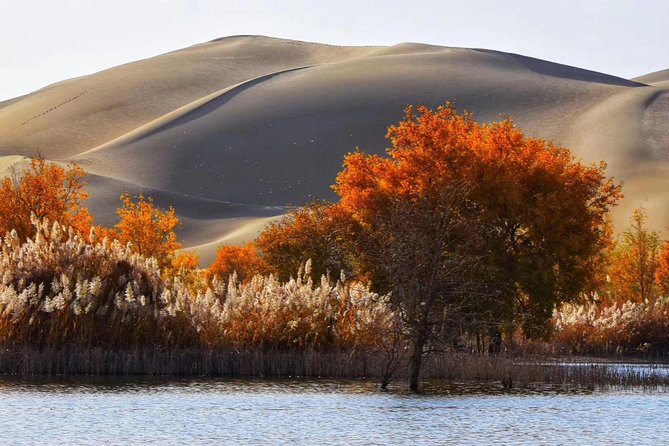
Kuqa is a gateway to the Middle Silk Road’s Buddhist period, and the standout here is the Kizil Thousand Buddha Caves. The tour gives you a longer block of time, including a professional guide who explains the caves and the Buddha paintings.
That explanation is what makes this type of stop worth paying attention to. Without context, cave viewing can turn into a checklist. With context, you start noticing themes, changes across time, and what the art was communicating to travelers.
You also pair the caves with outdoor scenery, including the Tianshan Grand Canyon stop. This gives your eyes a rest from close-up interpretation and lets you switch from “art reading” mode to “big view” mode.
The tour further rounds out Kuqa with stops like Subashi ancient city ruins (Subash ancient city and Subashi Gucheng Temple) and the Kuch a royal palace area and Kuche grand mosque. These don’t all feel equally preserved, but they create the sense of one cultural system spread across different city parts. For many first-time Xinjiang visitors, that helps the region feel coherent.
If you’re traveling with someone who wants photos, you’ll get plenty. If you’re traveling with someone who wants learning, you’ll also get that. The structure here helps both types of travelers.
Turpan essentials: karez water systems, Emin Minaret, and cave complexes
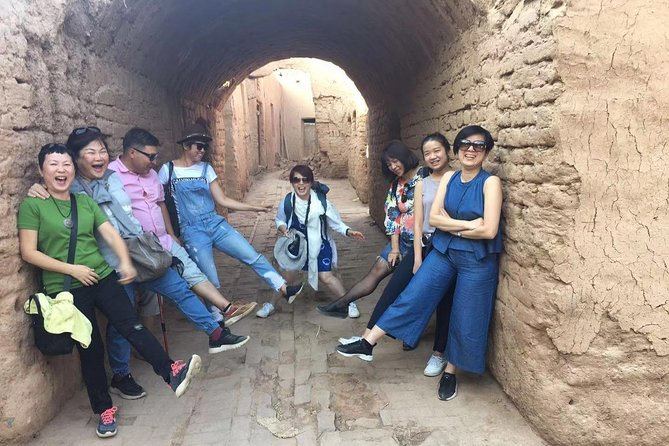
Turpan is where the Silk Road story becomes tied to engineering. The tour spends a full day and focuses on multiple sites that explain how people built a working life in a very challenging basin.
The day starts with the Karez wells, also known as an underground irrigation system built in Turpan over thousands of years. This isn’t just a curiosity stop. It explains why cities could exist in a harsh environment and why water management became a power source for trade and farming.
You also visit Tuyuq Valley and the Bezeklik Thousand Buddha Caves. Bezeklik is often described as one of the best preserved Buddhist sites in the Turpan area, and the tour gives you time to see it as part of the larger story of changing religious dominance over time.
Then you get two of Turpan’s signature landmarks: the Gaochang ancient city ruins and the Emin Minaret. Gaochang, also called Kharakhoja in the tour description, is one of the best preserved ancient city ruins in Xinjiang. Emin Minaret is described as the only minaret mosque in China’s Silk Road, which makes it a high-value stop for anyone who likes unique, specific architecture.
The tour also includes the Turpan museum, and it’s specifically noted for Tarim mummies. That’s another place where the guide support matters, because museums can feel like random rooms unless you know what to look for.
You finish with village and valley time, including Tuyugouxiang, an old village area that gives you a feel for local Turpan life. This kind of stop is small compared to the caves, but it often becomes one of the most memorable parts because it feels everyday.
Jiaohe and moving to Urumqi: ancient city scale plus Tianchi day
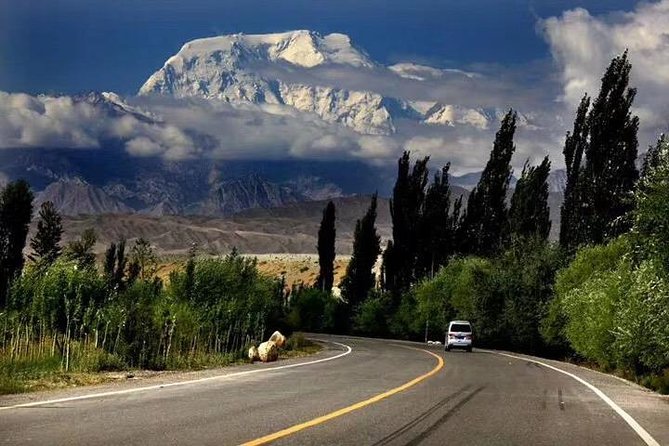
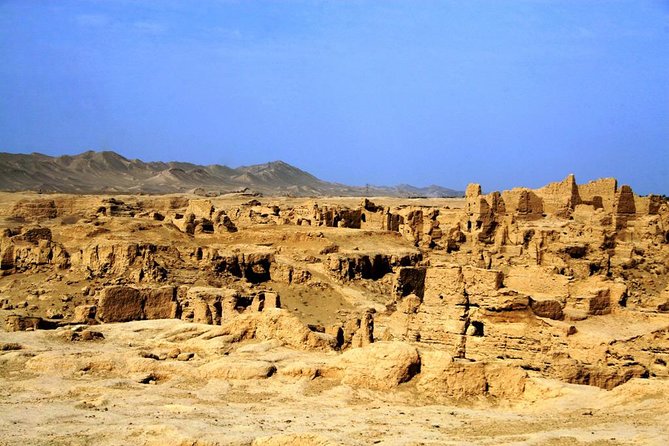
After your first Turpan day, you come back for more. The tour repeats a few key Turpan sights like Emin Minaret and the Bezeklik caves, and then adds ancient city scale with Jiaohe (also called Yarkhoto). Jiaohe is described as an ancient city you explore with the guide explaining its history and how it fits into Turpan’s broader Silk Road timeline.
Then you transition toward Urumqi. Once in Urumqi, you get a visit to the International Grand Bazaar area, where you can do a walking tour and browse the city in a more urban rhythm than the market towns earlier in the trip.
The last big “wow” day is Tianchi Lake at Mount Tianshan. The tour describes hiking around the lake with a guide for a few hours. Even if you prefer short walks, this stop is worth planning for, because it balances all the “stone and desert” days with water and mountain air.
On the way into Urumqi, you also pass Tianshan scenery and thousands of wind power plants, which gives you a modern Xinjiang contrast. It helps keep the trip from feeling like history only.
Price and value: what you are really paying for
At $3,524 per person, this tour is not a budget choice. The value sits in the combination: private guidance, multilingual help, included permits, included entrance tickets, and a mix of transport types, including the sleeper train.
You’re also paying for time management. The tour includes hotel stays in 3 and 4 star properties with breakfast. It covers air-conditioned vehicle travel, and it handles guide and driver costs, including meals, accommodations, fuels, taxes, tools, and parking. For many people, that takes the mental load down a lot.
Where you should watch your spending is outside the tour package. Lunches and dinners are not included, personal expenses are not included, and tips are not included. Also, airfare to arrive in Kashgar and depart from Urumqi is on you. If you’re building a total trip budget, include those items early so the headline price feels realistic.
One more value point is access. The tour includes the necessary permits for foreigners traveling on the Karakoram Highway to Tashkurgan, which is exactly the kind of thing that can turn a DIY plan into stress. When you combine that with entrance fees included, you get fewer surprises and more time for the actual places.
Should you book this Silk Road tour?
If you want one classic Xinjiang sweep and you care about guides who can connect you to what you’re seeing, I think this is a strong match. The stops are varied in a useful way: you get markets in Kashgar and Hotan, desert highway time in the Taklamakan, Buddhist cave art interpretation at Kizil and Bezeklik, plus Turpan engineering sites like karez wells and the Emin Minaret, then a Tianchi finale.
I’d skip it if you hate long driving days, dislike altitude, or want all meals fully handled end-to-end. This trip is set up for travelers who are comfortable planning meals and pacing themselves.
If you do book, pack for temperature swings, bring water for high and dry areas, and plan on doing some walking at multiple stops. Also, keep your phone charged and your camera ready, because this route delivers scenes you can’t fully explain with a map.
More along the Silk Road
- Xi’an Silk Road: Legend of Camel Bell Show Ticket w/Transfer
★ 4.9 · 45 reviews - 8-Day Silk Road Trip of Dunhuang, Jiayuguan, Zhangye with Accommodation
★ 5.0 · 16 reviews - Xi’an: Silk Road(Camel Bell) Legend with Roundtrip Transfer
★ 5.0 · 12 reviews - 3-Day Private Silk Road Tour of Dunhuang: Mogao Grottoes, Yulin Grottoes, Crescent Moon Pool
★ 5.0 · 11 reviews
Latest reviews from Kashgar
- Best of Kashgar tour with Karakoram Highway★ 4.5 · 3 reviews
Silk Road, compared.
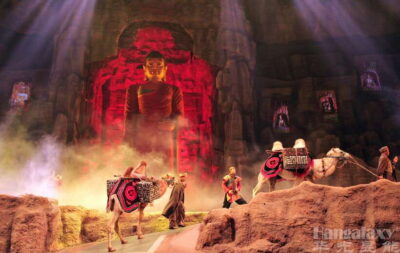
Xi’an Silk Road: Legend of Camel Bell Show Ticket w/Transfer
Read our review →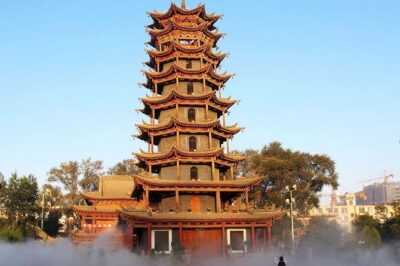
8-Day Silk Road Trip of Dunhuang, Jiayuguan, Zhangye with Accommodation
Read our review →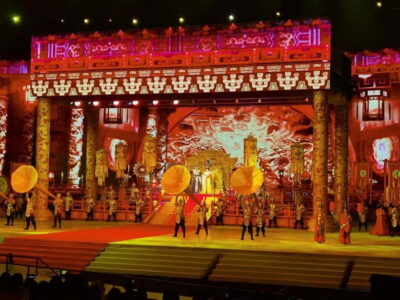
Silk Road(Camel Bell) Legend with Roundtrip Transfer
Read our review →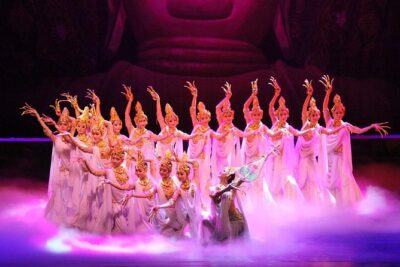
3-Day Private Silk Road Tour of Dunhuang: Mogao Grottoes, Yulin Grottoes, Crescent Moon Pool
Read our review →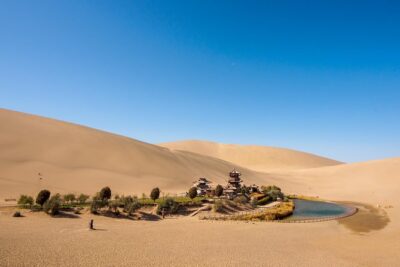
Dunhuang Private Silk Road Day Tour: Mogao Caves, Crescent Spring
Read our review →
Dunhuang Private Day Tour Mogao Grottoes, Singing Dunes and Crescent Moon Spring
Read our review →
Dunhuang Day Tour: Mogao Grottoes, Singing Sand Dunes and The Silk Road Show
Read our review →Browse the lists this tour appears in