
Reviewed · YU GARDEN
Shanghai: Yuyuan, City God Temple Old City Tour-Tip Based
Shanghai’s old city can feel like sensory overload, but this Yuyuan and City God Temple tour turns it into a route with a story you can follow. I love the way the guide makes the City God Temple feel understandable, explaining Taoism and folk beliefs instead of just pointing at statues. I also like the hands-on stop for traditional medicinal herbs, where you get to sample and learn what people are actually talking about.
One thing to think about first: this is a walking tour through temple and market areas, so it is not set up for people with mobility impairments. Comfortable shoes matter, and in busy areas you will want to keep your belongings secure.
Key things to know before you go
- Small group, guided, and paced for photos: limited to 10 participants, with group shots at landmarks.
- Taoism and folk religion explained on-site: you are not just looking, you are learning what visitors believe and why they celebrate.
- Chinese 12 Zodiac sights: each animal is shown with its own costume style, and the guide helps you connect the dots.
- Herbal tasting at a traditional medicine shop: you get a sampler experience, including the king of herbs focus.
- Scenic breaks inside the garden zone: stops near the 9 Zig-Zag Bridge and Mid-Lake Pavilion help you reset.
Yuyuan to City God Temple in 2 hours, the smart way to see Shanghai’s old-city meaning
This tour works because it targets the parts of Shanghai people remember as soon as they land. Yuyuan Old Street gives you the bustle and shopfront textures, then the City God Temple area slows things down into belief, ritual, and symbolism. In a short timeframe, you get both street life and the spiritual layer that shaped how locals gathered and celebrated.
I also like that it does not treat culture as a trivia game. The guide connects details you would otherwise miss, like why certain deities matter to daily life, and how Taoism-style practices show up in what people do during visits. That makes the sights feel less random.
The pace is built for a real walking loop, so you should expect to move steadily. If you want a completely relaxed stroll with long sit-down breaks, this might feel like it moves fast, even though the total duration is only about 2 hours.
More at Yu Garden:
- Best of Shanghai Day Tour, including Jade Buddha Temple & Bund & Yuyuan Garden
★ 4.0 · 338 reviews - Shanghai: Yu Garden Admission Ticket
★ 4.6 · 260 reviews - Shanghai Day Tour to Zhujiajiao Water Town, Yu Garden, Bazaar, Bund
★ 5.0 · 162 reviews
Starting at Yuyuan metro, then following an old-city walking loop
You meet at Yuyuan Garden metro area, with clear exit guidance. The start location is at 豫园站3号口, and the meeting point directions reference 豫园站1号口 (Exit 1) as the common landmark near 四牌楼.
Here is the practical tip: when you get to the station, pick one exit number, then follow the street signage and crowd flow. Yuyuan is a magnet, so it is easy to lose track if you keep changing directions. Once you link up with the guide, the route becomes straightforward.
You will cover multiple small zones, so plan to travel light. Keep your phone accessible for the scenic views near the bridge and pavilion, and keep your bag secure in the market areas where you can get shoulder-to-shoulder.
Stop 1: Yuyuan Old Street, the shop-lined “welcome” to the area
The first stop is Yuyuan Old Street for about 30 minutes, which is a smart way to start. You ease into the atmosphere immediately, with the kind of narrow lanes and shopfront energy that makes the area feel alive.
What I like here is that the guide sets context fast. Instead of making you guess what you are seeing, you learn how the old city area developed, and you pick up how residents’ living spaces changed over time. That gives meaning to the layers you are seeing, even when the streets look like a jumble.
If you prefer taking photos without constant interruptions, aim for the edges of the lane rather than the most central walkway. This is also where the Chinese 12 Zodiac themed presentation enters the story, with the animals shown in costumes so you can spot them visually.
Stop 2: Tonghan Chuntang, tasting the ideas behind traditional medicine
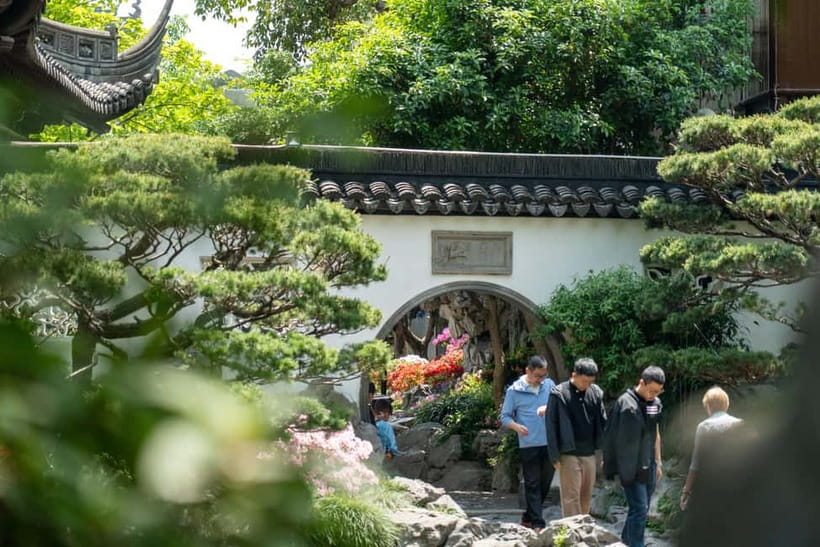
Next comes Tonghan Chuntang for around 20 minutes. This is where the tour shifts from street sights to a living tradition people still reference today.
You get a step back into how a traditional Chinese medicine shop is set up, and you will likely hear about herb roles and how they are described. The highlight is the chance to sample the “king of herbs,” tied to the shop’s teaching moment.
A practical note: if you are sensitive to strong herbal flavors, go easy at tasting time. It is a learning stop, not a meal, so you can take small samples and still get the full point of the experience.
Even if you are not planning to buy anything, this stop adds a grounded layer. It explains why certain ingredients show up in everyday conversations, and it helps you understand what people mean when they say an herb is used for balance, comfort, or prevention.
A few more Shanghai days to compare
- Zhujiajiao Water Town and Shanghai City Private Day Tour
★ 5.0 · 1,016 reviews - Private Shanghai Full Day City Tour with Old and New Highlights
★ 5.0 · 995 reviews - Shanghai City Guided Walking Tour | China’s 1st and Best Rated
★ 5.0 · 285 reviews - 4-Hour Flexible Private Shanghai City Tour
★ 5.0 · 235 reviews
Stop 3: City God Temple of Shanghai, Taoism rituals, folk religion, and why people come
The City God Temple stop runs about 40 minutes, and it is the heart of the tour. This is where you learn about Taoism and folk religion in China, including the common beliefs and celebrations associated with the temple world.
The guide helps you see past the surface. You learn what the City God represents, why visitors connect the temple to hopes and daily luck, and how rituals reflect a mix of religion and local tradition. That context makes your photos better too, because you know what you are aiming at.
One detail I really value is the way the guide brings you through the symbolism without turning it into a lecture. You are shown what to look for, and you get enough background to interpret what you see in a calm way.
Also, you may get the chance to make a wish during the garden and temple zone. That came up in real-tour experiences, and it is one of those small moments that makes the whole visit feel personal.
Scenic break: Lake Pavilion Tea House, plus the 9 Zig-Zag Bridge and Mid-Lake Pavilion
After the temple, you move toward the Lake Pavilion Tea House area for about 20 minutes. Even without a long sit-down, this stop matters because it gives you a breather from the densest crowds.
This is also where you get key scenery points tied to the garden design. The tour highlights the 9 Zig-Zag Bridge and the Mid-Lake Pavilion, and you can see why these features became photo magnets.
Here is the practical advice: use this as your reframe moment. Stand back, take a few pictures, and let the guide point out how the bridge and pavilion create sight lines across the water and garden edges. It is a quick lesson in how Chinese garden design guides your movement without forcing you to feel rushed.
If you are traveling during hot or rainy weather, the pavilion area can still be workable. Just bring water, because walking between stops adds up quickly.
Stop 4: Yuyuan Garden Smallware, craft shopping with guardrails
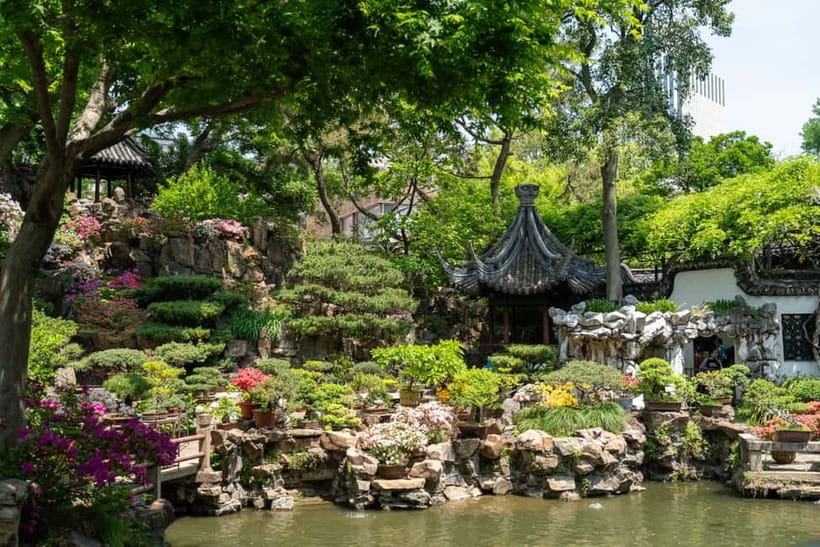
Then you head to Yuyuan Garden Smallware for about 20 minutes. This is a chance to shift from learning to buying, without it turning into a hard sell.
You get a guided look at a small product market where local craftsmanship and items for everyday life and souvenirs are part of the experience. The guide’s value here is simple: you learn how to recognize what you are looking at, and you get recommendations on what makes sense to buy in this kind of neighborhood.
This is also where you can manage your expectations. The best buys are usually small, because that is how old-city markets work. If you are trying to bring home something large or fragile, it gets complicated fast.
For shoppers, I suggest you do two passes. First, listen and look with the guide. Second, after you understand what categories you like, do your own quick comparisons. That way you avoid impulse buys before you know what you want.
Finish at 古城公园, where the old city finally slows down
Your tour ends at 古城公园. It is a peaceful finish that helps the whole experience land instead of fading out in another lane of shops.
This ending works well if you want one last calm look at how ancient relics and garden-style calm can coexist in a tourist-heavy area. You leave with a sense of rhythm, not just a list of stops.
If you still have energy, you can use this park zone as a reset before heading to another part of Shanghai. If you do not, it is also an easy place to stop, regroup, and plan your next meal nearby.
Price and value: why a low-cost guided walk can still be worth it
The listed price is $2.36 per person for a 2-hour guided tour with a small group, English live guide, and multiple stops including a traditional medicine sampling. On paper, that seems almost too low, so you should treat it as a sign you are getting a budget-friendly guide-led introduction rather than a long, in-depth private tour.
In a tip-based context, your guidance quality matters even more. With a small group limit of 10, the guide can answer questions and adjust pacing. That is exactly what you want around temples and medicine shops, because you will have cultural questions, and you will also want to know what to look for while you are there.
I also think the time is well spent. Two hours is long enough to see the core highlights, short enough to avoid fatigue from moving through crowds all day.
Who this tour is best for (and who should skip it)
This tour is a great fit if you want an organized walk through Yuyuan and the City God Temple area, with explanation around Taoism, folk religion, zodiac details, and traditional medicine. It is also a good match if you like meeting a guide who can explain culture clearly while keeping the group friendly and upbeat.
It is not ideal if you have mobility limitations, since the tour involves walking on uneven surfaces typical of temple and market zones. It also may not suit you if you dislike herbal tasting experiences, even if the tasting is small.
If you are traveling solo, couples, or small groups, the format works nicely because you get personal attention without needing private-guide pricing. If you hate group tours entirely, you might still find the small-group setup comfortable.
What to do before and during the tour for best results
Wear comfortable shoes. You will be on foot for a full loop through old-city areas, and the ground can be uneven near temple entrances and garden edges.
Keep your belongings secure. Old-city shopping zones mean close quarters. If you bring a crossbody bag, use it in front in the busiest lanes.
At herbal tasting time, decide your approach in advance. If you are curious, take a small sample and ask what it represents. If you are cautious, you can still participate by observing and listening, because the learning is built into what the guide explains.
Finally, bring a camera mindset. The route includes a mix of street texture, temple details, and garden views like the 9 Zig-Zag Bridge and Mid-Lake Pavilion. Those are not random photo stops, they are points where the guide tells you what the visual design is doing.
Should you book this Yuyuan and City God Temple tour?
If you want a 2-hour guided introduction to Yuyuan and Shanghai’s City God Temple area with Taoism context and traditional medicine sampling, this is a strong choice. The small group limit helps you get questions answered, and the stops are selected for variety, street atmosphere, temple learning, and garden views.
I would not book it if you need a low-walking pace or mobility-friendly route. I also suggest thinking twice if you strongly dislike herbal flavors or tasting.
If your goal is practical cultural understanding, not just sightseeing, book it. You will leave with a clearer picture of what people come to these places for, and you will have seen the garden and temple highlights in a way that actually makes sense.
FAQ
How long is the tour?
The tour lasts 2 hours.
Is there an English-speaking guide?
Yes. The tour includes a live guide in English.
How many people are in the group?
The group is small and limited to 10 participants.
Where do we meet?
You will meet at the Yuyuan Garden metro area. The start location is 豫园站3号口, and the meeting point directions reference 豫园站1号口 (Exit 1) near 四牌楼.
What is included in the tour?
It includes a 2-hour guided walkthrough of Shanghai’s Ancient City, culture and history explanations, Taoism and folk religion education, a traditional medicinal herb sampling, and expert travel tips, plus group photos at landmarks.
Is the tour suitable for people with mobility impairments?
No. It is not suitable for people with mobility impairments.
Latest reviews from Shanghai
- Shanghai to Beijing Bullet Train Ticket with Hongqiao Station Transfer★ 5.0 · 5 reviews
- Hangzhou Private Day Trip by Bullet Train from Shanghai★ 4.5 · 5 reviews
- Shanghai Era Theatre Acrobatics Show Ticket★ 5.0 · 5 reviews
- Online Cooking Class Fried Rice by Sunflower Li★ 4.5 · 5 reviews
- Shanghai in a Day: A Whirlwind Tour of the City’s Highlights★ 5.0 · 5 reviews
- Zhouzhuang and Tongli Water Town Private Transfer Service from Shanghai★ 5.0 · 5 reviews
- Shanghai Hongqiao Airport To Shanghai Hotel:Private transfer with Meet service★ 5.0 · 5 reviews
- Private Shanghai City Day Tour with Best Highlights and Shopping★ 5.0 · 5 reviews
Yu Garden, compared.
Best of Shanghai Day Tour, including Jade Buddha Temple & Bund & Yuyuan Garden
Read our review →
Yu Garden, Old Street, Bund & Zhujiajiao Water Town Bus Tour
Read our review →
Shanghai Day Tour to Zhujiajiao Water Town, Yu Garden, Bazaar, Bund
Read our review →
Private Yu Garden, The Bund, French Concession, Pudong Half-Day Tour
Read our review →


Yu Garden Entry or Zhujiajiao Water Town,Bund Tour
Read our review →Browse the lists this tour appears in