
Reviewed · FRENCH CONCESSION
Shanghai French Concession Walking Tour-Tip Based
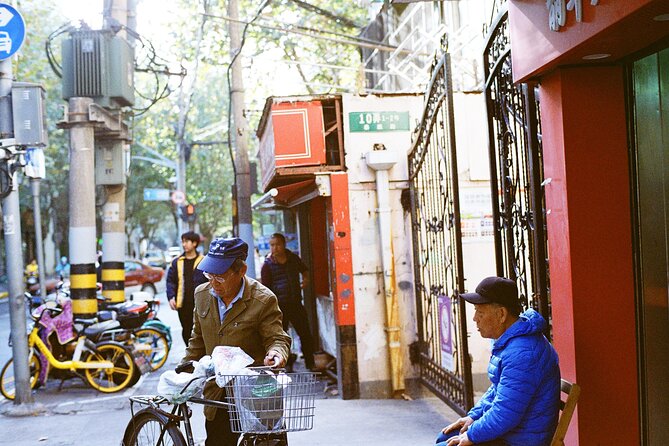
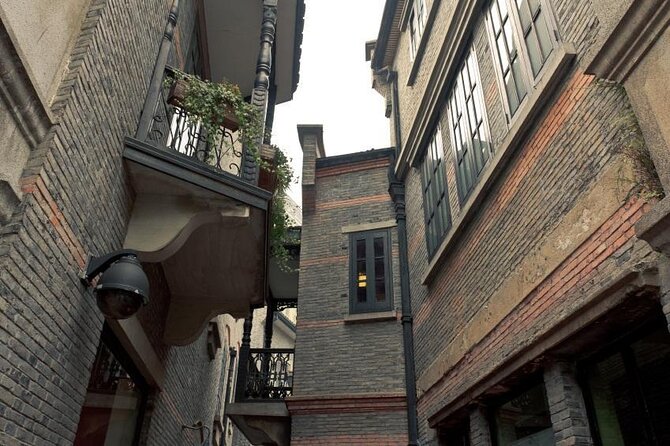
Shanghai’s French Concession is the part of the city that still feels like an older Shanghai that you can walk through. Tree-lined streets, preserved buildings, and those wrought iron details give you that I-just-came-out-of-a-movie-street feeling, often described as the Paris of the East.
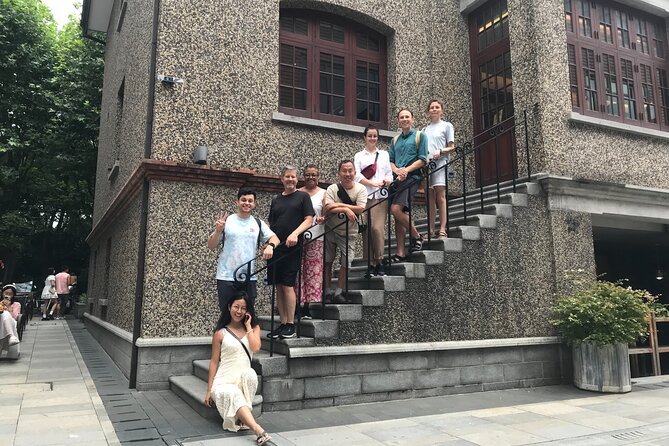
I really like the tour’s setup because it’s a conversation with a local, not just a checklist. Bill, a Shanghai native, brings personal stories and facts, and the pace includes breaks to sit so the walk stays enjoyable for a 2.5-hour outing.
One thing to plan for is that it’s tip-based. The $3.59 you pay at booking is mainly to reserve your spot, and you’ll be expected to tip the guide at the end (recommended 150-300 yuan, about 20-40 USD/EUR, based on satisfaction). If you’re not comfortable with that, this might feel weird.
Key highlights at a glance
- Bill’s native Shanghai perspective, with personal anecdotes tied to what you’re seeing
- Comfortable pacing, with short stops and breaks to sit during the 2.5 hours
- Six worthwhile stops, including hotel landmarks, a former racecourse site, and lanehouse compounds
- Free entry at each listed site, so your money stays focused on the tour itself
- A stylish end point at Xintiandi, where you can keep going for food, shopping, or galleries
The French Concession, a walk that still feels like a different Shanghai
This tour focuses on an area with a clear story line. The French government administered Shanghai’s French Concession from 1849 to 1943, and the architecture and street plan still show it. Even if you’ve never studied Shanghai’s timeline, you’ll feel the difference as the sidewalks widen, the trees appear overhead, and those classic iron railings show up again and again.
What makes it fun is that you’re not stuck at one postcard view. The route moves through hotels and civic-style spots, then shifts into residential compounds, and ends in one of the city’s best-known “reused old neighborhood” areas, Xintiandi. In other words, you get layers: colonial-era planning, modern Shanghai, and present-day shopping and dining.
More Walking Tours in Shanghai
- Shanghai City Guided Walking Tour | China’s 1st and Best Rated
★ 5.0 · 285 reviews - Shanghai Breakfast Walking Tour of Former French Concession
★ 5.0 · 139 reviews - Private Shanghai Evening Street Food Walking and Cruise Tour
★ 5.0 · 123 reviews
Price and the tip reality check: $3.59 booking fee
Here’s the deal in plain terms. The booking price is $3.59 per person, but it’s described as reserving your spot. The guide’s pay comes from tips at the end of the tour.
The recommended tip is 150-300 yuan per person (about 20-40 USD/EUR), depending on how you felt about the tour. If you enjoyed the humor, the stories, and the way Bill explains what you’re looking at, tipping toward the higher end makes sense. If you have a shorter attention span or you’re only there for photos, you may feel tempted to do the minimum, but the whole experience is built around the guide’s effort.
So yes, it’s good value for money because your paid amount is basically a reservation. Just don’t go in thinking it’s a fixed-price guided tour where you never need to think about tipping.
2 hours 30 minutes, with stops that keep it moving
The full tour runs about 2 hours 30 minutes, and each listed stop is around 20 minutes. You’ll be walking, but it’s not nonstop trudging. The experience is designed with multiple short segments, which also makes it easier if you want photos without turning the day into a sprint.
A key detail from the experience style: there are breaks to sit. That matters in Shanghai, where you can easily overheat or feel tired after an extended walk. If you’re traveling with someone who gets cranky when tours move too fast, this pacing is a strong point.
The group size is capped at a maximum of 100 travelers, and it’s near public transportation. That combination usually means logistics are workable, and it’s not likely to feel like a chaotic mob walk.
Meeting point near Okura Garden Hotel Shanghai, then finishing at Xintiandi
Your tour starts at Okura Garden Hotel Shanghai, 58 Mao Ming Nan Lu, Huang Pu Qu, Shanghai. The end point is Xintiandi, 123 Madang Road, Huang Pu Qu, Shanghai, where you can also connect near the South Huangpi Road Subway station.
I like this layout because you start in a calm, hotel-adjacent area and end in a lively zone where it’s easy to keep the day going. When a walking tour ends somewhere useful, you don’t waste time figuring out what to do next.
Also, you’ll have a mobile ticket. That helps if you like traveling light, and it can make check-in faster.
More of the French Concession:
- Eat Like a Local Through Shanghai’s French Concession
★ 5.0 · 353 reviews - Late Night Food Tour in the Shanghai’s French Concession
★ 5.0 · 260 reviews - French Concession Guided Walking Tour | China’s 1st & Best Rated
★ 5.0 · 91 reviews - Private Walking Tour in the Former French Concession
★ 5.0 · 67 reviews
Okura Garden Hotel Shanghai and the former French Club site
The first stop is the Okura Garden Hotel Shanghai area, described as a visiting site of the former French Club. Even without going deep into a single building, this kind of start works because it sets the mood early. It signals that you’re stepping into French-administered Shanghai, not just wandering around a modern city.
What I’d expect you to notice here is how the French Concession identity shows up in surroundings. Think: a more composed feel to the streets, older-looking boundaries and structures, and a sense that you’re walking through an area that used to function differently.
Possible drawback: because this is the first stop, you might feel a little “still waking up” mentally. If you’re the kind of traveler who wants history only after you’ve had coffee, arrive ready to listen for the first stretch.
Jinjiang Hotel, where modern Shanghai meets a China-US turning point
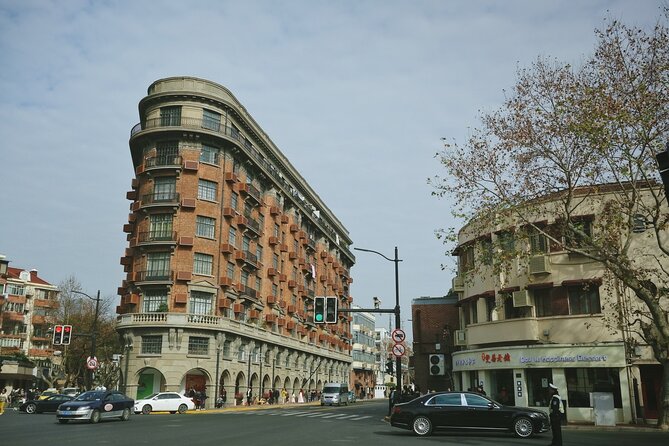
Next is the Jinjiang Hotel, presented as the oldest “modern” hotel in China, and linked to a major diplomatic moment: it is where a Sino-US joint declaration on normalizing relations was announced.
This is one of those stops that gives you context fast. Instead of talking only about architecture, you’re reminded that Shanghai has always been tied to international negotiations, trade, and global attention. Hotels like this weren’t just for guests, they were part of the city’s public face.
Why it’s valuable on foot: walking between very different types of places is what helps the French Concession story feel real. A racecourse site, a lanehouse compound, a fashion block, then a diplomacy-linked hotel, all in one afternoon. That contrast makes the tour more than an aesthetic stroll.
A former French racecourse site at 文化广场
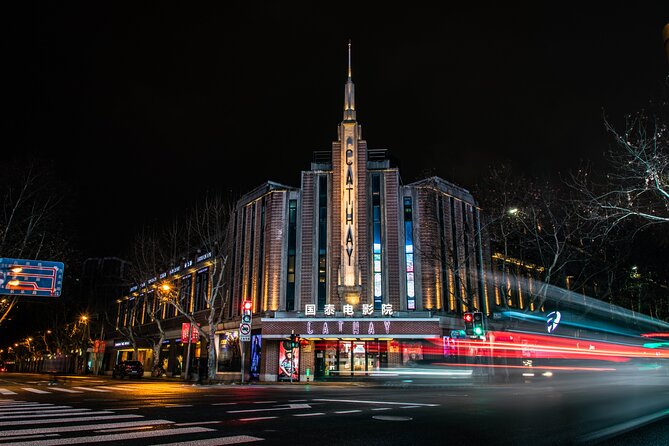
Stop 3 is 文化广场, described as a former French racecourse. A racecourse might sound like an odd thing to include, but it makes sense once you think about how colonial-era spaces worked. These were social and institutional spaces, not just entertainment.
In practice, you’ll likely get a clearer sense of how the French Concession organized leisure and community life. It’s the kind of detail that makes you look at a place and think, what was happening here before it became what it is today?
Possible drawback: if you’re mainly hoping for photo-heavy views, a former racecourse site can feel less visually dramatic than a lanehouse block or a hotel exterior. Still, it’s a useful “how the neighborhood functioned” stop.
Huaihaifang lanehouse compound, where Shanghai lived day to day
Stop 4 is Huaihaifang, visiting a local lanehouse compound. Lanehouses are where Shanghai’s daily life shows up, not only its official or international image. If you want to understand the city as people experience it, this is the kind of stop that delivers.
This is also a nice shift in pacing and tone. After hotel and institutional landmarks, you get a more residential scale. You can look at the space and try to picture how neighborhoods worked, how people moved, and how communities formed inside compounds.
Possible drawback: because this is focused on a compound area, it may not offer huge open views. If you’re expecting sweeping skyline moments, you’ll be disappointed. If you like human-scale city details, you’ll probably enjoy it more than you expect.
Sinan Mansions and the art-deco style blocks turned trendy venues
Stop 5 is Sinan Mansions, described as a fashionable quarter remade into a compound of trendy venues with cool vibes, remodeled for 51 art-deco style residential blocks.
This is where the tour’s “then and now” side gets visible. You’re seeing preserved character that’s been reworked for modern use. The art-deco angle is especially useful because it gives you a vocabulary for what you’re seeing, not just a general sense that the area looks old.
I also like that this stop bridges into shopping and culture. Even if you don’t plan to buy anything, you can use it as a texture sampler: cafes, storefronts, and galleries tend to cluster here, so it’s easy to continue on your own after the tour ends.
Possible drawback: if you’re traveling during peak crowd times, the trendy venue areas can be busy. That doesn’t ruin the stop, but it can make it harder to fully enjoy quiet listening in the middle of the street noise.
Xintiandi, remodeled old lanehouses that you can keep exploring
Stop 6 is Xintiandi, described as a neighborhood made of cafes, souvenir stores, and galleries, remodeled from a dilapidated old lane house area.
This is the payoff zone. Your tour finishes here because it’s convenient and because it’s built for wandering. After a guided walk, it’s nice to have an immediate place where you can sit, snack, and keep exploring without hunting for your next move.
Value for you: Xintiandi is a good “wrap-up” location. You can reflect on what you learned about lanehouses and the French Concession feel, then look at the area’s design choices in real time. If you want a souvenir, a drink, or a gallery stop, you’re in the right area.
One consideration: since this is a popular destination, it can feel commercial. If you’re chasing something purely off-the-beaten-path, you might spend less time here and more time soaking up the earlier residential compound details.
What you actually get from Bill, beyond basic facts
The strongest repeated theme is the guide. Bill comes up as funny, engaging, and patient with explanations, with lots of interesting facts and personal anecdotes. That combination matters because a walking tour can go two ways. It can become either a dry lecture or a casual wander with little meaning.
Here, the balance seems better. You’re walking through specific stops, and Bill ties them to a Shanghai that people remember and a Shanghai that changed. That “inside scoop” approach is the difference between taking photos and understanding why the photos look the way they do.
I also like the practical side that shows up in the feedback. A good guide helps you get great pictures, but also helps you notice details: railings, street layout, and building styles that you might otherwise miss.
Who should book this tour, and who should skip
This tour is a strong pick if you:
- Want a local, English-speaking guide who can explain how the French Concession shaped what you see
- Enjoy walking but still want breaks and short stop times
- Like neighborhoods where old architecture connects to modern life
- Plan to end your day around Xintiandi, so you have food and browsing ready
You might skip it if:
- You hate tip-based tours or prefer fully fixed pricing
- You strongly dislike crowds, since Xintiandi can be busy and the group cap can still mean you’ll be sharing space
- You’re only interested in big, single monuments rather than a multi-stop neighborhood story
Should you book this Shanghai French Concession walking tour?
Yes, I think you should book it if your goal is to understand Shanghai as a place shaped by international influence and everyday neighborhood life. The route gives you a smart mix: hotels and diplomatic landmarks, a former leisure site, lanehouse living spaces, then a remodeled district you can immediately enjoy after the walk.
Just go in knowing it’s tip-based and bringing a plan for the recommended 150-300 yuan per person. If you do that, you’ll get what this tour seems best at: an easy 2.5-hour walk with a guide like Bill who turns street corners into stories.
FAQ
Is this tour really tip-based?
Yes. The amount you pay at booking is to reserve your spot. You then give the guide a tip at the end based on what you think is appropriate.
What tip amount is recommended?
The recommended tips are 150-300 yuan per person, roughly 20-40 USD/EUR, depending on your satisfaction with the tour.
How long is the tour?
It runs about 2 hours 30 minutes.
Where does the tour start and end?
It starts at Okura Garden Hotel Shanghai, 58 Mao Ming Nan Lu. It ends at Xintiandi, 123 Madang Road, and you can use the South Huangpi Road Subway station nearby.
What stops are included?
The tour includes six stops: Okura Garden Hotel Shanghai, Jinjiang Hotel, 文化广场, Huaihaifang, Sinan Mansions, and Xintiandi.
Are there admission tickets included for the stops?
The listed stops show free admission tickets, and the tour is presented with that as part of the experience setup.
What is included in the tour price besides the reservation fee?
The tour includes a professional English-speaking guide.
Is there a mobile ticket?
Yes, the experience uses a mobile ticket.
What is the maximum group size?
The tour has a maximum of 100 travelers.
What happens if the weather is bad?
The tour requires good weather. If it’s canceled due to poor weather, you’ll be offered a different date or a full refund.
Latest reviews from Shanghai
- Shanghai to Beijing Bullet Train Ticket with Hongqiao Station Transfer★ 5.0 · 5 reviews
- Hangzhou Private Day Trip by Bullet Train from Shanghai★ 4.5 · 5 reviews
- Shanghai Era Theatre Acrobatics Show Ticket★ 5.0 · 5 reviews
- Online Cooking Class Fried Rice by Sunflower Li★ 4.5 · 5 reviews
- Shanghai in a Day: A Whirlwind Tour of the City’s Highlights★ 5.0 · 5 reviews
- Zhouzhuang and Tongli Water Town Private Transfer Service from Shanghai★ 5.0 · 5 reviews
- Shanghai Hongqiao Airport To Shanghai Hotel:Private transfer with Meet service★ 5.0 · 5 reviews
- Private Shanghai City Day Tour with Best Highlights and Shopping★ 5.0 · 5 reviews
French Concession, compared.
Eat Like a Local Through Shanghai’s French Concession
Read our review →
Late Night Food Tour in the Shanghai’s French Concession
Read our review →
Shanghai Breakfast Walking Tour of Former French Concession
Read our review →French Concession Guided Walking Tour | China’s 1st & Best Rated
Read our review →
Private Walking Tour in the Former French Concession
Read our review →
Private Yu Garden, The Bund, French Concession, Pudong Half-Day Tour
Read our review →
Shanghai bar hopping tour in the former french concession
Read our review →
Browse the lists this tour appears in