
Reviewed · SICHUAN OPERA
Jinjiang Theater: Eight-Face Changing-Legendary Sichuan Opera
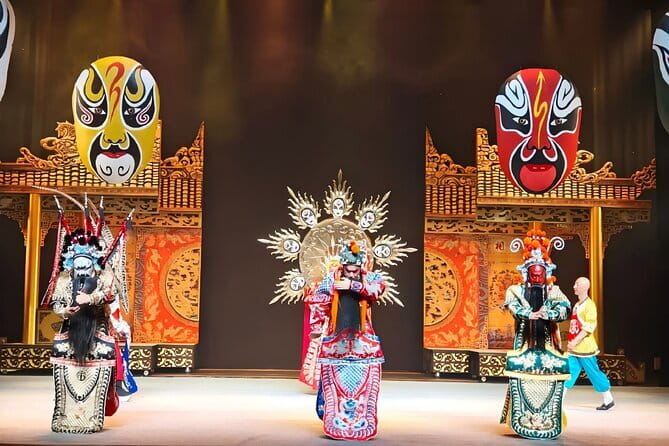
If you want an authentic Sichuan Opera night without overthinking it, the show at Jinjiang Theater is a smart pick. It’s built around a single storyline and ramps up the stage tricks until the famous eight-face changing skill takes center stage.
I love the craft focus here. You get a full menu of Sichuan Opera specialties plus acrobatics, not just one gimmick. And the standout moments feel paced for real attention, especially the face-changing sequence.
One thing to consider: the experience is scheduled for 8:00 pm and it lists good weather as a requirement, so keep a flexible backup plan in case your date gets changed.
Key Things to Know Before You Go
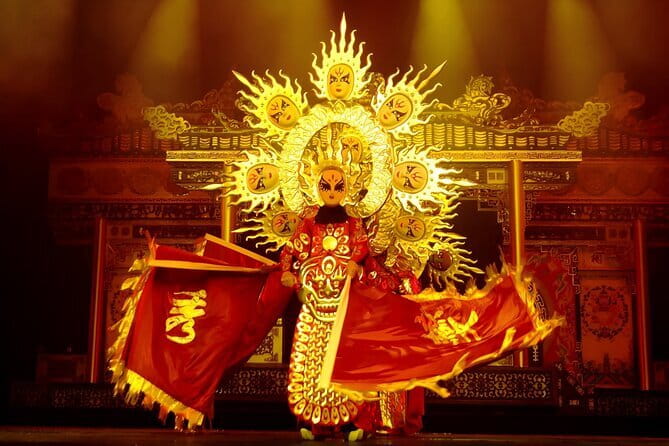
- Eight-face changing is the headline, with the speed and precision being the big wow factor
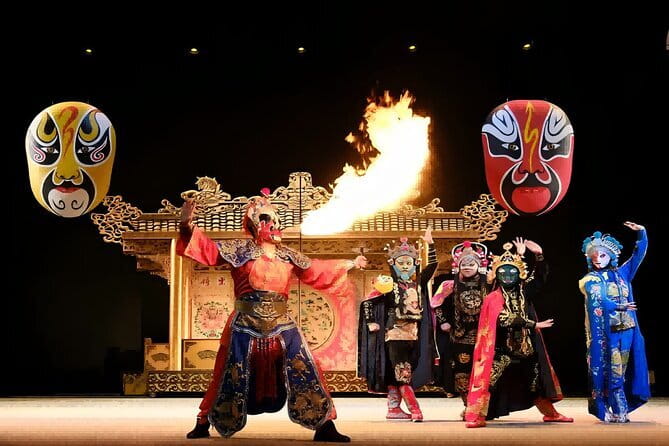
- Fire breathing and Rolling Lantern deliver the most adrenaline on stage
- Little Sanqing’s journey gives the show a storyline, not just a string of acts
- Stage variety is the point, from hidden knife and acrobatics to shadow puppetry
- You get a cup of Sichuan Gaiwan tea with admission, which is a nice local touch near Tianfu Square
Jinjiang Theater and Chengdu at Night: Why This Show Works
Chengdu is famous for Sichuan Opera, but it can be hard to know where to start. This show at Jinjiang Theater is appealing because it keeps things simple: you buy a ticket, take your seat, and the program moves through story, singing, recitation, movement, and martial arts.
I like that the theater itself is part of the appeal. It is set in a well-known venue connected with Sichuan opera’s origins, so you’re not just watching performers, you’re also getting that sense of place. Even if you only know face-changing as a headline, the rest of the show gives you context.
And because it runs for about 1 hour and 10 minutes, it fits cleanly into a first or second evening in the city. You do not need a whole day of planning to pull it off. You just need a comfortable spot and an open mind for stage magic.
More Sichuan opera evenings:
- Chengdu: Sichuan Opera Shu Feng Yan Yun Evening Show Ticket
★ 4.7 · 185 reviews - Chengdu Sichuan Opera Show Ticket – Shu Feng Ya Yun
★ 4.4 · 73 reviews - Chengdu: Sichuan Opera Show Ticket – Shu Feng Ya Yun
★ 4.8 · 30 reviews
The Little Sanqing Story, and Why the Plot Matters
The performance follows a character called Little Sanqing as he tries to master face-changing through adversity. That storyline matters more than it sounds. Instead of watching isolated tricks, you’re tracking a progression that builds toward the ultimate skill, the eight-face changing debut.
This helps you connect with the show even if you do not catch every word. Sichuan Opera is performative in its own way, and the narrative spine gives your brain something to hold onto. When the show shifts to a different specialty, it still feels like part of the same journey.
The show also layers in traditional arts you can recognize as Sichuan Opera hallmarks. You’ll see elements of singing, recitation, movement, and martial arts mixed together, so the evening feels like a complete performance tradition rather than one isolated act.
The Program in Order: What You’ll See From Start to Finish
The show runs as a tight sequence of excerpts, specialties, and performance styles. Here’s the flow in plain terms, with what each piece is good for.
It begins with The Three Heroes Fight Lü Bu, which sets the tone with classic opera energy. This kind of opening works well because it signals what you’re in for: strong acting, clear physical storytelling, and quick scene changes.
Next comes Hand Shadow Art. This is a good mid-early moment if you’re still settling in. It’s also an easy way to appreciate timing, since shadow work depends on precision and coordination.
Then the program moves into acrobatics and stage-fighting specialties:
- Umbrella Kicking brings fast, athletic footwork into the mix.
- Hidden Knife adds a sharper edge, where the illusion of danger is part of the entertainment.
After that, you get another opera excerpt, Releasing Pei, followed by a cluster of signature Sichuan Opera specialties:
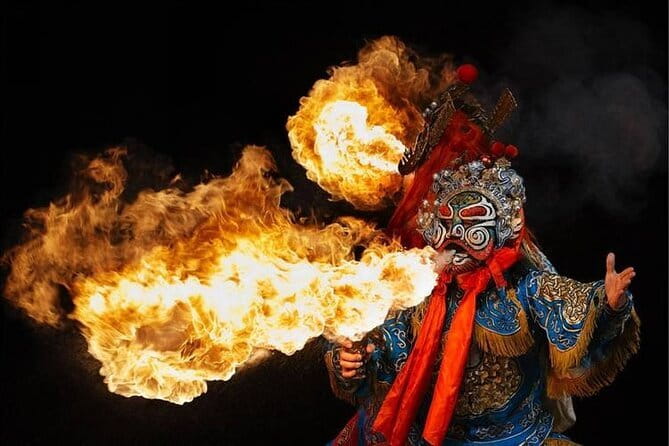
- Fire Breathing brings heat to the stage and raises the intensity.
- Rolling Lantern turns that intensity into spectacle, using movement and visual rhythm to keep you locked in.
- Multi-Person Drum Kicking adds synchronized strength and timing, with more bodies and more coordinated action.
Toward the middle-to-late portion, you’ll also see The Beauty of Life as a puppet show. This is a helpful change of pace. It gives your eyes a different style of storytelling and helps break up the more intense stage moments.
Finally, the program returns to the core highlight:
- Face-Changing
- Eight-Face Changing as the exclusive featured skill
- Three Costume Changes and a Traditional Fashion Show
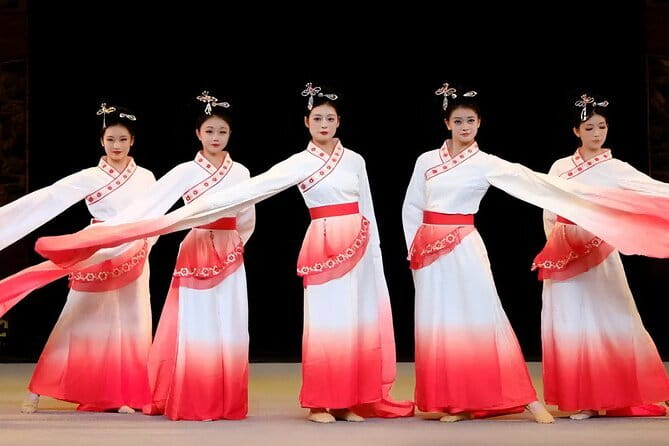
As the show wraps, you transition from trick-heavy spectacle into performance beauty with dances such as Water Sleeve Dance and Ghost Immortal Dance. That closing stretch is often where the show feels most elegant, because the movements get broader and more lyrical after all the high-impact skills.
Face-Changing, Eight-Face Changing, and the Moments You Should Watch Closely
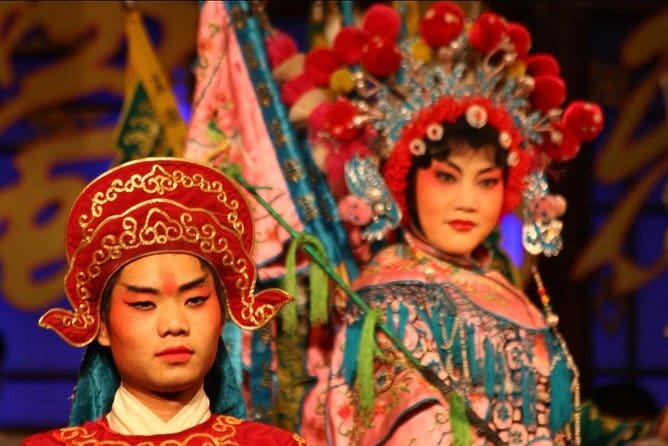
If your main reason for going is face-changing, plan to treat it like the headline it is. This show is built so that the face-changing sequence doesn’t feel random. It comes after you’ve already seen enough stage craft to understand how much attention and control the performers have.
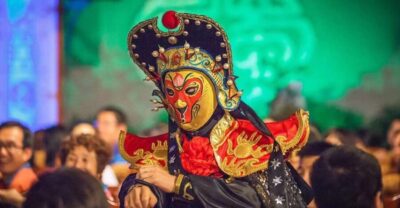
The featured highlight is the eight-face changing skill. The show promises it as the exclusive skill, and the big takeaway from the experience is how fast and precise it is. Even if you’ve seen face-changing as a concept before, eight-face changing raises the bar because there is more to keep track of.
Then there’s the plain reality of stage performance: your eyes want a place to rest. The face-changing moments are those anchors. If you’re sitting with friends, you’ll find it’s the part where everyone turns into the same kind of watcher.
One more reason this matters for your trip: it’s a story and a technique at the same time. You’re not just seeing a trick, you’re seeing the climax of Little Sanqing’s journey to master it.
A different sort of day out of Chengdu:
- Chengdu: Giant Panda Breeding Research Base Ticket
★ 4.5 · 580 reviews - Half-Day Chengdu Cooking Class with a Local Market Visit
★ 5.0 · 465 reviews - Tuktuk Food Tour Through Chengdu’s Local Eats
★ 5.0 · 435 reviews - Private Half-Day Chengdu Panda Breeding Center Tour with Optional Volunteer
★ 5.0 · 353 reviews
Fire Breathing and Rolling Lantern: The Thrill Section
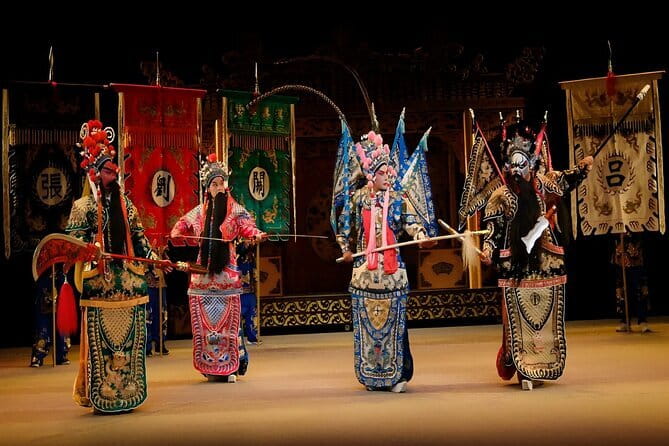
Not all Sichuan Opera showcases have the same balance. This one leans into showmanship, especially with two high-energy specialties: Fire Breathing and Rolling Lantern.
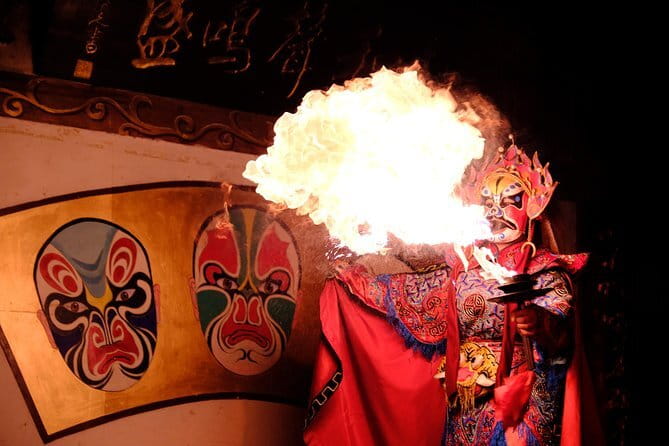
Fire Breathing is the kind of stage moment that instantly cuts through language barriers. Even if you miss context, you cannot miss the intensity. It’s also one of those performances that makes you appreciate how much coordination has to happen offstage too, since the timing and control need to be spot-on.
Rolling Lantern is different. Instead of focusing on fire as the singular image, it becomes about dramatic motion and visual rhythm. This is where the show turns into full-scale spectacle. If you like stage effects that look bigger than normal, this is your act.
If you’re deciding whether to bring kids, or if you’re sensitive to intense stage effects, I’d treat these two segments as the main consideration. They are the most extreme-feeling moments in the program, compared with singing or costume changes.
Acrobatics, Hidden Knife, Puppet Story, and Costume Theater
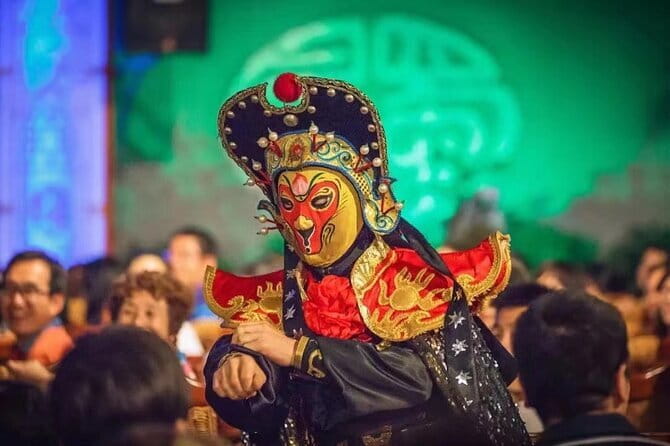
The show doesn’t stop at the signature highlights. It keeps feeding you variety so you’re never stuck in a single style for too long.
A few acts are especially worth your attention because they add different kinds of skill:
- Umbrella Kicking blends everyday props with athletic movement, which makes it feel clever rather than brute force.
- Hidden Knife is a specialty that plays with anticipation. You’re watching how the performance controls your expectations.
- Multi-Person Drum Kicking turns rhythm into movement, with more people to track and more timing to appreciate.
Then you get The Beauty of Life as a puppet show. If you’re the type who enjoys cultural variety, you’ll likely find this puppet segment a refreshing break. It also helps the show feel more complete, because it adds another traditional storytelling mode rather than repeating the same kind of action.
Later, the evening shifts into costume and fashion theater. You’ll see Three Costume Changes and a Traditional Fashion Show. This is where you slow down a touch and enjoy visual detail. Costume transitions in opera are not only about looks, they’re about stage storytelling and how the character or mood shifts.
And toward the end, the dances help wrap the experience with elegance:
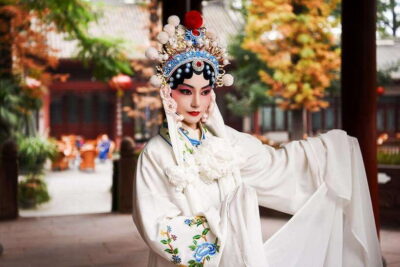
- Water Sleeve Dance often feels fluid and airy because of the way sleeves create motion lines.
- Ghost Immortal Dance adds a theatrical, character-based feel that turns the closing moments into something memorable.
The Included Sichuan Gaiwan Tea, and Why It’s More Than a Freebie
You’ll receive a complimentary cup of traditional Sichuan Gaiwan tea while you settle into the performance. I like this detail because it makes the evening feel like part of Sichuan culture instead of only being a ticketed event.
A cup of tea is also practical. It’s easy to arrive a bit hungry after an afternoon exploring Chengdu, and having something to sip helps you stay comfortable through a one-hour show.
Even if tea is not your thing, it’s still worth paying attention to the timing. Having that moment before or during seating helps you get your bearings fast, so you’re not distracted when the acts start.
Getting There Near Tianfu Square, and How to Time Your Evening
The Jinjiang Theater meeting point is at 54 Hua Xing Zheng Jie, Luomashi, Jin Jiang Qu, Cheng Du Shi, Si Chuan Sheng, China, 610017. It’s also described as near public transportation, which matters in Chengdu because you’ll likely be using transit to move around.
The show starts at 8:00 pm. That means you can plan a normal daytime schedule, then do your opera evening without rushing. If you want to make this an easy, low-stress night, I suggest arriving early enough to redeem your ticket and get seated before the program gets going.
Also note the weather requirement listed for the experience. Even though this is an indoor show, the tour description still flags good weather. If you’re traveling in a season with frequent rain or storms, plan to keep your schedule flexible for that night.
Price and Value: Is $18 Good for This Much Performance?
At about $18, this show is a strong value if you want a lot of different Sichuan Opera elements in a single sitting. You’re not paying just for face-changing. You’re paying for a packed program that combines:
- classic Sichuan opera excerpts
- multiple opera specialties, including face-changing and eight-face changing
- acrobatics and stage specialties like hidden knife and multi-person drum kicking
- puppet storytelling
- costume changes, plus dance segments
- and a complimentary cup of Sichuan Gaiwan tea
That’s the key value point. Many entertainment options in a new city cost more and give you less variety. Here, you’re getting a full evening that’s designed to keep changing pace, so you’re more likely to feel satisfied even if you don’t understand every word.
Who This Show Fits Best
This experience is a good match if you want:
- a clear cultural activity that feels distinctly Sichuan
- the easiest way to see face-changing and the featured eight-face changing technique
- a show that includes action, costume theater, and dance rather than only one style
It’s also family-friendly in the sense that it’s structured for broad audience enjoyment. The program mixes spectacle and performance variety, which usually works well for different ages.
If you’re the kind of traveler who needs a quiet, low-stimulation evening, this might feel too intense because of fire breathing, rolling lantern, and acrobatics. But if you like spectacle and stage craft, it’s exactly the right balance.
Should You Book Jinjiang Theater’s Eight-Face Changing Show?
I’d book it if you want a memorable Chengdu evening that delivers the headline specialty and also gives you enough variety to feel like you saw more than a one-trick performance.
I would think twice if you are traveling on a night with uncertain weather or if your schedule is rigid, because the experience is listed as requiring good weather and depends on meeting a minimum number of travelers. In that case, you’ll want a backup plan for the same time window.
If you like your cultural experiences with clear highlights, this show checks that box fast. Eight-face changing is the reason to go, but the rest of the program, from Rolling Lantern to the dances like Water Sleeve Dance, is what makes it worth the ticket price.
FAQ
Where is the meeting point for the Jinjiang Theater show?
You’ll redeem at Jinjiang Theatre, 54 Hua Xing Zheng Jie, Luomashi, Jin Jiang Qu, Cheng Du Shi, Si Chuan Sheng, China, 610017.
What time does the performance start?
The start time is 8:00 pm.
How long is the show?
The duration is about 1 hour 10 minutes.
What is the price of the ticket?
The price is $18.
Is anything included besides the admission to the performance?
Yes. Admission is included, and you also get a complimentary cup of traditional Sichuan Gaiwan tea.
What is the cancellation rule if my plans change?
You can cancel for a full refund if you cancel at least 24 hours before the experience start time. If you cancel less than 24 hours before, you won’t receive a refund.
Latest reviews from Chengdu
- Chengdu: Giant Panda Base Reservation and Entry★ 5.0 · 5 reviews
- Private Day Tour: Chengdu Panda and Leshan Buddha★ 4.0 · 5 reviews
- Full-Day Tour of Leshan’s Giant Buddha from Chengdu★ 5.0 · 5 reviews
- Half-Day Tour at Chengdu Panda Breeding Research Base★ 4.0 · 5 reviews
- Huanglong Scenic Area: Explore Stunning Five-Colored Ponds★ 5.0 · 6 reviews
- 3 Day Private Tour to Jiuzhai Valley and Huanglong★ 5.0 · 6 reviews
- From Chengdu: Tibetan Village Live as a Tibetan Day Tour★ 5.0 · 6 reviews
- Chengdu: Private Tour at Panda Base with Guide★ 5.0 · 6 reviews
Sichuan Opera, compared.
Sichuan Opera Shu Feng Yan Yun Evening Show Ticket
Read our review →
Chengdu Sichuan Opera Show Ticket – Shu Feng Ya Yun
Read our review →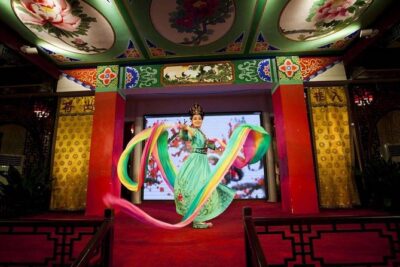
Chengdu Sichuan Opera Evening Show Ticket-Shu Feng Yan Yun
Read our review →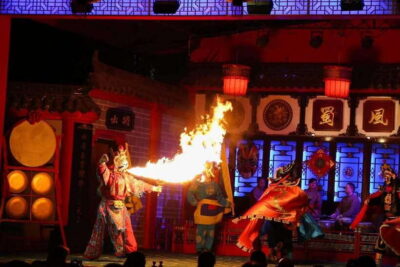
Sichuan Opera Show ShufengYayun & Covered Bowl Tea
Read our review →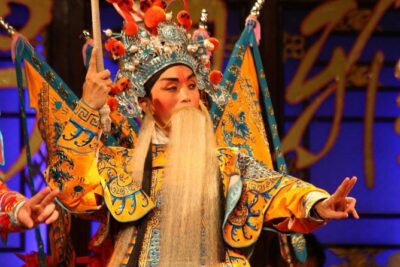
Browse the lists this tour appears in