Reviewed · BEIJING TOURS
Beijing Royal Dinning Experience with cultural performance
What makes this experience interesting is the mix of royal-style food and a live cultural show that moves in the same timeline as the dishes. It takes place in a preserved courtyard setting in central Beijing, close enough to the Forbidden City that you feel like you are stepping into imperial-era Beijing without needing a full day of logistics.
I especially like how the meal is treated like a narrative, not just a buffet. I also like the physical setting, a classic courtyard where the scenery changes with the seasons and the views from higher floors help you turn dinner into photo time too.
One possible drawback to plan for: the performance is in Mandarin, so if you want detailed explanations of every course in English, you may have moments where you just enjoy the visuals and taste instead of fully understanding the story.
Key highlights
- Courtyard dining about 2 kilometers from the Forbidden City, in a historically themed compound in the city center
- A cultural performance timed to each course, with the action and dishes running in chronological order
- Imperial-cuisine background tied to Tan Zongjun and the roots of what is presented as Tan’s official cuisine
- A strong main-course focus on sea cucumber and abalone, with a multi-course flow before and after
- Top-floor sightlines that let you spot the White Pagoda Temple and the Temple of Emperors of All Dynasties
- Two performance windows (lunch and dinner) that help you fit it into a Beijing itinerary without stretching your day
Entering a Courtyard Near the Forbidden City
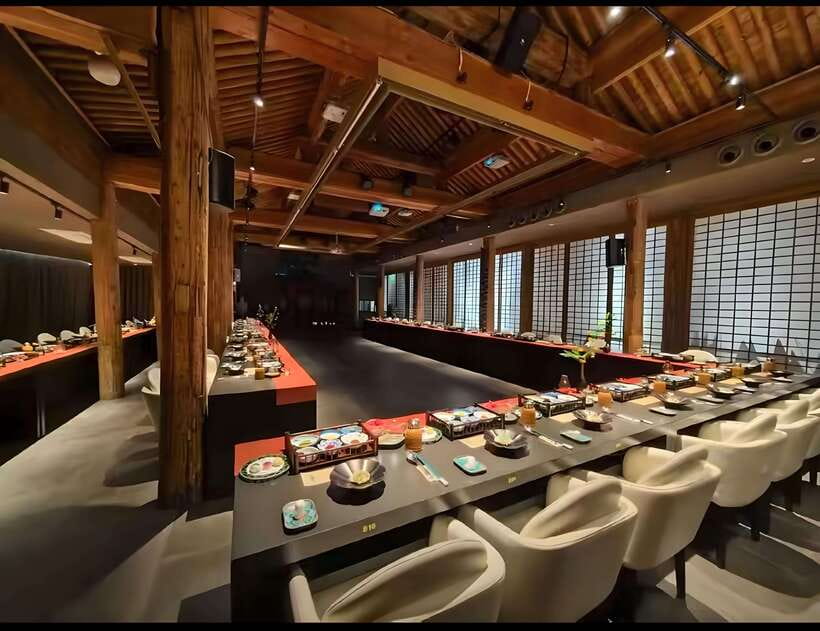
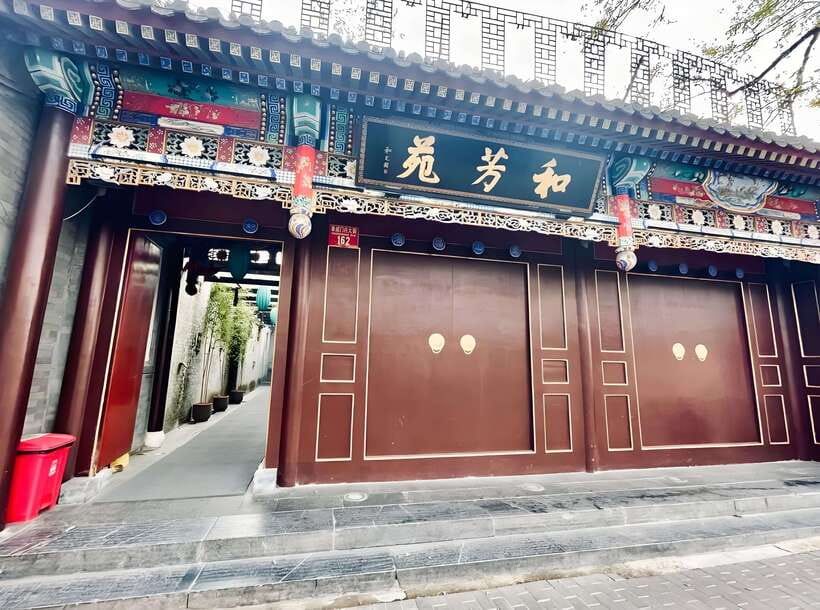
This royal dining experience is set in a beautifully kept courtyard environment, and that is not just decoration. You can feel the intent behind it. The space holds onto that traditional compound layout, so the dinner starts to feel like an occasion rather than a restaurant meal.
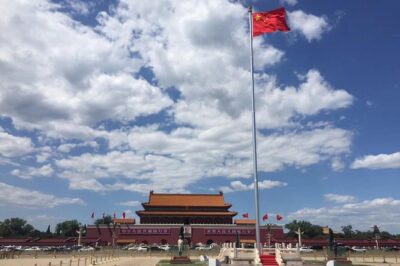
The location matters too. It is about 2 kilometers from the Forbidden City, which is close enough that you can pair this with a history day without turning your trip into constant commuting. If you like walking neighborhoods around big sights, this keeps your evening practical.
I also like the way the courtyard shifts through the year. The scenery is different in each season, which means you get a slightly different mood depending on when you go. It is one of those details that makes the place feel less staged and more “this is what Beijing looks like here.”
And yes, there are photo-worthy moments. From the top floor, you can see the White Pagoda Temple and the Temple of Emperors of All Dynasties. Even if you do not care about architecture, that kind of skyline peek gives you context and a reason to linger for a minute before the show starts.
What else people fit into the same Beijing trip:
- From Beijing: Mutianyu Great Wall Tours with Options
★ 4.9 · 9,216 reviews - Beijing: Forbidden City Tour(Group/Private)-Tickets Included
★ 4.8 · 7,974 reviews - Beijing: T-Square & Forbidden City Group or Private Tour
★ 4.8 · 4,446 reviews
How the Royal Dining Works Like a Story
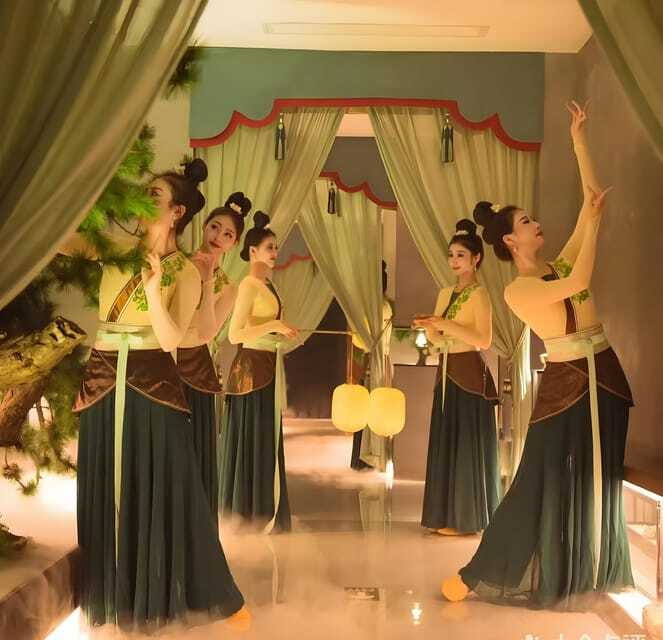
The core idea here is that dinner is paired with performance, and the pairing is tight. The cultural program follows a chronological order, and it is synchronized with the dishes. In other words, courses do not just arrive randomly while someone performs on the side.
This is where the experience can feel surprisingly “thoughtful,” because each dish comes with a story-performance component. You are not only tasting food, you are watching the theme unfold. If you enjoy food as culture, it is a fun way to connect flavors to tradition.
The setting also supports this. Because the meal is in a courtyard with a clear atmosphere, it is easier to treat each course like part of a sequence instead of trying to multitask like you would in a normal dinner.
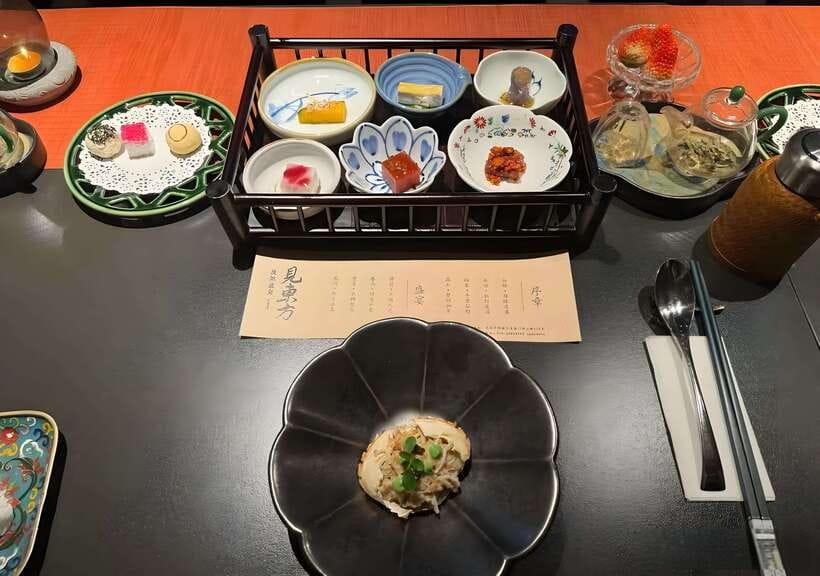
Here is the typical flow you should expect based on what is included:
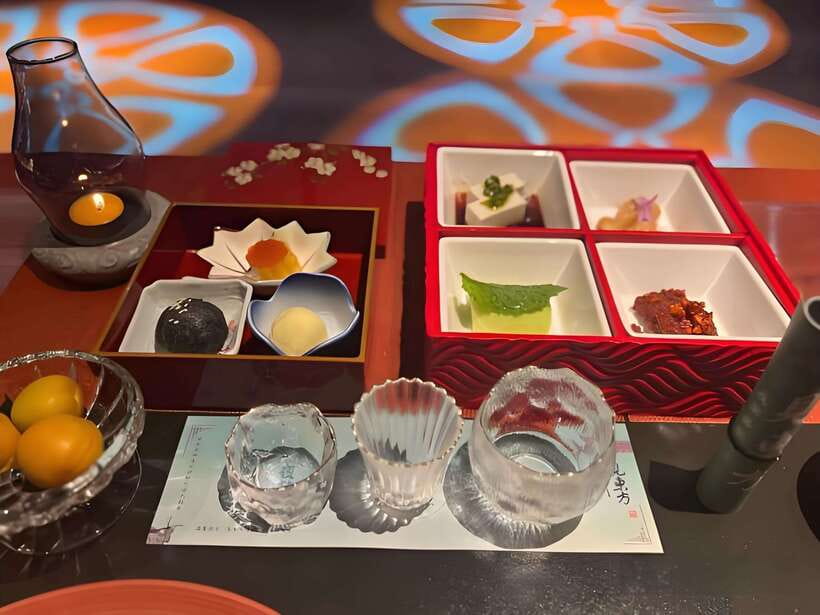
- Appetizers that kick off the pace
- Desserts to close out the sweet side
- Tea
- Wine
- A main meal centered on sea cucumber and abalone, which is the headline portion
The presentation gets attention too. The plating is described as beautiful, and the variety across the courses is part of the appeal. Even if you do not read every story line, you will still understand the rhythm because the format is repeated course after course.
The Cultural Performance, and What to Expect From Mandarin
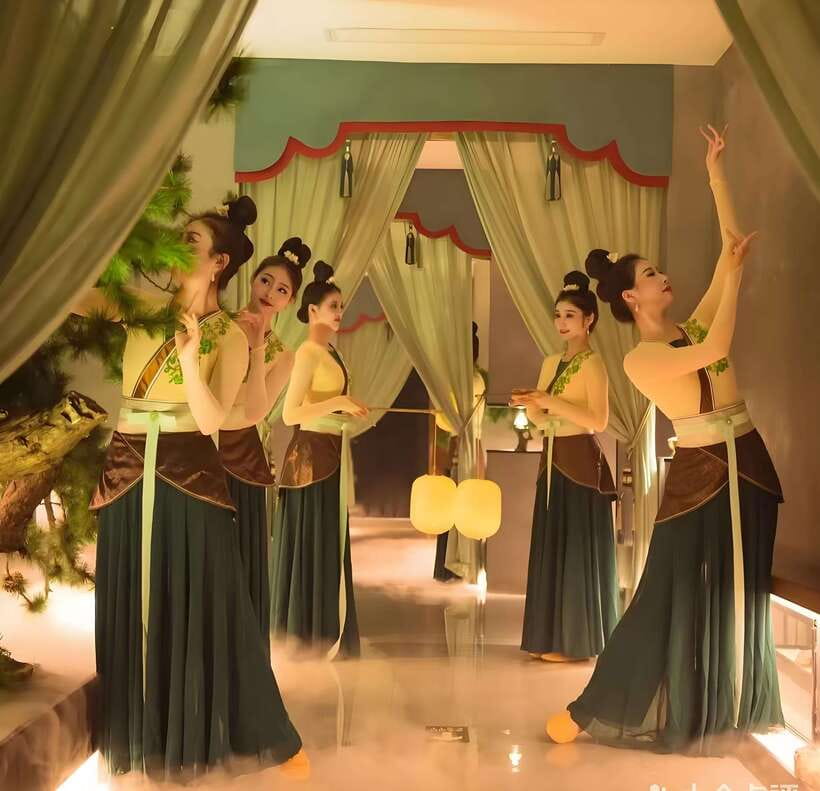
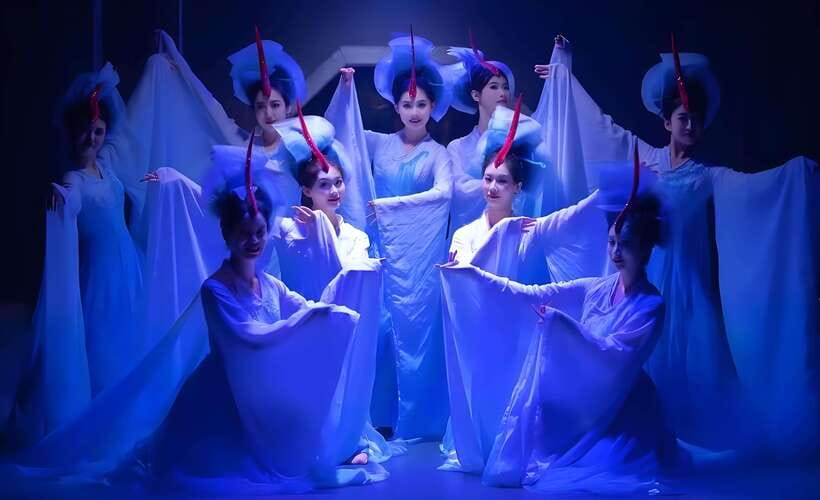
The show is described as a classical drama style performance, and the performers are clearly focused on their roles. The actors’ dedication comes across in how the performance fits with the meal sequence rather than feeling like a separate event you attend and then forget.
One important reality check: the performance is in Mandarin. Some people handle that fine because the action and timing do most of the work. Others find the lack of language support harder, especially if they want to follow a narration about each dish.
If you are the type who likes understanding details, I suggest you go in with a flexible mindset. Treat it like live theater plus a multi-course culinary set. Your main “translation” will be what you see, what you taste, and the general sense of a timeline running through the evening.
Good news: the integration still works even when you cannot follow every word. The choreography and the fact that dishes arrive in sync gives you plenty to focus on. Still, if you need dish explanations in English to feel fully comfortable, plan to enjoy it more as a performance and less as a guided lecture.
Lunch at 12:00 or Dinner at 6:30: Timing That Keeps It Stress-Free
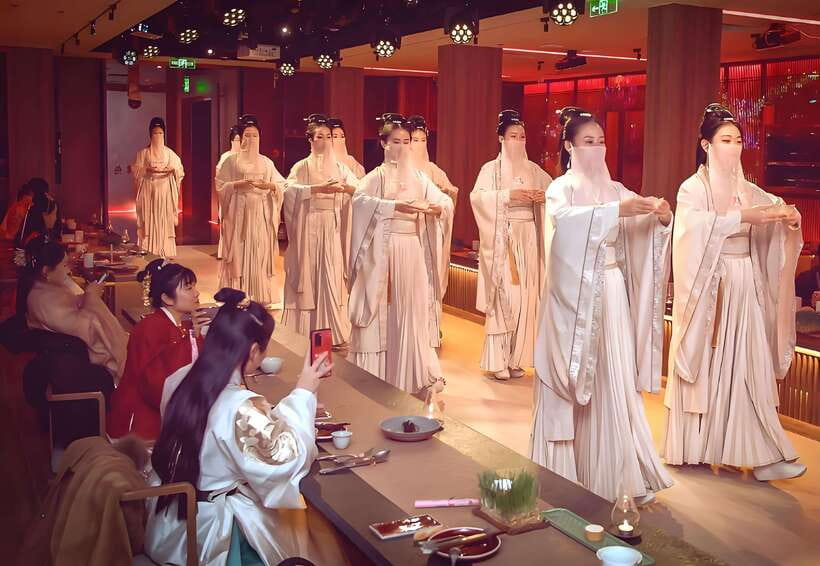
You get two options, and they are clearly separated:
- Lunch performance starts at 12:00 PM
- Dinner performance starts at 6:30 PM
- Duration is 2 hours
- Plan to arrive 30 minutes early
That 30-minute buffer is more than “nice to have.” It helps you settle into the space, find your seat or table flow, and get oriented before the show starts. In a setting like a courtyard compound, it is also easier to avoid rushing through the first moments.
Think of this as a tight, well-paced 2-hour block in your day. You are not signing up for a half-day tour. You are signing up for an evening event that includes food and a timed program, and the schedule reflects that.
If you are building a Beijing itinerary, this kind of predictable timing is valuable. You can plan your Forbidden City time, or nearby sights, then come back and do this as your “evening event.” That is especially helpful if you like an itinerary that does not feel fragile.
A different sort of day out of Beijing:
- All-Inclusive Tour: Tiananmen Square, Forbidden City, Great Wall
★ 5.0 · 2,873 reviews - MuBus: Mutianyu Great Wall ENG/ESP/RUS Guided Bus Tour
★ 5.0 · 2,361 reviews - 4-Hour Small Group Tour to Forbidden City with Entry Tickets
★ 5.0 · 1,863 reviews - Beijing: Tiananmen Square Registration Service(Ticket)
★ 4.5 · 1,704 reviews
The Historical Thread: Tan Zongjun and Tan’s Cuisine
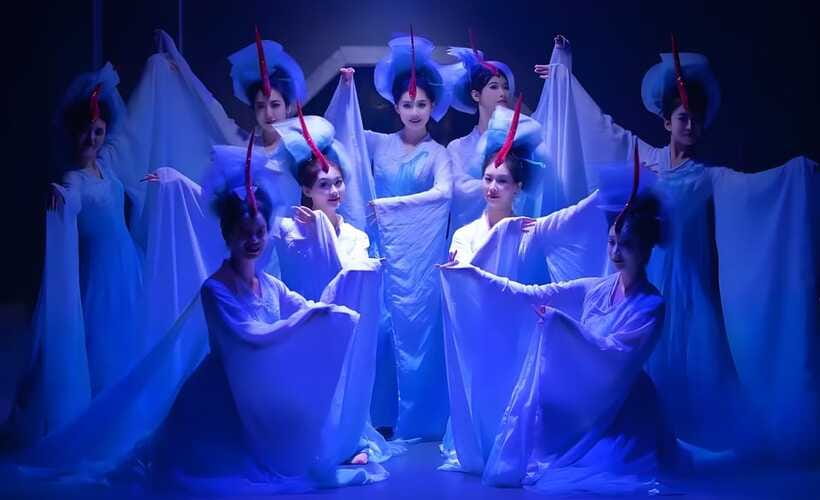
There is a story behind the building itself. The site you dine in was originally connected to Tan Zongjun, described as the second place in the imperial examinations in the Qing Dynasty. Later, the place developed into the birthplace of what is presented as official cuisine, Tan’s cuisine.
Why does this matter to you as a diner? Because it gives the experience a theme that is not generic. Instead of only focusing on spectacle, the evening ties the courtyard and the meal to a specific historical line and a cuisine identity.
Even if you only catch the main ideas, you can feel the intent: the choreography, the course structure, and the “royal” framing are all working toward the same message that you are tasting a tradition with roots, not simply buying an expensive meal.
And since the courtyard layout is preserved, the setting supports the history. That helps the whole thing feel more authentic than a modern stage surrounded by generic dining furniture.
Price and Value: What You Get for $99
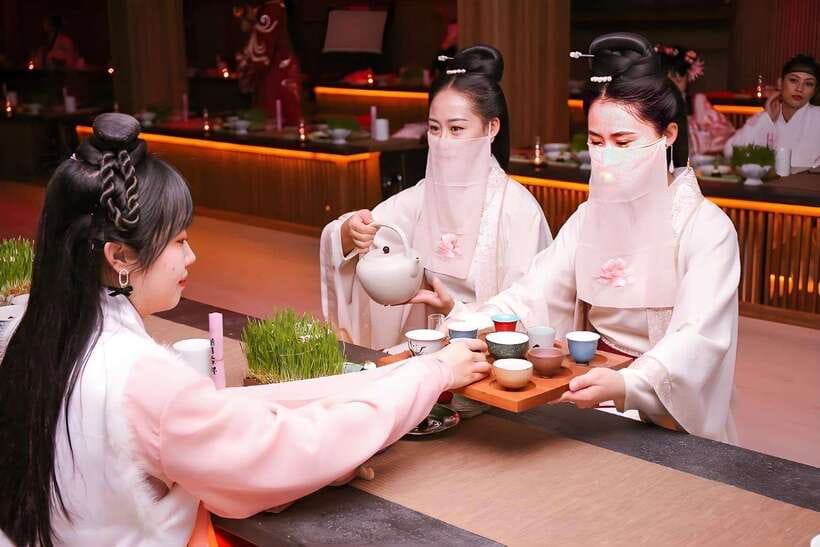
At $99 per person for a 2-hour package, the value question is simple: you are not just paying for food. You are paying for an experience that includes:
- Royal dining built as a multi-course sequence
- A cultural performance integrated with the dish timing
- A special setting in a preserved courtyard location
- Convenient entry style, including skipping the ticket line
If your interest is mainly in eating, you might find other meals in Beijing for less. But if your interest is in the total package, the pricing starts to make sense. You are paying for a controlled format where the show and the course sequence are designed to happen together.
Also, the format means you do not spend energy coordinating parts. You do not have to line up a separate theater ticket. You do not have to find a restaurant that also delivers a staged cultural program. You get one block, and the night runs on script.
So I would frame it like this: $99 is fair if you want a memorable cultural evening with a “royal dining” style meal. It is less convincing if you prefer free-form dining with no performance, or if you need English explanations for every course to enjoy the meal.
Practical Tips: Getting There and Enjoying the Courtyard
One of the most useful tips is to give yourself extra time and be careful with navigation. Some mapping apps can point you to the wrong place. A traveler tip that sounds worth following: open the address in Didi as shown with the location details you receive, and it should bring you where you need to go. If you feel stuck, asking locals can also fix it fast.
Once you are there, your next best move is to arrive early, again, 30 minutes before the performance. In this kind of venue, early arrival gives you time to orient yourself and take in the courtyard before the program begins.
A few other practical thoughts:
- Wear comfortable shoes. You are in a courtyard setting, and you will likely walk a bit before seating.
- Bring your camera. The top-floor views toward the White Pagoda Temple area and the Temple of Emperors of All Dynasties are a real reason to lift your phone at least once.
- Go in prepared for Mandarin. You do not need to be fluent. Just expect that the story component may not be fully explained in English.
Wheelchair access is listed, so if you need it, you can feel confident the venue is meant to accommodate. Still, arriving early is useful for anyone who wants to settle in without rushing.
Who Should Book This Beijing Royal Dinner Show
This experience fits best if you want a cultural night where the meal and performance are built as one unit.
You will likely enjoy it if you:
- Like theater-style performances, not just casual entertainment
- Want to try “royal” or official cuisine formats
- Enjoy multi-course meals and do not mind that the sequence is designed for storytelling
- Want something close to major sights, since it is near the Forbidden City
You might want to think twice if:
- You strongly rely on English narration to understand what you are eating
- You are picky about main-course seafood ingredients and especially the sea cucumber and abalone focus
- You need a purely informational tasting experience, because the evening is built more like performance plus dining than a detailed food lecture
A balanced way to decide: if you are traveling for moments and atmosphere as much as food, this is a good match. If you are traveling mainly for food with minimal ceremony, you may prefer a restaurant where you can talk through the menu.
Should You Book It?
I think this is a strong booking choice when you want a “Beijing evening” that combines royal dining with a structured cultural performance in a preserved courtyard setting.
Book it if you want:
- A fixed 2-hour block with lunch at 12:00 or dinner at 6:30
- A multi-course format with memorable main dishes like sea cucumber and abalone
- An environment where you can also enjoy views from higher floors, including the White Pagoda Temple area
Skip it or look for an alternative if:
- Language comprehension is a must for you, because the performance is in Mandarin
- You mainly want an easy dinner with minimal structure, since this is clearly designed as a show-dinner package
If you do book, I would go in with a simple plan: arrive early, expect the story to be partly visual, and let the food sequence guide you. Done that way, the night can feel like a real taste of imperial-inspired theater, not just an expensive meal.
FAQ
What time are the lunch and dinner performances?
Lunch starts at 12:00 PM and dinner starts at 6:30 PM.
How long does the experience last?
The experience is listed as 2 hours.
What is included in the Royal Dining Experience?
It includes the royal dining experience and the cultural performance.
What languages should I expect?
The performance is in Mandarin.
What should I do about arrival time?
You should arrive 30 minutes before the performance starts.
Do children need child tickets?
Children under 120 centimeters must buy a child ticket, and children over 120 centimeters need an adult ticket.
Latest reviews from Beijing
- SummerPalace or temple of heaven Ticket with guide(optional)★ 3.7 · 5 reviews
- Customized Private Beijing Layover City Tour★ 5.0 · 5 reviews
- Private Transfer to Longqing Gorge and Guyaju Caves Excursion by English Driver★ 5.0 · 5 reviews
- Half Day Mutianyu Great Wall private tour★ 5.0 · 5 reviews
- Beijing Golden Mask Dynasty Show Discount Tickets★ 5.0 · 5 reviews
- Private Tour to Yinshan Pagoda Forest w/Optional Activities★ 5.0 · 5 reviews
- Private Tour to Pearl Market Acrobatic Show & Peking Duck Dinner★ 5.0 · 5 reviews
- Terracotta Army Entry Ticket★ 4.8 · 5 reviews
Beijing Tours, compared.
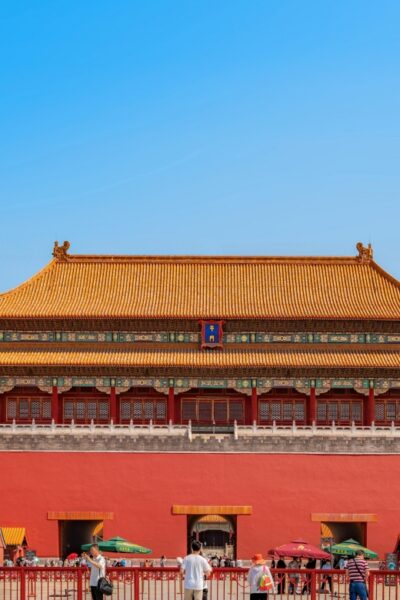
Forbidden City Tour(Group/Private)-Tickets Included
Read our review →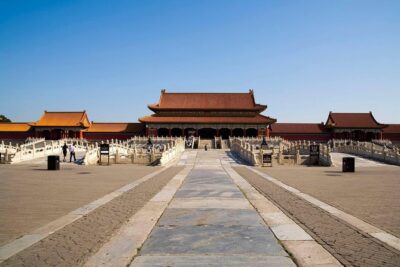
T-Square & Forbidden City Group or Private Tour
Read our review →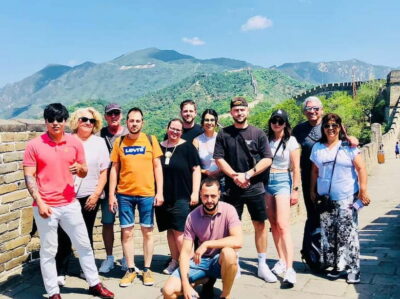
Mutianyu Great Wall Daily Tour with Ticket & Lunch
Read our review →
All-Inclusive Tour: Tiananmen Square, Forbidden City, Great Wall
Read our review →
MuBus: Mutianyu Great Wall ENG/ESP/RUS Guided Bus Tour
Read our review →
Tian’anmen Square & Forbidden City W Optional Tours
Read our review →